


Silver Dessert Scissors
Silver dessert scissors are specialist cutting implements for the dining table, prized for serving fruit cleanly without bruising.
Silver Dessert Scissors
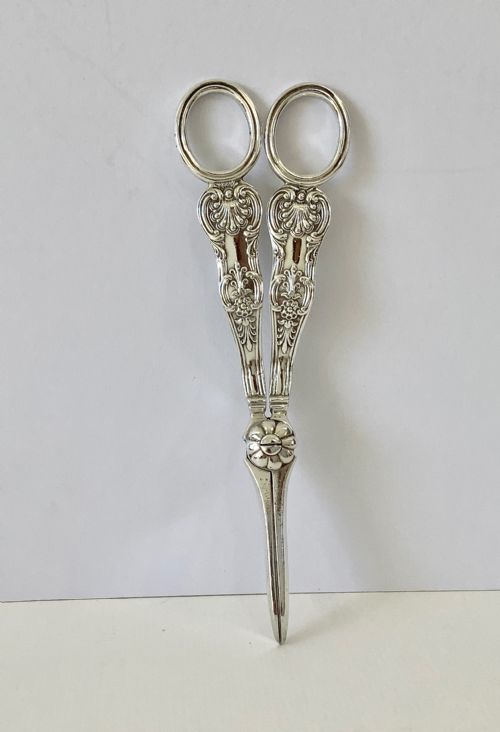
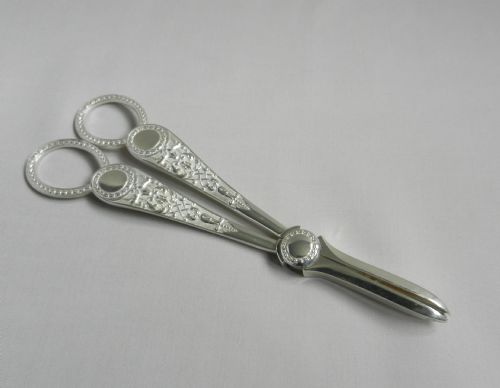
When you search for silver dessert scissors, you encounter specialised implements designed specifically for portioning fruit at the table. The examples listed here predominantly take the form of grape scissors and grape shears, alongside related fruit serving sets and serving tongs.
The material record spans sterling silver, silver plate, and gold gilt, often accompanied by velvet, leatherette, and satin within fitted presentation boxes. Periods range from the early nineteenth century through the Victorian and Edwardian eras into the mid-twentieth century.
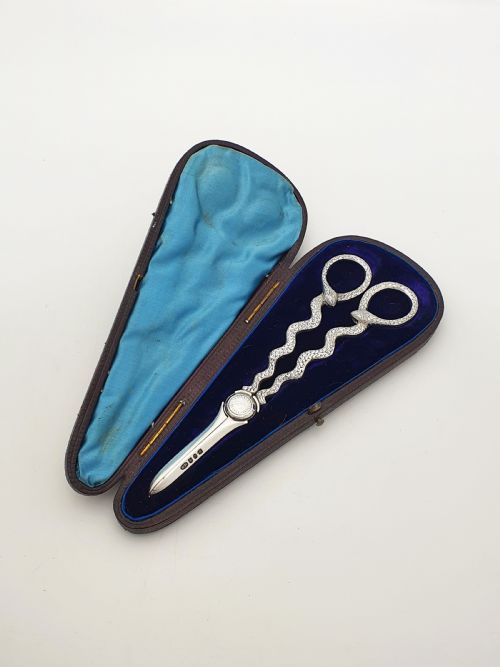
Victorian examples dominate the selection, frequently displaying elaborate ornamentation such as snake handles or gothic revival motifs. Buyers also find twentieth-century iterations, including barware pieces and simpler Edwardian designs.
How they were made
The construction relies heavily on sterling silver and silver plate, shaped through casting and ornate engraving. Many pieces incorporate gold gilt highlights to the interior blades or bowls, adding decorative contrast to the polished metal.
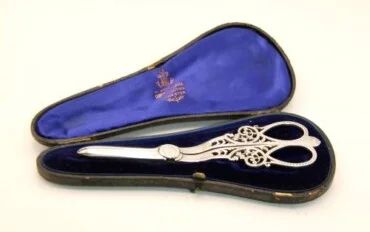
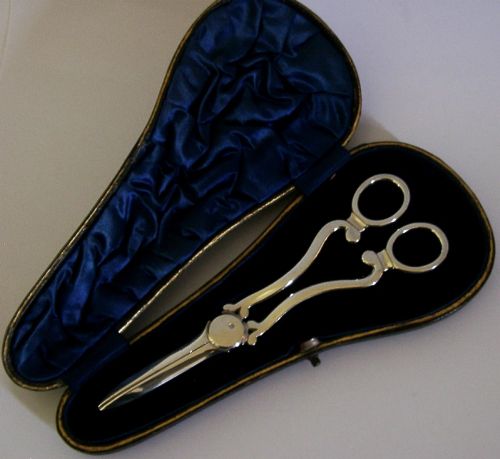
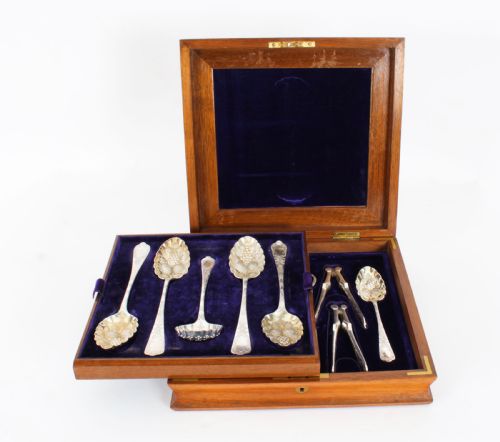
Storage and presentation formed an integral part of the manufacturing process, with original fitted boxes lined in satin, velvet, or leatherette. These protective cases often housed matched sets containing spoons, nutcrackers, and the scissors themselves.
Victorian makers occasionally fitted grape scissors with coiled snake handles, ensuring dinner guests encountered a small reptile before reaching for the fruit bowl.
What varies in quality
Quality separates mass-produced plated items from substantial cast sterling silver pieces possessing significant weight and gauge. Heavier metal affords a more rigid structure, particularly noticeable in the leverage required for snipping fruit stems.
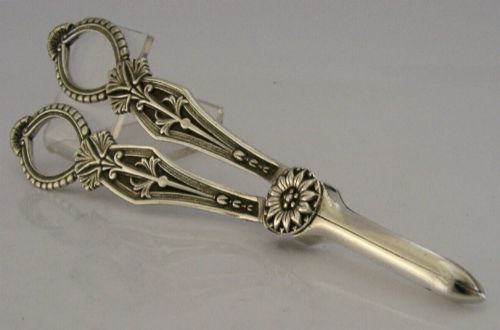
The artistry of the decoration distinguishes finer examples from standard production. Master silversmiths invested considerable skill in hand-engraving foliage or fashioning figural elements like snake handles, whereas lesser pieces rely on simpler stamped patterns.
Goldsmiths & Silversmiths Co. Gibson & Langman·Reilly & Storer·Hukin & Heath
The Silver Dessert Scissors Glossary
- Sterling silver
- An alloy consisting of ninety-two point five percent silver and seven point five percent other metals, typically copper. This standard composition ensured durability for functional cutlery while maintaining a bright metallic lustre.
- Silver plate
- A base metal substrate coated with a thin layer of pure silver through electroplating or older manufacturing methods. It provided a more affordable alternative to solid sterling items during the nineteenth and twentieth centuries.
- Gold gilt
- A thin application of gold applied to the surface of a silver object, often used to line the interior of blades or bowls. This technique protected the silver from the acidic juices of fresh fruit.
- Grape shears
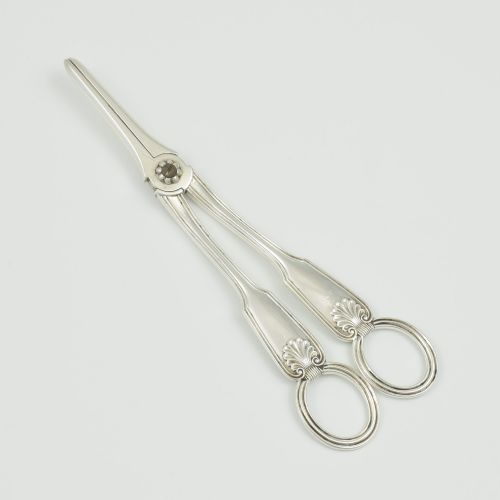
- A specific variant of dessert scissors featuring curved blades designed to cut individual fruit stems cleanly. They allowed diners to transfer portions without touching the fruit by hand.
Silver Dessert Scissors: Frequently Asked Questions
What are silver dessert scissors?
Silver dessert scissors are hinged cutting tools designed for the formal dining table, specifically intended for snipping stems from clusters of grapes and other soft fruits.
They allow diners to serve portions neatly without handling the fruit directly, maintaining the etiquette of nineteenth and early twentieth-century dining.
How do I date silver dessert scissors?
Dating relies on hallmarks stamped into the metal, stylistic clues such as gothic revival motifs or snake handles, and the presence of original fitted presentation boxes.
Victorian pieces often display heavy cast ornamentation and elaborate hand engraving, whereas Edwardian and later twentieth-century examples tend towards cleaner, more restrained lines.
Were they sold in sets?
Many dessert scissors formed part of larger fruit serving sets that included matched spoons and nutcrackers housed in fitted wooden boxes lined with satin or velvet.
These comprehensive sets were popular wedding gifts and status symbols for the dining room during the Victorian and Edwardian periods.
How should I clean silver scissors?
Cleaning requires a soft microfibre cloth and a specialised silver polish formulated to remove tarnish without abrading the metal surface or delicate hand engravings.
Avoid abrasive dips or scrubbers, especially on pieces with gold gilt highlights or fitted leatherette and velvet presentation cases.