
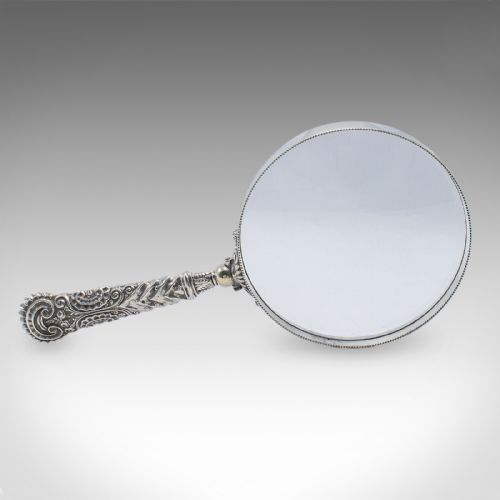


Silver Desk Magnifying Glass
A silver desk magnifying glass brings practical utility and tactile pleasure to a writing table.
Silver Desk Magnifying Glass
A silver desk magnifying glass serves as a functional tool for reading small print and examining documents in a study or library. These objects range from compact handheld pieces to large library aids designed to sit permanently upon a desk.
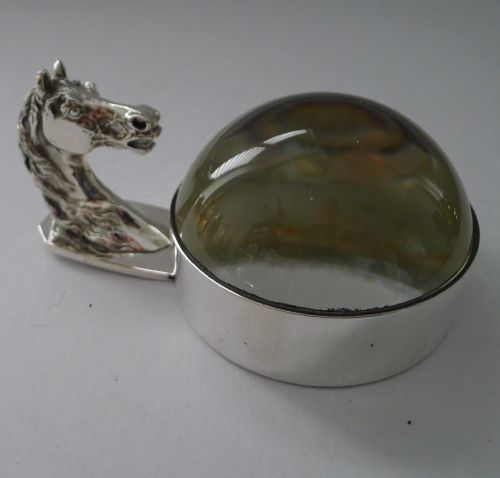
The pieces appearing on this page span the Victorian, Edwardian, and Art Deco periods, alongside mid-century modernist designs. Forms include standalone magnifiers, folding variants, and combination desk accessories that incorporate rulers or letter openers.
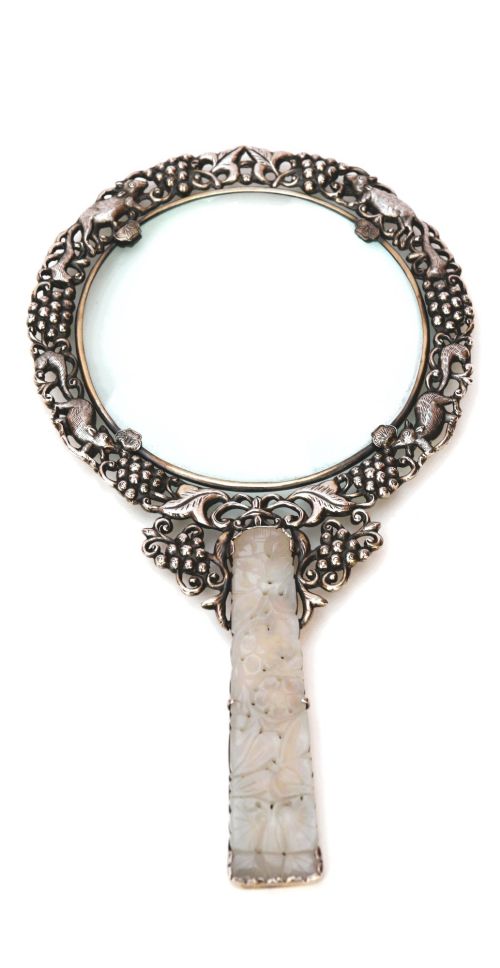
Origins include English workshops in Birmingham, Sheffield, and London, alongside continental makers and Qing Dynasty examples. Materials span sterling silver, silver plate, brass, glass, jade, shagreen, enamel, and mother of pearl.
How they were made
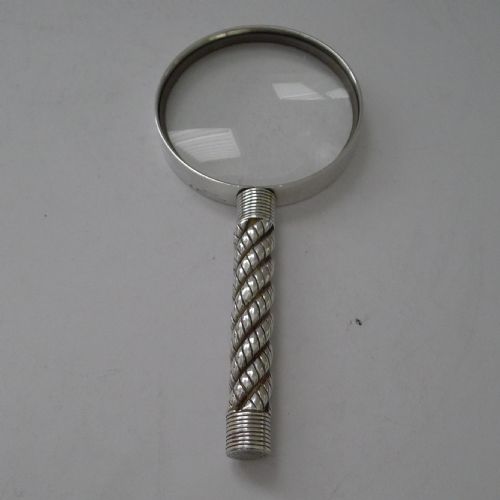
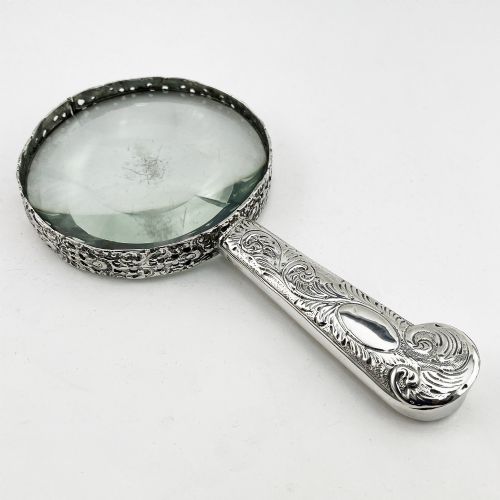
Silversmiths constructed handles using sterling silver or silver plate, frequently mounting them onto optical glass lenses. Techniques such as guilloche enamel, pique tortoiseshell, and shagreen covering were applied to embellish the grip.
Some examples combine silver mounts with organic materials like jade, mother of pearl, ivory, or bone. Metal components typically carry assay office hallmarks indicating the city and year of manufacture.
The selection spans Victorian, Edwardian, Art Deco, and mid-century modern periods across English and continental origins.
What varies in quality
Quality depends upon the weight and gauge of the silver used in the handle and mount, alongside the optical clarity of the glass lens. Substantial pieces with balanced heft sit more comfortably in the hand.
The intricacy of secondary materials distinguishes finer examples, particularly crisp engine-turned guilloche enamel, unblemished shagreen, or carved jade. Maker attribution to prominent firms also elevates the standing of a desk magnifier.
Hermes Paris·Broadway & Co·Mappin & Webb·P H Vogel & Co·Asprey & Co·William Yates·Henry Greaves·James A Scholes·Thomas Henry Blake·Josiah Williams & Co·Christofle
The Silver Desk Magnifying Glass Glossary
- Guilloche enamel
- A decorative technique involving precise mechanical engraving beneath translucent enamel. This method creates repeating geometric patterns visible across the coloured surface of the handle.
- Shagreen
- Untanned skin prepared from the hide of a shark or ray, recognised by its distinct granular texture. It finds frequent use on Art Deco desk accessories.
- Sterling silver
- An alloy consisting of silver and other metals, traditionally copper, meeting a specific fineness standard. Most English pieces bear hallmarks confirming this standard.
- Assay office
- An official body responsible for testing the purity of precious metals and stamping them with hallmarks. Common locations include Birmingham, Sheffield, and London.
Silver Desk Magnifying Glass: Frequently Asked Questions
How do I date a silver magnifying glass?
British pieces typically carry hallmarks that include a date letter, assay office mark, and standard mark. These stamps allow for precise dating down to the exact year of manufacture.
Items lacking British marks often rely on stylistic indicators, such as Art Deco geometry or mid-century modernist clean lines, to suggest a decade of origin.
Were these items meant for travel or desk use?
Most examples function primarily as desk accessories, remaining static on writing tables or library desks. Larger variants, such as mammoth map magnifiers, stayed anchored to a specific study workspace.
Some pieces feature folding frames or compact proportions suited for a pocket or travelling case, though stationary use remains predominant.
What is combination desk stationery?
Combination desk stationery refers to multi-functional desk tools that merge a magnifying glass with a letter opener or ruler. Makers engineered these pieces to reduce clutter on executive writing surfaces.
Such objects combine the optical utility of a glass lens with the practical edge of a paper knife into a single silver-mounted instrument.
How should I clean a silver handle with enamel?
Silver components require a gentle polish with a non-abrasive cloth to preserve the metal surface without disturbing surrounding materials. Enamel and shagreen call for dry dusting rather than liquid cleaning agents.
Avoiding harsh chemical dips protects organic inlays and delicate coloured glass coatings from permanent damage.