

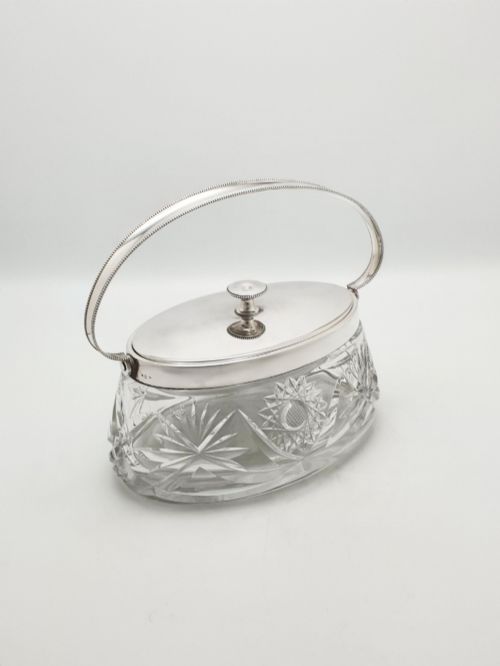


Silver Biscuit Container
A silver biscuit container sits on the table as a heavy, gleaming centrepiece, designed to keep dry afternoon provisions crisp.
Silver Biscuit Container
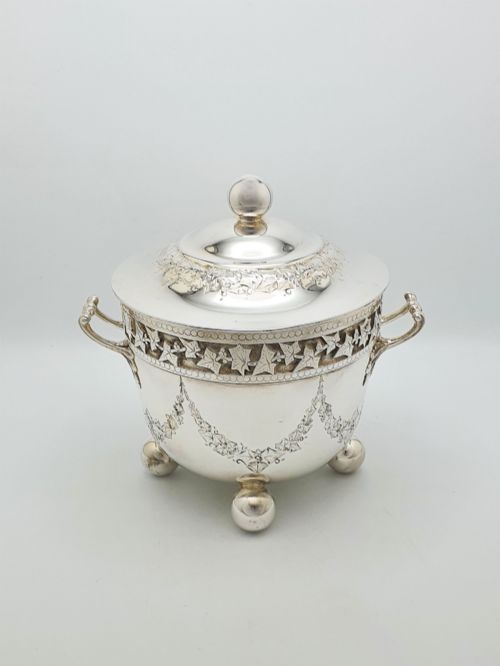
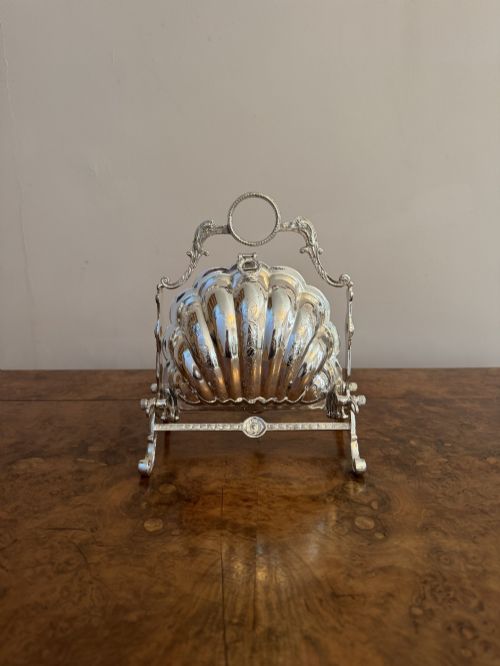
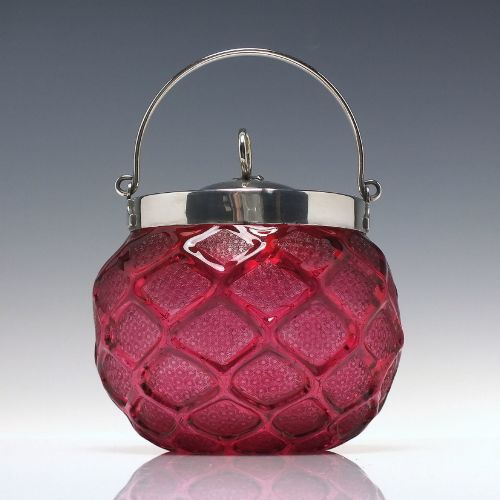
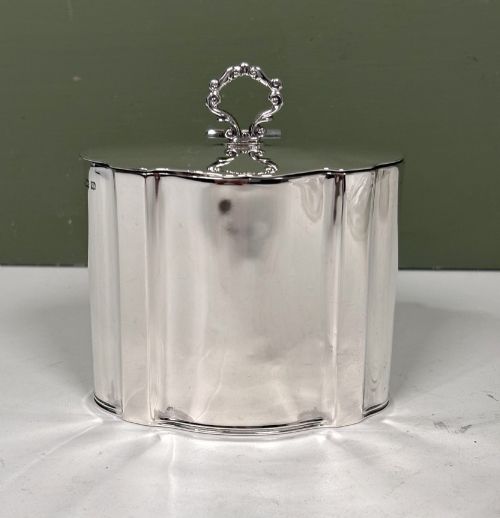
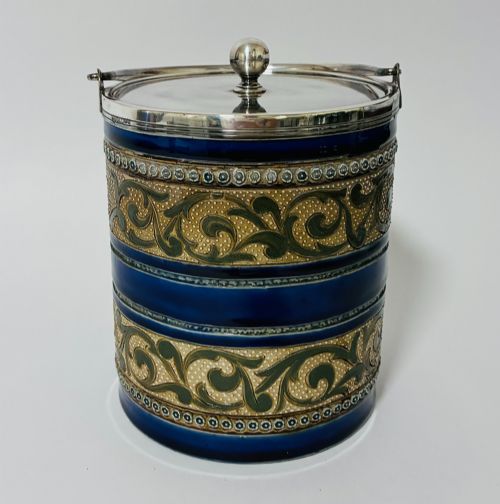
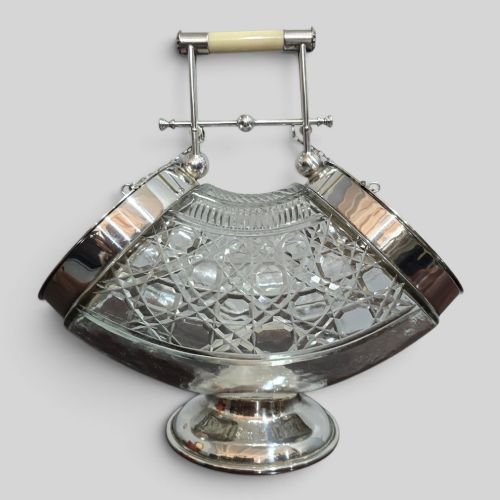
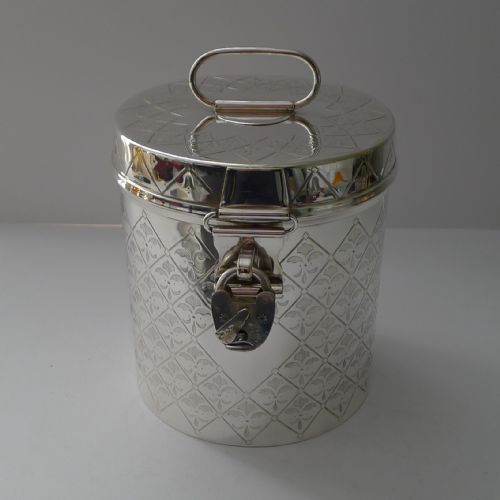
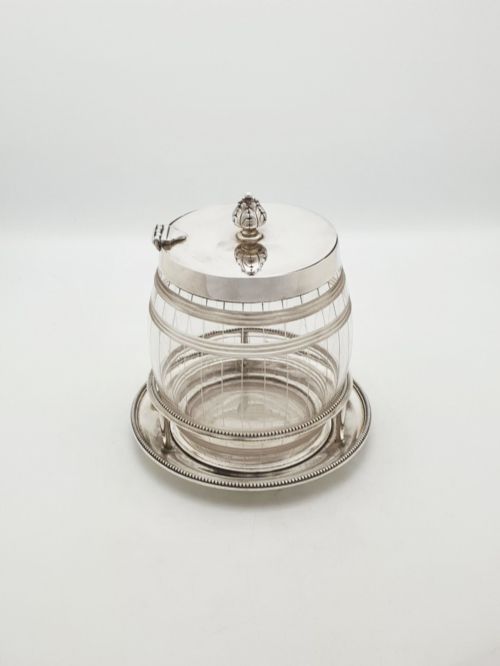
A silver biscuit container serves as a formal lidded vessel for the dining table, taking the form of barrels, boxes, and caddies created across the Victorian, Edwardian, and George V periods. You encounter these pieces most frequently as silver-plated frames holding cut glass or cranberry glass bodies, alongside ceramic bodies from Doulton Lambeth and Wedgwood.
The domestic role of these containers changed little from the mid-nineteenth century into the early twentieth century, functioning as lidded receptacles for dry baked goods. Formats range from upright cylindrical barrels with hinged handles to novelty shapes modelled as iron weights, reflecting both utilitarian dining customs and playful Victorian design.
Makers utilised distinct regional styles, moving from heavy nineteenth-century ornamentation towards cleaner Edwardian lines and Art Deco influences. The selection on this page captures this evolution through English, Dutch, and continental European works spanning multiple decades.
How they were made
Makers constructed these vessels by combining metal mounts with glass or ceramic bodies, utilising silver plate or solid sterling silver for lids, rims, and swinging handles. Electroplated nickel silver provided a durable base for many English pieces, while master silversmiths hammered and hallmarked solid silver boxes.
Glass bodies relied on heavy cutting and moulding techniques, producing hobnail, faceted, and diamond patterns that caught the light beneath silver lids. Ceramic bodies utilised stoneware, jasperware, and flow blue earthenware, often fitted with cast metal finials depicting heraldic dragons or floral motifs.
Silver Biscuit Container Retail Price Guide 2026
Typical asking prices for silver biscuit container among the pieces listed under this phrase on Sellingantiques today, from the lower quarter to the upper quarter. They describe what is for sale here now, not the wider market.
Listings feature periods from the nineteenth century through the 1920s, incorporating materials such as cranberry glass, stoneware, and electroplated nickel silver.
What varies in quality
The standard of craftsmanship separates standard utility wares from pieces bearing the marks of prominent makers like Mappin and Webb, Elkington, or James Dixon and Sons. Superior examples display substantial metal gauges, crisp chasing on mounts, and glass or ceramic bodies free from internal stress marks.
Proportion and decorative harmony dictate the visual balance of the container, where handles move smoothly and lids close with precision against the collar. The weight of the metal and the depth of the glass cutting define the physical presence of the object on the table.
Mappin and Webb·Elkington·Thomas Bradbury·James Dixon and Sons
The Silver Biscuit Container Glossary
- Silver Plate
- A layer of silver fused to a base metal, typically nickel silver or copper, providing the appearance of solid silver at a lower cost.
- Cranberry Glass
- A rich red-pink transparent glass coloured with gold chloride, popular for Victorian tableware and decorative biscuit barrels.
- Jasperware
- A fine-grained unglazed stoneware developed by Josiah Wedgwood, characterised by white relief figures set against a coloured matte background.
- Hallmark
- An official stamp applied to precious metals indicating the standard of purity, the maker, and the year of assay.
- Finial
- A small decorative knob or ornament attached to the top of a lid for lifting.
Silver Biscuit Container: Frequently Asked Questions
What were silver biscuit containers used for?
These vessels held dry biscuits and sweet treats during formal afternoon tea and dining in Victorian and Edwardian homes. The lidded design kept moisture out of the baked goods while presenting them attractively on the sideboard.
Servants brought them to the table as part of the afternoon spread, where guests lifted the hinged lid to help themselves. Today they function equally well for holding small household items or sweets.
How do I clean a silver biscuit container?
Clean the silver-plated or solid silver mounts using a soft cloth and a mild, non-abrasive silver polish to maintain the shine without stripping the plating. Avoid submerging older mounted ceramics or glass in hot water for extended periods.
Wash glass and ceramic bodies separately in lukewarm soapy water using a soft sponge. Dry all metal parts immediately to prevent water spots from forming on the surface.
Are these containers safe for food use?
While the materials are generally stable, historic silver plate and older solders can contain trace elements that require consideration for modern consumption. Many owners prefer to use these pieces for display or to hold wrapped sweets rather than loose foodstuffs.
Ensure the interior glass or ceramic liner is thoroughly washed before any contact with edible items. If the silver plating is worn through to the base metal, it is best to keep the interior lined or dry.
How do I tell Victorian pieces from Edwardian ones?
Victorian containers tend to feature heavier, more ornate decoration, including deep hand-cut glass, elaborate floral chasing, and dramatic finials. The overall aesthetic leans towards rich ornamentation and substantial physical weight.
Edwardian and George V examples often display lighter proportions, cleaner lines, and influences from Neoclassical or early Art Deco styles. The glass cutting becomes more geometric and the mounts less congested with heavy relief work.