




Silver and Enamel Pot
A silver and enamel pot brings brilliant colour and bright metalwork together on the dressing table.
Silver and Enamel Pot
A silver and enamel pot unites precious metal with vitreous colour, taking the form of vanity jars, dressing table jars, trinket boxes, inkwells, and lidded bowls. These vessels survive from the Victorian, Edwardian, and Art Deco periods, alongside mid-century examples and Chinese export pieces.
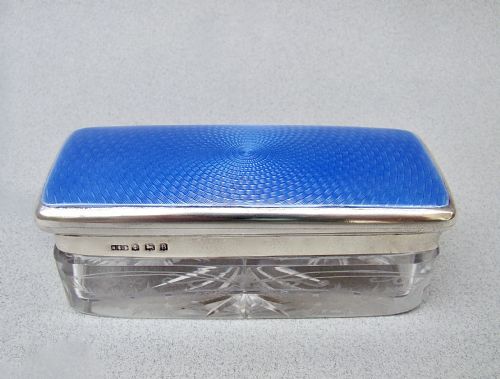
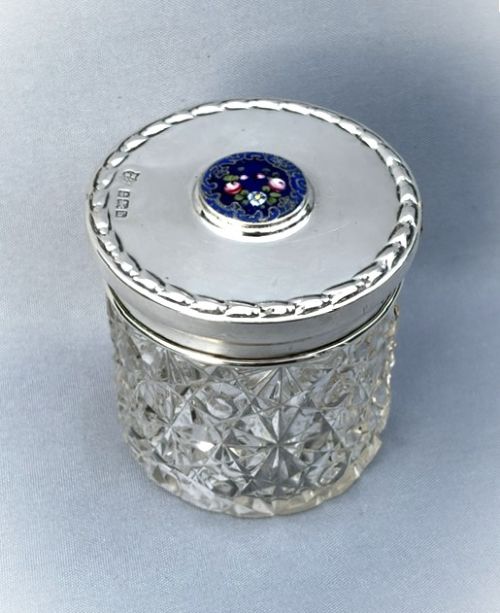
Most pieces encountered on this page belong to the early twentieth century, particularly the 1920s and 1930s, featuring fitted sterling silver lids above glass bases. The colour is often applied in translucent guilloche patterns over engine-turned metal.
Forms range from small rouge pots and pill boxes to large cut glass dressing table jars and cruet sets. Makers worked in Birmingham and London, applying blue, pink, and multi-coloured enamel directly to silver mounts.
Materials and construction
Silversmiths formed the mounts and lids from sterling silver, frequently hallmarked in Birmingham or London during the early twentieth century. Glass bases were often heavy, cut, or etched to catch the light beneath the decorated top.
Enamel work involved fusing powdered glass to metal under high heat. Many pieces utilise guilloche technique, where mechanical engraving beneath translucent enamel creates geometric radiating patterns.
Silver and Enamel Pot Retail Price Guide 2026
Typical asking prices for silver and enamel pot among the pieces listed under this phrase on Sellingantiques today, from the lower quarter to the upper quarter. They describe what is for sale here now, not the wider market.
Some pots were made specifically to hold rouge for the cheeks, proving that vanity has kept silversmiths busy for centuries.
Assessing quality and execution
Quality rests on the crispness of the engine-turning beneath the enamel and the depth of the translucent colour. Fine execution shows an even, smooth surface without pitting or cloudiness in the glass layer.
The weight of the sterling silver mount and the precision of the lid closure distinguish superior workshops. Cut glass bases with deep, sharp facets reflect greater skill than plain moulded alternatives.
Henry Clifford Davis
The Silver and Enamel Pot Glossary
- Guilloche enamel
- Enamel applied over a metal surface that has been mechanically engraved with intricate geometric patterns. This technique allows light to pass through the coloured glass and reflect off the worked metal below.
- Sterling silver
- An alloy of silver containing ninety-two point five percent pure silver and seven point five percent other metals, usually copper. It provides the durable structure for the lids and collars of these pots.
- Dressing table jar
- A container designed to hold cosmetics, pins, or trinkets on a vanity or dressing table. They typically combine a heavy glass body with a decorative metal lid.
- Cranberry glass
- A rich red glass created by adding gold chloride to the molten batch during manufacture. It appears in lidded boxes and cruet sets.
Silver and Enamel Pot: Frequently Asked Questions
What were silver and enamel pots used for?
These vessels served practical roles on dressing tables and desks, holding cosmetics, powder, pins, trinkets, or ink. Lidded jars kept everyday items protected while adding bright colour to the room.
Over time, their function shifted from daily dressing accessories to decorative display items collected for their metalwork and enamel colours.
How do I date a silver and enamel pot?
English pieces usually carry sterling silver hallmarks stamped on the mount or lid. These assay marks reveal the specific year of manufacture and the town where the silver was tested.
Stylistic details also help indicate the period, such as the geometric lines of Art Deco items from the 1920s and 1930s compared to softer floral Edwardian designs.
How should I clean my silver and enamel pot?
The silver mount can be polished with a soft cloth designed for precious metals, taking care to avoid touching the enamel surface. Enamel is essentially glass and requires gentle wiping with a damp cloth rather than abrasive dips.
Harsh chemical cleaners and prolonged soaking in water will damage both the glass enamel and the fitted metal components.
What is guilloche enamel?
Guilloche is a decorative technique where a machine engraves precise geometric patterns into a metal base before translucent enamel is applied. The underlying pattern shines through the coloured glass to create depth and movement.
This method was especially popular during the early twentieth century for dressing table sets and small trinket boxes.