




Silk Turkish Rug
A silk turkish rug brings tactile luxury and centuries of weaving heritage into a room, offering intricate designs hand-knotted in fine fibres.
Silk Turkish Rug
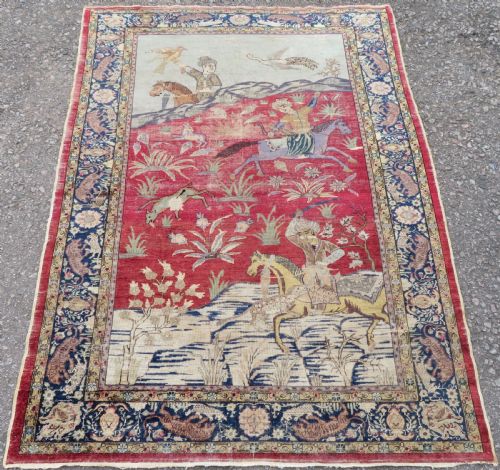
A silk turkish rug represents a sophisticated tradition of textile craftsmanship originating from Anatolia and major weaving centres like Kayseri and Hereke. These pieces span centuries of production, encompassing formal prayer designs, pictorial hunting scenes, and repeat floral motifs.
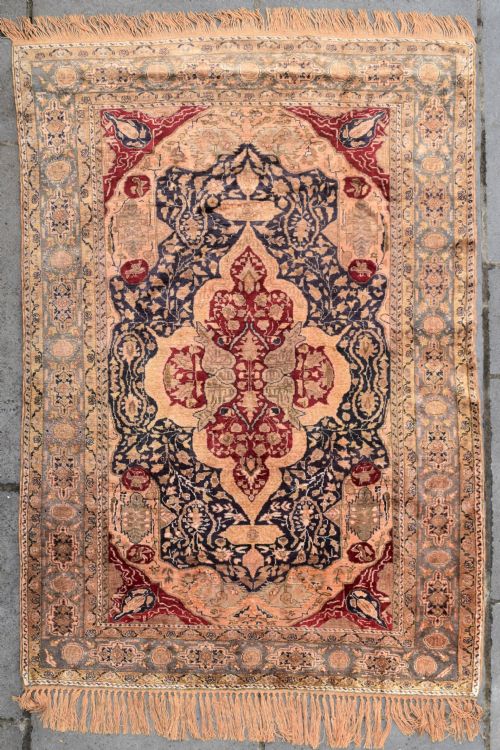
The version most commonly encountered on this page is the Kayseri silk or art silk rug dating from the late nineteenth or early twentieth century. Buyers will also find specialised formats such as prayer rugs, runners, and framed miniature works.
How they were made
Weavers constructed these textiles primarily using silk, floss silk, or mercerised cotton piled onto cotton or linen foundations. Certain examples incorporate metallic thread to accentuate intricate details within the composition.
Techniques relied on meticulous hand-knotting to achieve dense piles and precise pictorial clarity. Artisans also produced embroidered fragments utilising specialised needlework on textile grounds.
Silk Turkish Rug Retail Price Guide 2026
Typical asking prices for silk turkish rug among the pieces listed under this phrase on Sellingantiques today, from the lower quarter to the upper quarter. They describe what is for sale here now, not the wider market.
Several rugs depict lively hunting scenes complete with tiny birds and animals hiding amongst the floral foliage.
What varies in quality
Knot density and fibre selection dictate the refinement of the finished surface. Pure silk examples executed with tight structural foundations display superior drape and colour retention compared to later art silk iterations.
The complexity of the design, whether a figural hunting scene or a detailed prayer architectural niche, reflects the skill required by the weaver. Workshop signatures and framed miniature formats indicate dedicated artistic provenance.
Hereke·Kayseri
The Silk Turkish Rug Glossary
- Prayer rug
- A textile featuring a Mihrab or arch design indicating the direction of prayer. These pieces often hang on walls or serve as focused floor coverings.
- Art silk
- Viscose or mercerised cotton utilised to imitate the lustre of genuine silk. It provides a similar sheen at a different material grade.
- Kayseri
- A prominent Turkish city renowned for producing finely knotted carpets and rugs. It appears frequently as the origin for pictorial and floral compositions.
- Hereke
- A historic town famous for manufacturing palace-quality silk carpets. Pieces from this origin often feature extremely fine knot counts.
- Saf
- A multi-niche prayer rug designed to accommodate multiple worshippers in a single continuous row. These textile formats incorporate repeating architectural arches.
Silk Turkish Rug: Frequently Asked Questions
How do I care for a silk rug?
Keep these textiles away from direct sunlight to preserve the dye saturation and fibre integrity. Professional cleaning suited for delicate pile work is essential.
Vacuum with care using a suction-only attachment without a rotating brush roll. This prevents snagging the fine silk or cotton foundation threads.
Can I use these rugs on the floor?
Many examples function well as floor coverings in low-traffic areas of a home. Their delicate pile responds best to gentle placement away from heavy foot traffic.
Alternatively, smaller formats and pictorial fragments suit wall display. Hanging distributes no physical wear across the textile surface.
What is the difference between silk and art silk?
Genuine silk comes from the cocoons of silkworms, offering natural protein fibres with high tensile strength and subtle lustre. It represents traditional high-end production.
Art silk uses regenerated cellulose materials like mercerised cotton or viscose. These substitutes mimic the visual sheen of protein fibres while differing in material composition.
How do I identify a prayer design?
A prayer composition centres on an arch motif known as a mihrab. This architectural outline directs the visual flow of the rug toward a single focal point.
Such layouts often incorporate floral motifs, lamps, or columns within the niche. They reflect specific devotional functions distinct from all-over repeat fields.