



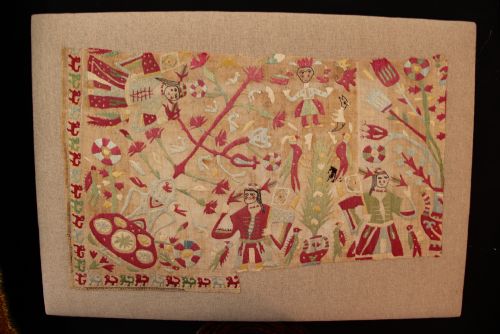
Silk Needlework Wall Panel
A silk needlework wall panel brings texture and narrative to a room, ranging from English pastoral scenes to Central Asian Suzanis.
Silk Needlework Wall Panel
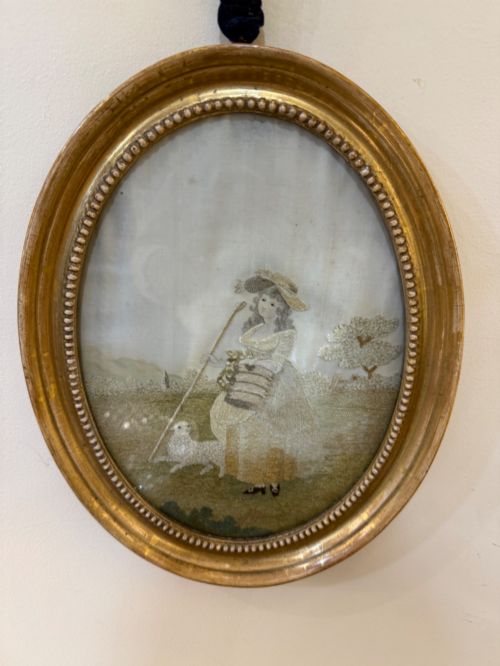
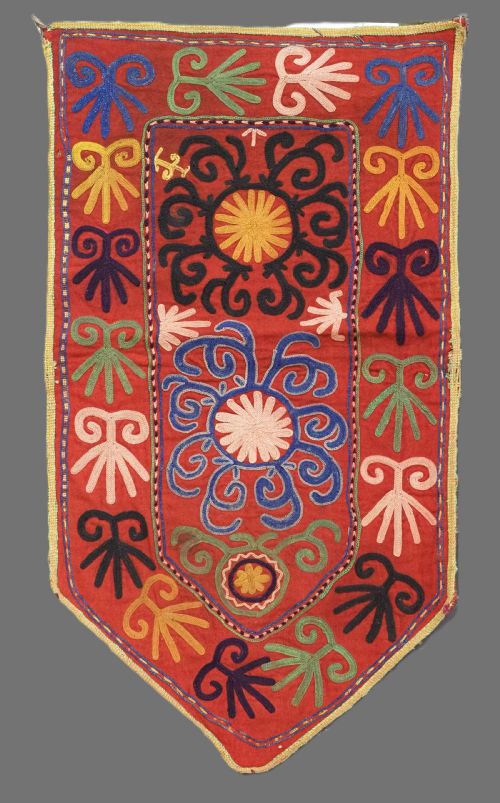
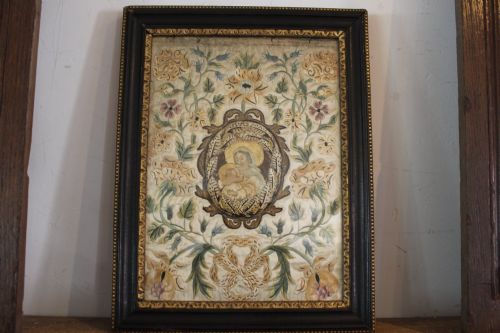
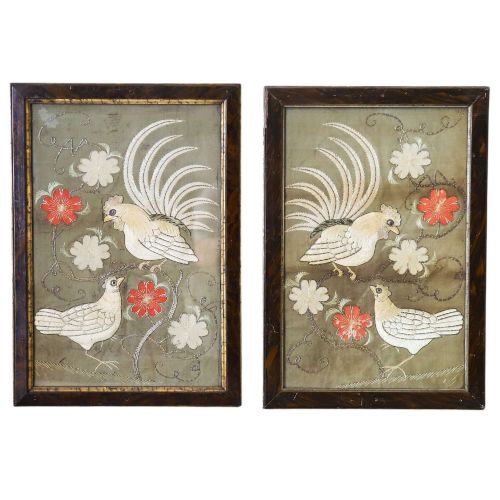
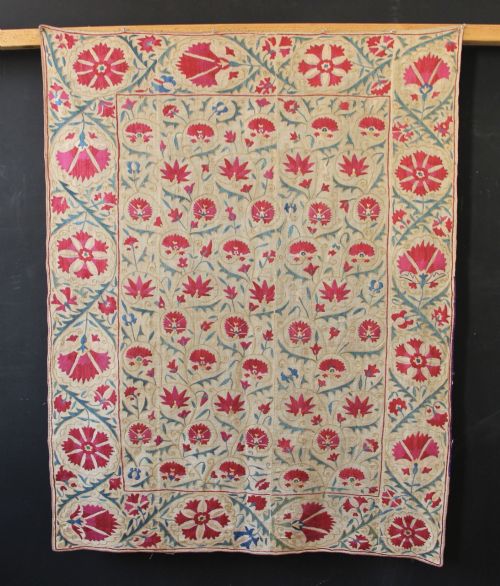
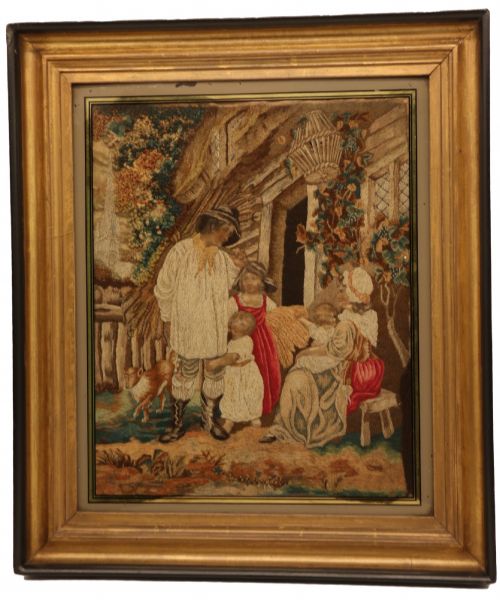
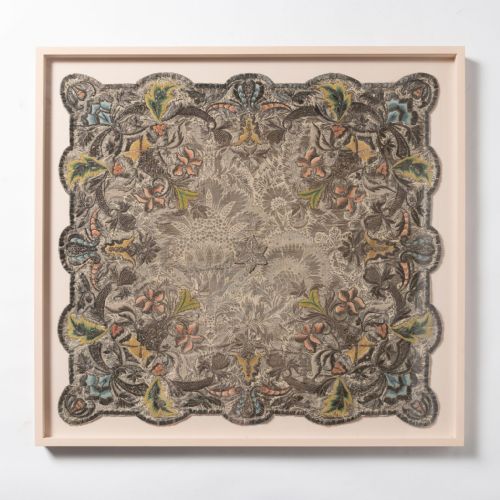
A silk needlework wall panel encompasses framed pictures, samplers, and large embroidered hangings originating from English, French, Greek, Persian, and Central Asian traditions. When searching for this phrase, a buyer encounters everything from seventeenth-century Stuart stumpwork and Georgian pastoral pictures to nineteenth-century Suzanis from Uzbekistan.
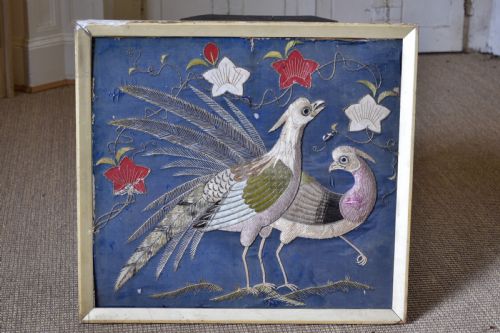
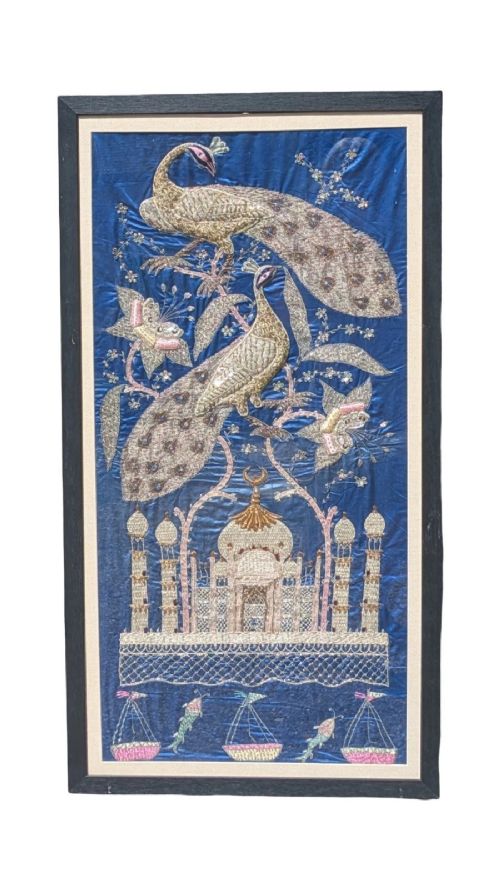
The format varies from small mounted needlework pictures depicting birds and figures to large tribal embroideries and ceremonial covers intended for display. Many pieces combine fine silk thread with wool, cotton, or metallic thread upon linen, felt, or silk grounds.
Examples span several centuries, with eighteenth-century framed panels and nineteenth-century Chinese garden bird embroideries appearing frequently alongside Bokhara and Lakai Suzanis.
How they were made
Maker execution relies on hand-stitching with silk floss and metallic thread onto ground materials such as linen, cotton, wool, and felt. Applique work is common in Persian Rasht embroideries, where coloured silks are applied directly to a felt background.
What varies in quality
Quality rests upon the fineness of the stitching, the complexity of the design, and the preservation of the delicate silk threads. Tightly worked Suzanis and intricate seventeenth-century stumpwork demonstrate high levels of needlecraft skill.
The integrity of the ground fabric and the stability of the mounted panel dictate the overall condition. Pieces retaining vibrant natural dyes and original frames or backing show superior preservation over time.
The Silk Needlework Wall Panel Glossary
- Suzani
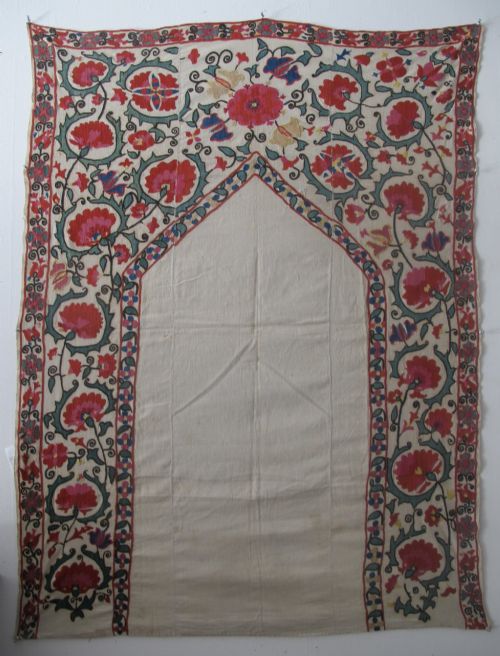
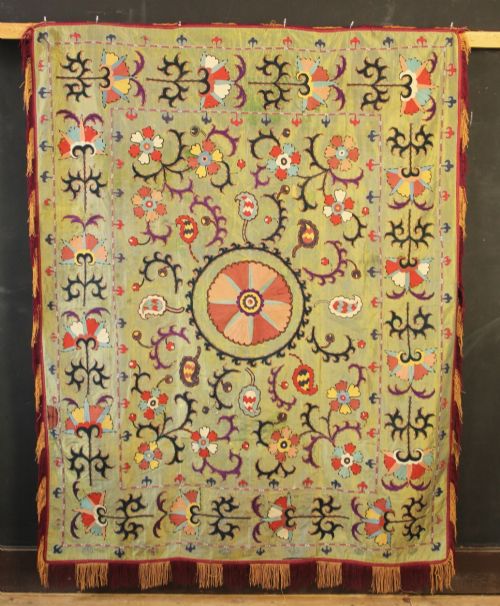
- A type of embroidered and decorative tribal textile made in Tajikistan, Uzbekistan, and other Central Asian nations. These large panels typically feature floral and architectural motifs worked in silk on a cotton or linen ground.
- Stumpwork
- A raised embroidery style popular in seventeenth-century England that utilises padded elements, wire foundations, and threads to create a three-dimensional effect. Panels often depict historical or biblical scenes with figures.
- Sampler
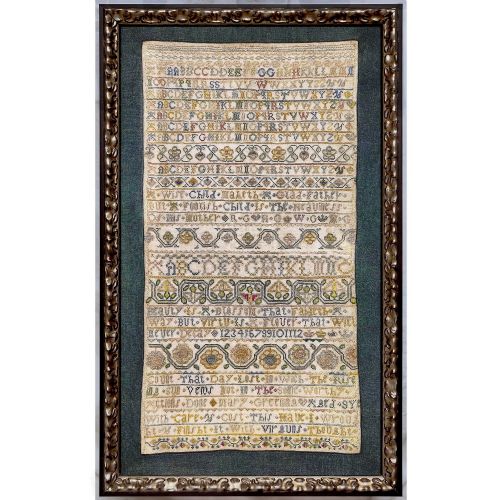
- A piece of needlework produced by a maker to demonstrate proficiency in various stitches and alphabets. Early examples often function as record pieces bearing names and dates.
- Rasht embroidery
- A traditional Persian textile technique involving inlaid felt and silk applique work. These panels typically display central floral medallions and geometric borders.
- Floss silk
- Untwisted or lightly twisted silk yarn used in embroidery to produce a smooth, glossy surface. It allows for subtle shading in pictorial needlework.
Silk Needlework Wall Panel: Frequently Asked Questions
How should I hang a silk needlework wall panel?
Mount the panel away from direct sunlight to protect the delicate silk threads and natural dyes from fading over time.
Ensure the piece is supported evenly behind glass or secured to a padded backing board to prevent the fabric from sagging under its own weight.
What is the difference between a Suzani and a needlework picture?
A Suzani is a large, traditionally embroidered textile from Central Asia featuring bold floral and geometric patterns intended as wall hangings or covers.
In contrast, a needlework picture is typically a smaller European framed artwork depicting pastoral scenes, figures, or botanical subjects.
Can I clean an antique embroidered panel?
Cleaning antique textiles requires specialist conservation knowledge because old silk threads and natural dyes are extremely fragile and prone to running.
Surface dust should only be gently removed by a professional restorer using specialised vacuum techniques rather than water or chemical solvents.
How do I identify the period of an embroidery panel?
Dating relies upon examining the materials, the style of the stitching, the framing methods, and the specific motifs characteristic of periods like the Georgian era or the seventeenth century.
Comparing regional characteristics, such as the felt applique of Persian Rasht work or the designs of Uzbek Suzanis, helps narrow down the origin and age.