



Signed Wooden Figure
A signed wooden figure brings carved character to a room, ranging from small netsuke to large trade signs.
Signed Wooden Figure
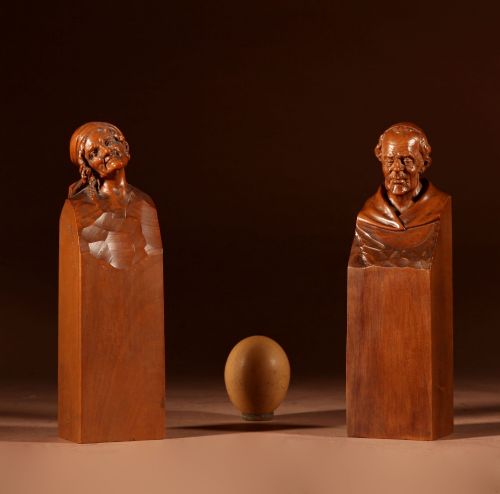
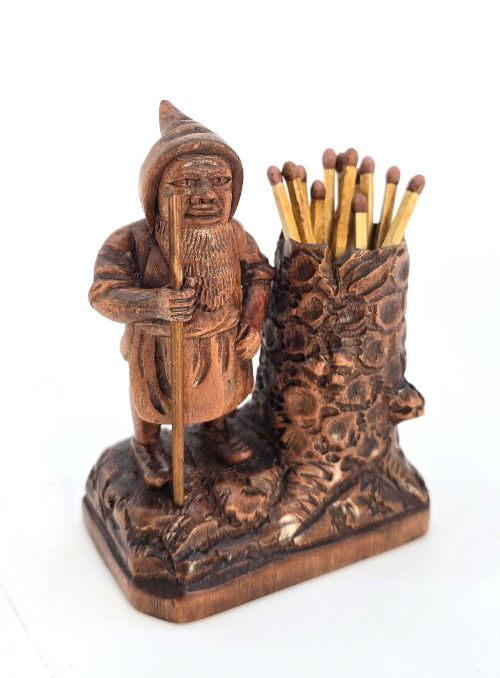
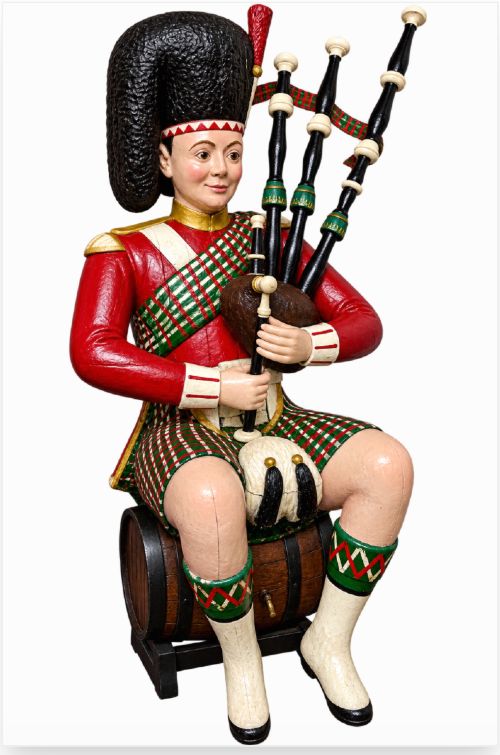
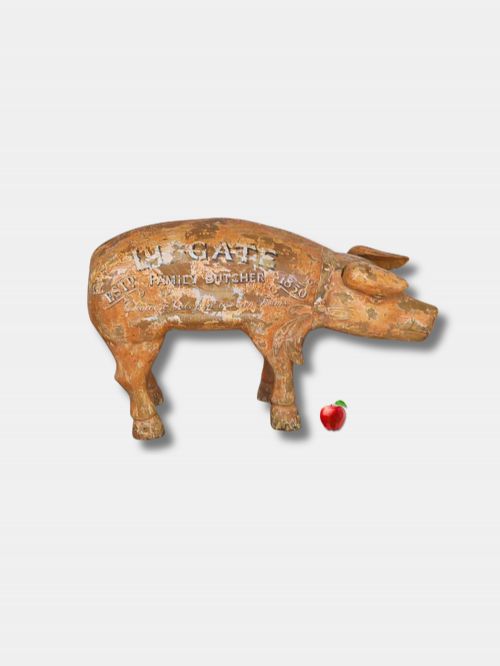
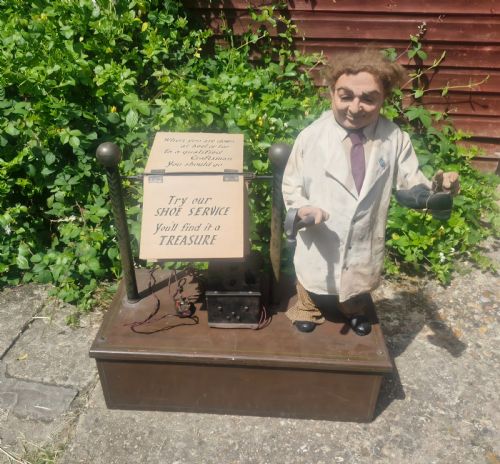
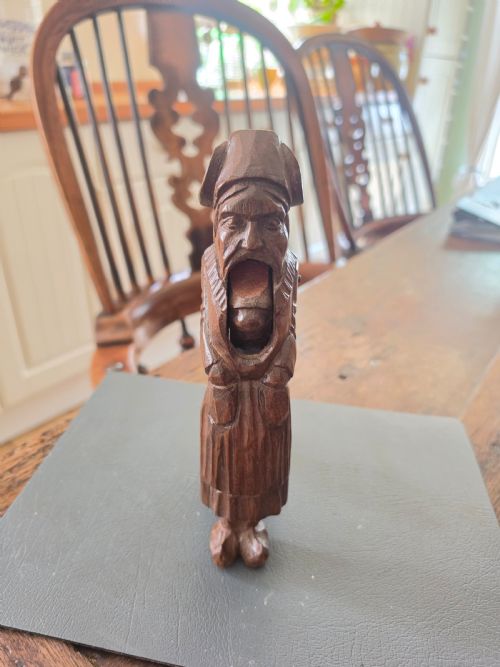
A signed wooden figure encompasses everything from small Japanese netsuke to life-size trade signs and shop display models. When searching for a signed wooden figure, collectors encounter diverse forms including match holders, tobacco advertising pieces, and animal carvings.
The pieces span several centuries, with examples originating from the eighteenth, nineteenth, and early twentieth centuries. Regional origins and styles vary widely, taking in Black Forest, Tyrolean, French, and English traditions alongside Japanese Meiji period works.
How they were made
Carvers utilised various timbers suited to their scale, employing boxwood and pear wood for intricate miniature sculptures and limewood, oak, or solid wood for larger trade figures. Many pieces incorporate polychrome paint, gesso, or simple surface pigmentation to enhance details.
Makers shaped these materials with hand tools, creating textures from smooth polished surfaces to rustic folk art finishes. Iron elements occasionally appear as functional components, such as match strikers or structural supports within the larger shop displays.
Signed Wooden Figure Retail Price Guide 2026
Typical asking prices for signed wooden figure among the pieces listed under this phrase on Sellingantiques today, from the lower quarter to the upper quarter. They describe what is for sale here now, not the wider market.
Materials documented across the pieces include boxwood, limewood, oak, pear wood, paint, gesso, and iron.
What varies in quality
The definition of the carving separates standard commercial work from master craftsmanship, particularly visible in facial expressions and anatomical proportions. Finer pieces demonstrate confident handling of the grain and secure attachment of signatures or inscriptions.
Surface preservation dictates the visual impact of older items, distinguishing untouched original paint from later overpainting. The clarity of the maker's signature or workshop mark adds documentary value to the carved object.
Tomochika·Masayuki
The Signed Wooden Figure Glossary
- Netsuke
- A small carved toggle traditionally used in Japan to secure small pouches to the kimono sash. These miniature sculptures often feature signatures of master carvers on the underside.
- Trade sign
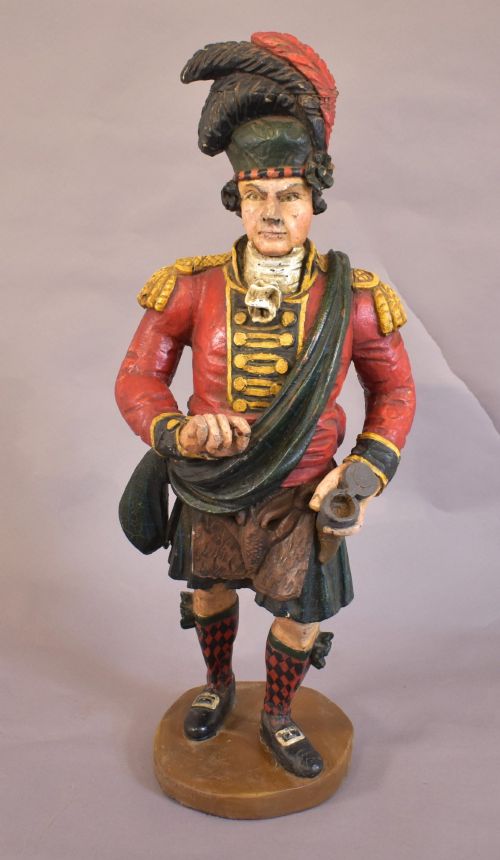
- A large carved wooden figure or board displayed outside a shop to advertise goods or services. Examples include figures of highlanders, butchers' signs, and cigar store figures.
- Polychrome
- Painted in several colours. This surface treatment appears on many folk art figures and shop displays to provide realistic details.
- Gesso
- A plaster-based mixture applied to wood surfaces to prepare them for painting or gilding. It provides a smooth ground for fine decorative finishes.
- Black Forest carving
- Woodcarving originating from the Brienz region of Switzerland, known for realistic animal figures and rustic household objects produced around nineteen hundred.
Signed Wooden Figure: Frequently Asked Questions
What is a signed wooden figure?
A signed wooden figure is a carved sculpture bearing the mark, signature, or initials of its maker or workshop. These items range from small netsuke and match holders to large trade figures and shop displays.
They reflect diverse cultural traditions, including Japanese Meiji period carvings, European folk art, and commercial advertising pieces from the eighteenth to the twentieth centuries.
How were trade figures used?
Trade figures stood outside or inside nineteenth-century shops to advertise specific businesses and attract customers passing on the street. Common examples include highlanders for tobacconists and butchers' signs.
Over time, these functional advertising displays transitioned into decorative objects valued for their rustic charm and craftsmanship.
What woods are common?
Carvers used a variety of timbers depending on the object's scale and regional tradition. Miniature carvings often utilise dense boxwood or pear wood to capture fine facial details and flowing drapery.
Larger shop displays and trade signs typically employ limewood, oak, or solid wood blocks to withstand everyday handling and environmental changes.
How do I date these figures?
Dating relies on stylistic clues, costume details, material preparation, and known operating periods of specific carvers or workshops. Nineteenth-century and Edwardian pieces often display distinct decorative traits linked to regional folk art movements.
Signatures, stamps, and inscribed dates provide direct chronological markers, though these must be evaluated alongside the overall construction and wear.