




Signed Rural Scene Painting
A signed rural scene painting brings the quiet charm of the countryside indoors through authentic brushwork and personal artistic touch.
Signed Rural Scene Painting
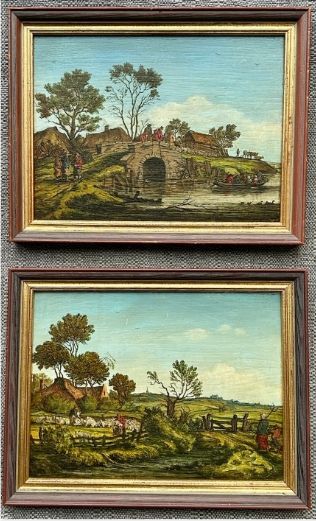
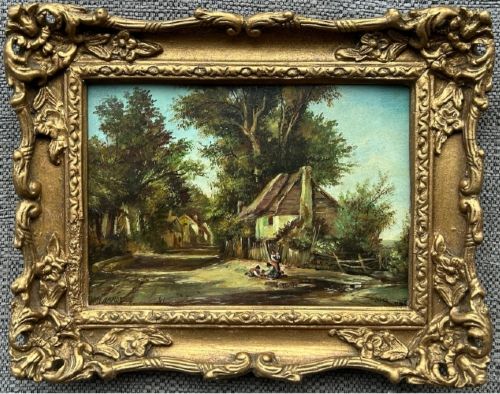
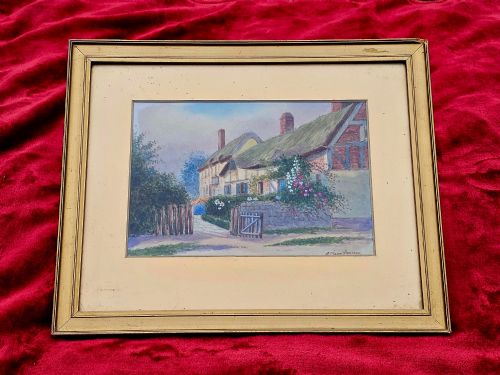
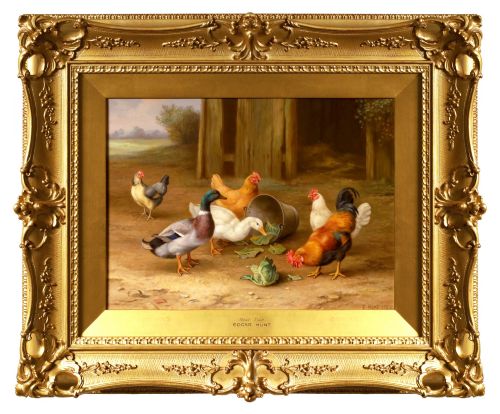
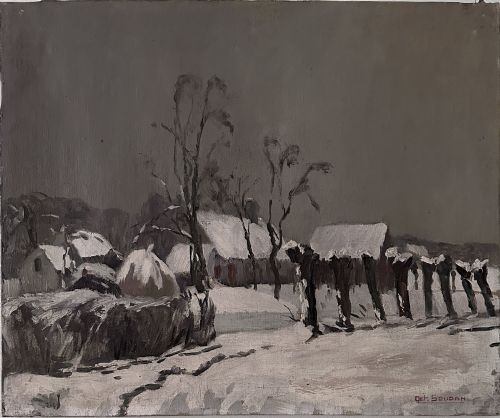
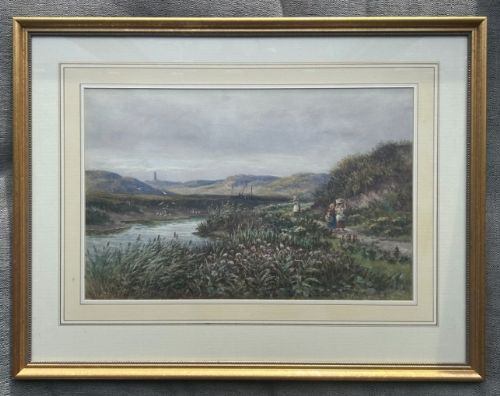
A signed rural scene painting captures agrarian life, cottages, rivers, and farmland created by named artists across the nineteenth and twentieth centuries. These works range from Victorian watercolours of haymaking to mid-century oil paintings of European courtyards and Yorkshire dales.
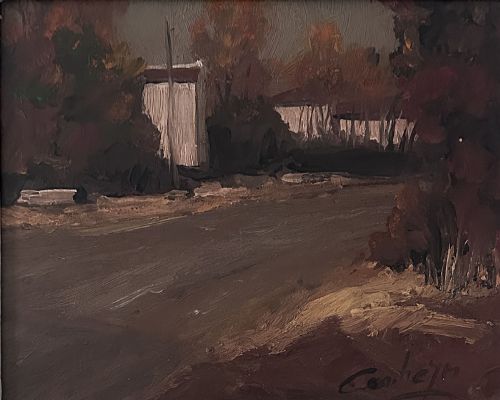
Buyers encounter oil on canvas, oil on panel, and watercolour mediums bearing legible signatures or monograms from periods spanning early Victorian traditions through to post-war impressionism. The predominant subjects celebrate traditional country pursuits, livestock, and harvest landscapes.
Works appear in formats varying from intimate watercolours on paper to large framed canvases. Each piece records a distinct regional topography, preserving historical views of British and European rural life.
Materials and techniques
Artists applied oil paint and watercolour onto stretched canvas, wooden panels, board, and paper supports using traditional brushes. Oil formulations allowed for layered impasto and rich textures, whilst watercolours utilised fluid washes on paper to capture natural light.
Many works incorporate giltwood frames that protect the perimeter of the canvas or paper while complementing the palette of the composition. Support panels were frequently prepared with gesso grounds before painting to stabilise the surface.
Listings feature works spanning the nineteenth century through the mid-twentieth century, utilising oil, watercolour, and mixed media on canvas, board, and paper.
Assessing quality
Quality rests upon the confidence of the brushwork, the handling of natural light, and the precision of the composition. Stronger examples display depth in atmospheric effects and careful rendering of figures, animals, and foliage.
The prominence and historical significance of the artist further define the standing of a piece. Works associated with documented schools or exhibited painters command closer attention for their technical execution.
W Klombeck·William Howard Hardy·A Marie Parsons·Edgar Hunt·Thomas Sidney Cooper·Herbert Royle·Robert John Hammond·Colin H Greenwood·Henry Bailey·R Palnay·J C Grey·William Joseph Boyes·William Manners·Julius Caesar Ibbetson·John Frederic Greenwood·Thomas Pyne·Thomas Nicholson Tyndale·Antoine Bouvard·William Greaves·Stephanie Cooper·George Graham·Horace Augustus Mummery
The Signed Rural Scene Painting Glossary
- Oil on Canvas
- Pigment mixed with drying oil applied to a woven fabric stretched across a wooden frame. This medium permits rich colour blending and textured surface application.
- Watercolour
- Paint consisting of colourants suspended in a water-soluble binder applied to paper. It creates transparent washes that rely on the white of the paper for luminosity.
- Giltwood
- Wood carved and coated with a thin layer of gold leaf or metallic powder. It provides traditional framing for fine art pieces.
- Impressionism
- A style of painting emphasising spontaneous brushstrokes and the depiction of light in its changing qualities. It emerged strongly in late nineteenth and early twentieth century works.
- Provenance
- The documented history of ownership of a work of art. It establishes authenticity and traces the timeline of the piece.
Signed Rural Scene Painting: Frequently Asked Questions
How do I date a rural painting?
Dating relies on stylistic clues, framing methods, and the canvas preparation used by the artist. Signatures can often be cross-referenced with artist registries from the nineteenth and twentieth centuries.
Changes in palette and subject matter also help narrow the period of creation. Mid-century works often show freer brushwork compared to strict Victorian academic styles.
Where should I hang these paintings?
These works suit traditional living spaces, studies, or hallways where natural light can illuminate the brushwork. Keeping them away from direct sunlight protects oil pigments and paper supports from fading.
Pairing them with period wooden furniture enhances their traditional rural atmosphere. Ensure wall fixings securely support the weight of framed canvases.
What is the difference between oil and watercolour?
Oils use pigment bound in slow-drying oils, allowing rich textures and deep colour saturation on canvas or panel. Watercolours use water-soluble binders on paper, creating luminous and delicate translucent effects.
Watercolours require glass framing for protection against moisture and dust. Oils remain open to the air on canvas but benefit from stable room humidity.
How do I care for antique paintings?
Maintain stable indoor temperatures and moderate humidity to prevent warping in wooden panels and canvas stretcher bars. Dust frames gently with a dry, soft cloth without touching the painted surface.
Avoid using chemical cleaners on canvases or watercolours. Professional conservators should handle any structural repairs or deep cleaning.