




Signed Dial Clock
A signed dial clock is a timekeeper bearing the maker's name on its face, offering both domestic utility and historic provenance.
Signed Dial Clock
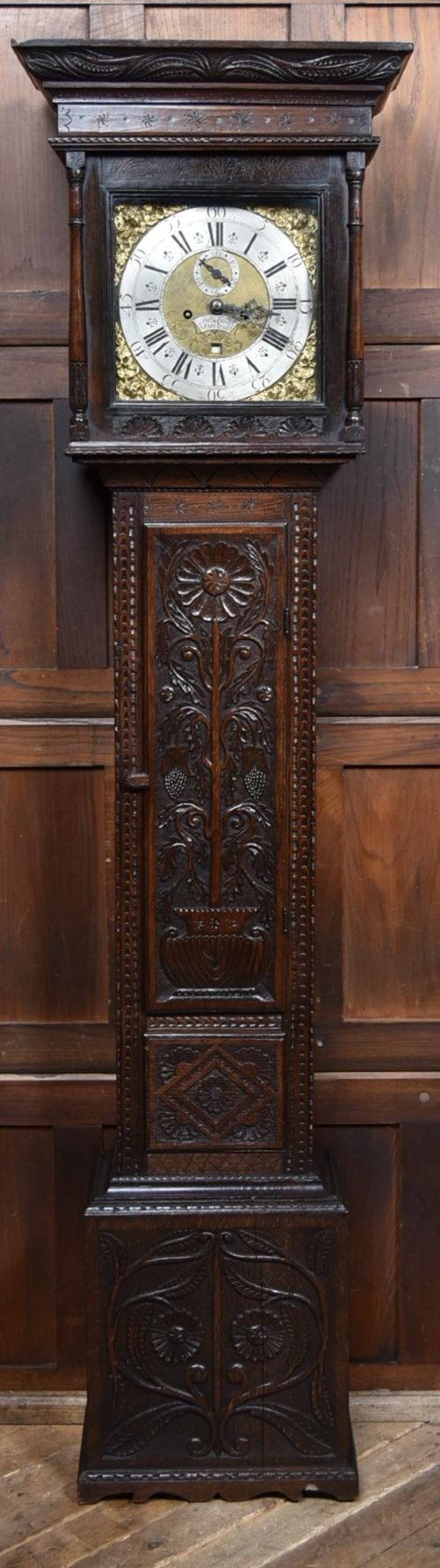
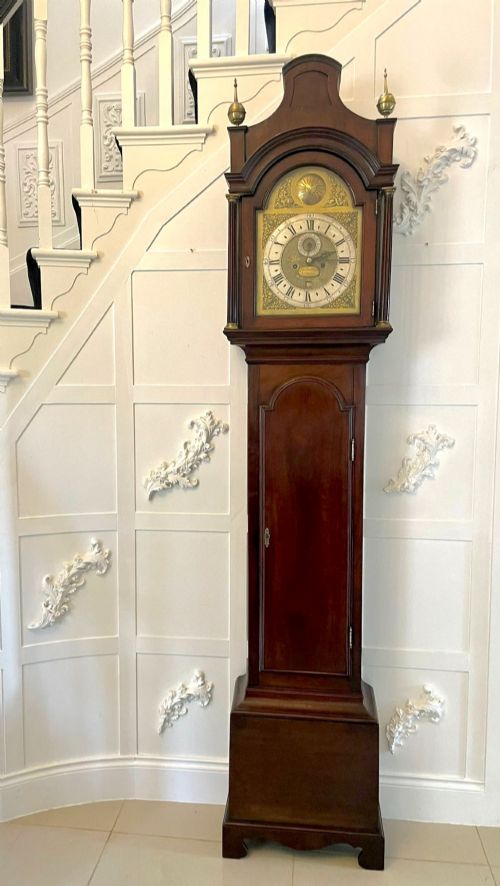
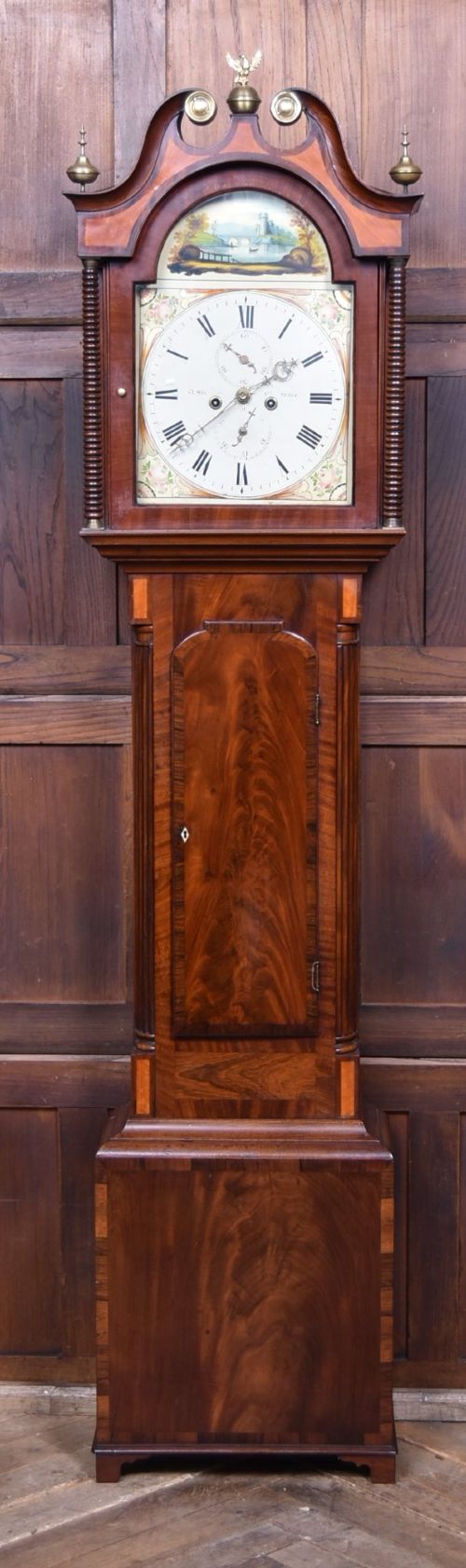
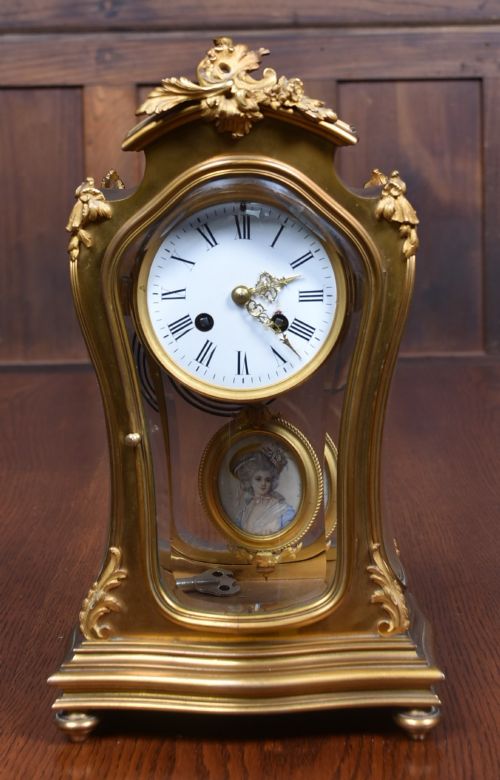
A signed dial clock displays the signature of the maker directly on the face, marking it out from anonymous production pieces. These timepieces appear predominantly as tall longcase clocks housed in mahogany or oak cases, alongside wall-mounted drum dial clocks and French mantel pieces.
The selections span from the late seventeenth century through the Georgian and Victorian eras up to the nineteen-twenties. Longcase examples dominate the offerings, built in regional workshops across England and Scotland by makers such as Charles Shuckburgh and D. Straiton.
Buyers encounter variations ranging from provincial oak grandfather clocks to refined London longcase pieces with inlaid mahogany and painted iron dials. French gilt bronze and rosewood drum dial clocks provide alternative desk or wall formats from the nineteenth century.
Materials and construction
Clockmakers built the structural cases using dense hardwoods like mahogany, oak, and rosewood, frequently incorporating marquetry or fine inlay work. These timber enclosures protected the intricate brass and iron movements housed within.
Faces and dials utilised materials such as painted iron, enamel, and brass, upon which the maker inscribed their signature. Glazed doors and bezels in glass protected these delicate dial surfaces while allowing a clear view of the hands.
Signed Dial Clock Retail Price Guide 2026
Typical asking prices for signed dial clock among the pieces listed under this phrase on Sellingantiques today, from the lower quarter to the upper quarter. They describe what is for sale here now, not the wider market.
Measures of quality
Superior quality manifests in the crispness of the dial engraving and the fidelity of the maker's signature. London workshops and skilled provincial makers achieved a higher standard of case timber selection and movement finishing than standard domestic models.
Charles Shuckburgh·D. Straiton·Jn° Smith·Tait·Rodier·John Denbigh·L. Morris·John Wylde·Henry Smith·Pearson and Price·Henry Massy
The Signed Dial Clock Glossary
- Dial
- The visible face of the clock where the hours and minutes are marked. It frequently bears the signature of the maker and the location of the workshop.
- Longcase clock
- A tall freestanding weight-driven timekeeper housed in a wooden case, commonly known as a grandfather clock. These instruments feature visible pendulums and weights inside the trunk.
- Fusee
- A conical pulley used in clock movements to maintain an even pull from the mainspring as it winds down. This mechanism ensures consistent timekeeping accuracy across the power reserve.
- Drum dial clock
- A timepiece featuring a circular drum-shaped case, often designed to hang on a wall or sit upon a surface. Rosewood and gilt bronze commonly form the housings for these signed dials.
- Penny moon
- A mechanical display on a clock dial tracking the phases of the lunar cycle. It rotates behind an aperture to show the waxing and waning of the moon.
Signed Dial Clock: Frequently Asked Questions
What is a signed dial clock?
A signed dial clock is any timekeeper that displays the maker's name or workshop on the face. These range from tall mahogany longcase clocks to wall-mounted drum dial pieces.
They represent the individual craftsmanship of horologists working in Britain and France across the eighteenth and nineteenth centuries.
How do I date an oak longcase clock?
Dating involves examining the style of the wooden case, the materials used for the dial, and the formatting of the maker's signature. Eighteenth-century examples often feature simple oak cabinetry and brass dials.
Later nineteenth-century pieces incorporate painted iron faces and distinct regional cabinet styles from makers in Scotland and England.
Where were drum dial clocks used?
Drum dial clocks were utilised in domestic rooms where a compact wall-mounted or desk timepiece was required. Their circular rosewood or gilt brass housings suited Victorian interiors.
Makers such as L. Morris and Pearson and Price produced these signed drum formats during the middle and late nineteenth century.
What does a penny moon display do?
A penny moon display tracks the lunar month across a painted disc on the clock face. It rotates gradually to show whether the moon is new, half, or full.
This complication appears on eighteenth-century longcase clocks alongside the signature of the maker.