




Signed Architectural Artwork
Signed architectural artwork brings buildings and landscape studies into focus through the direct hand of the maker.
Signed Architectural Artwork
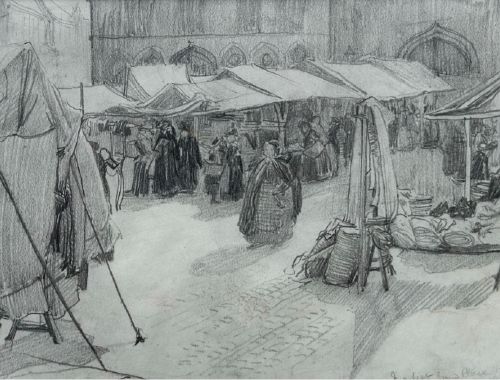
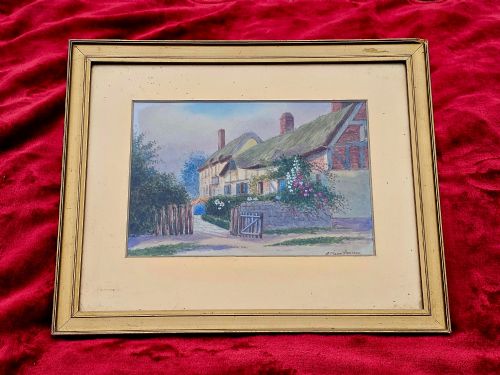
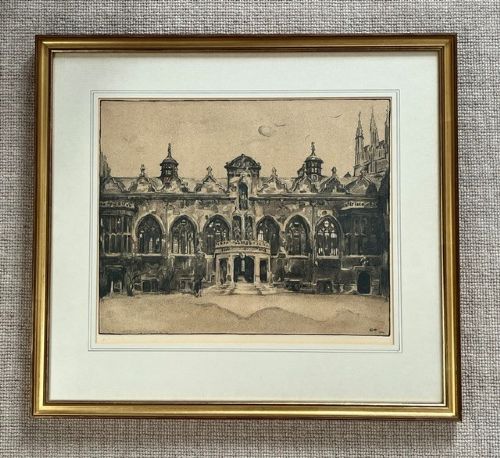
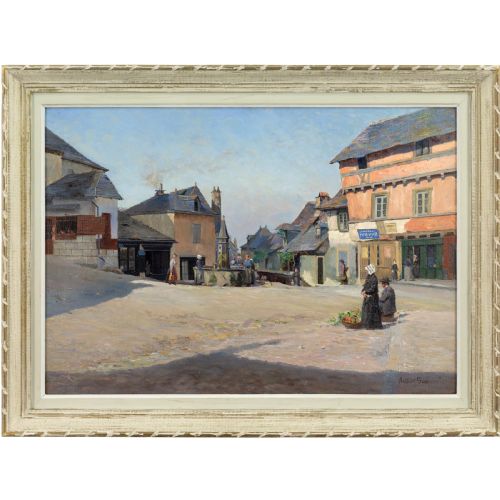
When you search for signed architectural artwork, you encounter framed watercolours, pencil drawings, oil paintings, and etchings that record specific buildings, streets, and institutions. These pieces capture townscapes, castles, bridges, and religious sites across various periods.
The selections available range from early nineteenth-century pencil sketches of gaols and studies of Gothic art to mid-century industrial constructivist factory scenes and townscape watercolours. You will frequently find works produced between the Victorian era and the mid-twentieth century.
Makers recorded in these listings include named artists and draughtsmen who signed their views of locations spanning from British universities and cathedrals to European markets and Bavarian castles.
Materials and techniques
Works in this category rely primarily on paper and canvas as supports, marked through the application of watercolour, ink, oil paint, graphite, or drypoint etching techniques. Artists utilised wash methods for atmospheric temple scenes and fine pencil lines for precise building studies.
Framed presentation is standard, protecting fragile paper supports such as antique watercolours and signed prints from environmental degradation while securing the canvas or board used for oil paintings.
Signed Architectural Artwork Retail Price Guide 2026
Typical asking prices for signed architectural artwork among the pieces listed under this phrase on Sellingantiques today, from the lower quarter to the upper quarter. They describe what is for sale here now, not the wider market.
Techniques recorded in the evidence span oil on canvas, pencil drawings, drypoint etchings, and delicate watercolour washes.
Distinctions in quality
Quality rests upon the precision of the draughtsmanship and the clarity with which the structural details of the buildings are rendered. Top-tier pieces demonstrate confident handling of perspective and light, whether executed in rapid pencil or layered oil.
The strength of the artist's signature and the historical context of the subject matter elevate individual works. Strong examples maintain vibrancy in their pigments and integrity in their paper or canvas supports.
Muriel Metcalfe·Henry Percy Huggill·Sir William Nicholson·A. Marie Parsons·Arthur Gué·Stanley Orchart·E A Minardo·A.A. Finch·Karl Herrle·Edith E Caswall·John Sowden·Sir Francis Leggatt Chantrey·R.P. Phillimore·Edgar J. Maybery·Fred Lawson·Frank Greenwood·A Gilbert·CB Prescott
The Signed Architectural Artwork Glossary
- Drypoint etching
- A printmaking process where an image is scratched directly into a metal plate with a hard needle, creating a raised burr that holds ink for velvety lines.
- Watercolour
- A paint consisting of pigment suspended in a water-soluble vehicle, applied to paper to achieve translucent washes of colour.
- Constructivism
- An artistic and architectural movement that originated in Russia, emphasising industrial materials and geometric structures.
- Gothic Revival
- An architectural style that began in the mid-eighteenth century and applied medieval Gothic forms to newer structures and artistic studies.
- Lithograph
- A planographic print method based on the chemical repulsion of oil and water, enabling multiple reproductions of a drawn image.
Signed Architectural Artwork: Frequently Asked Questions
What subjects appear in these artworks?
The pieces depict specific structures including bridges, cathedrals, colleges, castles, and industrial factories.
Artists recorded street scenes, markets, and historical buildings across Britain and continental Europe.
How are these pieces signed?
Makers applied their names directly onto the surface using pencil, ink, or paint, often alongside dates or location notes.
Signatures confirm the hand of the artist who completed the architectural study or landscape view.
Which periods do the works represent?
The selections span from the nineteenth century through the Edwardian era and into the mid-twentieth century.
Styles range from Gothic Revival and Victorian academic work to Impressionism, Post-Impressionism, and Mid-Century Modern Constructivism.
How should I display framed paper artwork?
Framed paper watercolours, drawings, and prints require placement away from direct sunlight to prevent fading of the pigments.
Stable indoor humidity protects both the paper support and the surrounding wooden or glazed frame.