

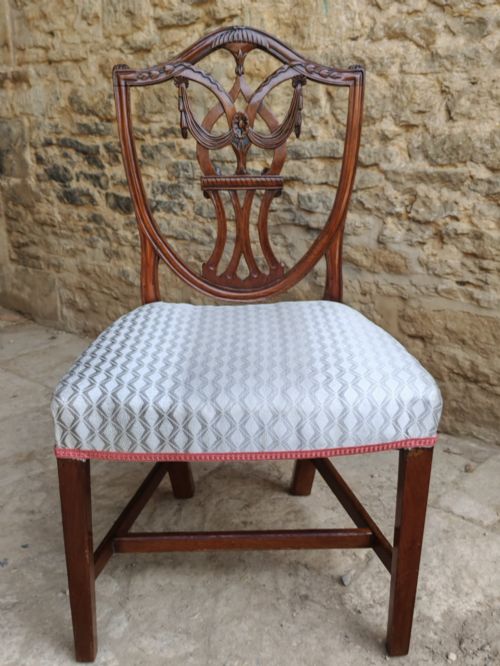
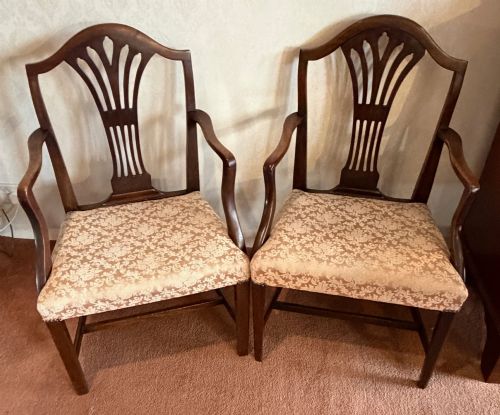


Shield Back Desk Chair
A shield back desk chair brings unmistakable Georgian elegance to a study, uniting a distinctive carved silhouette with practical seating.
Shield Back Desk Chair
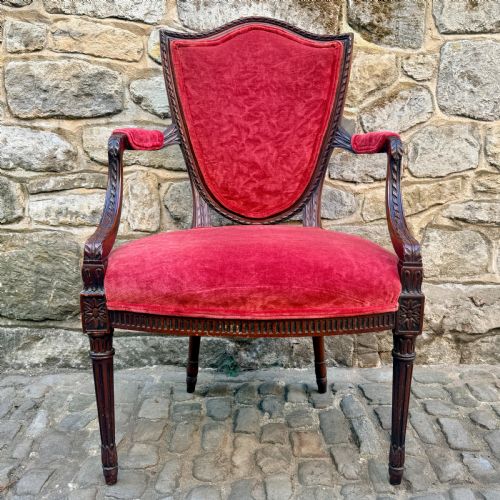
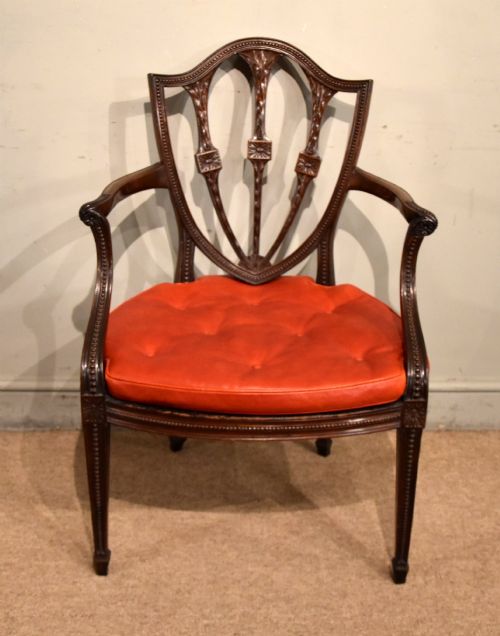
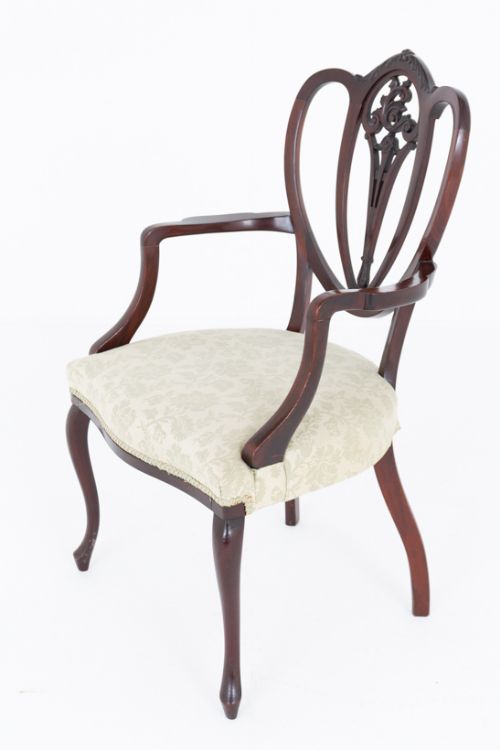
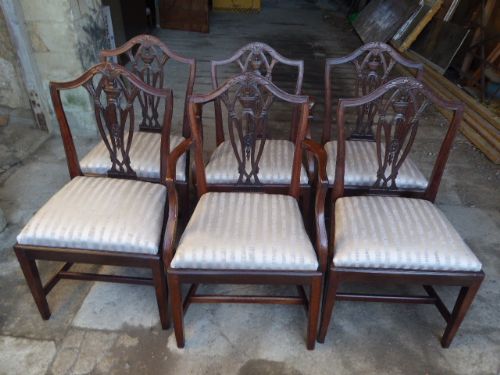
A shield back desk chair is defined by its characteristic tapered, curvilinear backrest shaped like an upturned shield, often filled with pierced splats or carved drapery motifs. These seating forms span periods from the eighteenth century through the nineteenth century, including revival eras like the Edwardian period and nineteen hundred.
The version most commonly encountered on this page is constructed from mahogany or walnut, frequently taking the form of an open armchair, carver, or side chair adapted for writing tables. Many examples reflect Georgian Neoclassical or Hepplewhite style aesthetics, merging decorative woodwork with functional proportions.
Originating as formal dining or parlour seating, these chairs were frequently pressed into service as desk seats due to their supportive arms and open profiles. Surviving pieces demonstrate the enduring appeal of carved wooden frames paired with upholstered or leather seats.
Construction and Materials
Makers utilised solid hardwoods such as mahogany and walnut, selected for their strength and capability to hold intricate hand-carved details along the shield frame and splat. Joinery relied on traditional mortise and tenon techniques to ensure structural integrity under daily use.
Surface finishing often involved polishing the timber to enhance the natural grain, whilst some examples incorporated ebonising, painted decoration, or delicate inlay. Upholstery materials included leather, fabric, and textile pads secured over webbing or stuffing within the seat frame.
Shield Back Desk Chair Retail Price Guide 2026
Typical asking prices for shield back desk chair among the pieces listed under this phrase on Sellingantiques today, from the lower quarter to the upper quarter. They describe what is for sale here now, not the wider market.
Listings feature mahogany, walnut, and satinwood, spanning the eighteenth century, nineteenth century, and nineteen hundred.
Judging Quality and Craftsmanship
Quality in these chairs is revealed through the crispness of the carving within the shield splat and the choice of timber stock. Finer pieces exhibit deeply sculpted woodwork and symmetrical pierced designs rather than shallow, mechanical shaping.
Structural robustness also distinguishes better examples, where the junction of the arms and legs remains tight and undisturbed through centuries of use. The proportion and balance of the curved backrest relative to the seat base determine the visual harmony of the piece.
The Shield Back Desk Chair Glossary
- Shield back
- A chair backrest shaped to resemble the outline of a defensive shield, tapering towards the seat and popularised in the eighteenth century.
- Carver armchair
- An open armchair traditionally designed with arms placed further forward to accommodate bulkier period garments, often used at a desk or table end.
- Pierced splat
- The central vertical wooden element within a chair back that has been carved and pierced with decorative openwork patterns.
- Neoclassical style
- A design movement drawing inspiration from classical antiquity, marked by symmetry, urns, drapery, and restrained ornamentation.
- Ebonised
- Wood finished with a dark stain or black lacquer to imitate the appearance of ebony.
Shield Back Desk Chair: Frequently Asked Questions
Are shield back desk chairs comfortable for working?
These chairs offer upright support suited to traditional writing tasks, though they lack modern ergonomic adjustments. Their open arm designs allow the user to sit close to a desk.
Most examples feature upholstered or leather-covered drop-in seats that provide firm cushioning during extended periods of use.
How do I date a shield back chair?
Dating relies on examining the timber species, joinery methods, and the specific interpretation of the carved ornament. Eighteenth-century pieces typically show hand-cut joinery and dense, mature mahogany.
Revival pieces from the nineteenth century or nineteen hundred often adopt Georgian forms but may utilise machine-tooled elements or different secondary woods beneath the surface.
Can I use a dining chair as a desk chair?
Many side chairs and armchairs from the Georgian period onward were utilised interchangeably between dining spaces and writing rooms. The key consideration is seat height relative to your desk surface.
Arm clearance is another factor, as low-slung armrests are necessary to slide the chair neatly beneath a desk drawer.
What is the difference between Hepplewhite and Sheraton styles?
Hepplewhite design is closely associated with the distinctive shield-shaped backrest and graceful, flowing curved lines. Sheraton style tends to favour more rectilinear geometry and straight, tapered legs.
Both movements belong to the broader Georgian Neoclassical period and frequently overlap in nineteenth-century revival pieces.
How should I care for antique mahogany woodwork?
Maintain the timber by dusting regularly with a soft, dry cloth and avoiding direct sunlight that can fade the polished surface. Occasional application of appropriate wax polish helps nourish the wood.
Keep the chair away from direct heat sources to prevent the timber or the nineteenth-century upholstery foundations from drying out.