





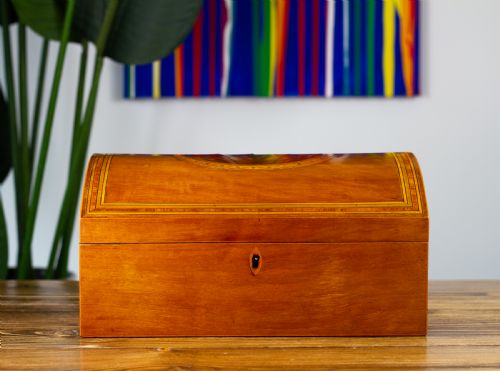


Sheraton Tea Box
These sheraton tea box pieces are refined containers crafted for storing valuable leaves, bringing period elegance and craftsmanship to any room.
Sheraton Tea Box
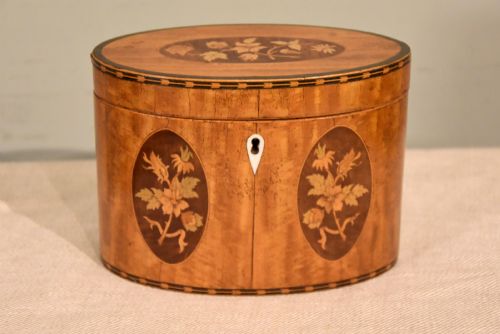
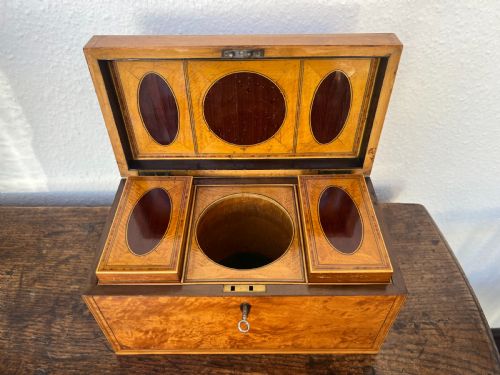
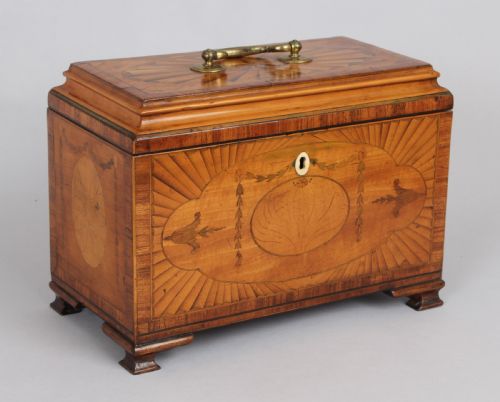
When you search for a sheraton tea box, you enter a world of sophisticated storage designed to safeguard precious dry leaves during the Georgian era. These containers range from oval and octagonal caddies to larger teapoys and decanter boxes.
The versions you are most likely to meet on this page hail from the late eighteenth and nineteenth centuries, often rendered in rich satinwood, mahogany, and harewood. They reflect the classical restraint and balanced proportions typical of the style.
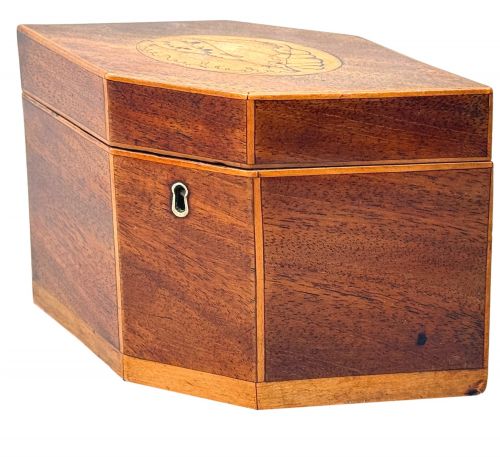
Makers shaped these boxes into geometric forms such as hexagons and octagons, creating functional pieces that doubled as decorative objects for the parlour. Their enduring appeal lies in this marriage of strict geometry and warm timber.
How they were made
The construction relies heavily on choice timbers such as satinwood, mahogany, and harewood, providing a smooth canvas for decorative work. Artisans selected these woods for their grain and colour, forming sturdy carcasses designed to protect contents from moisture.
Wood inlay and marquetry define the surface decoration, utilising contrasting materials like boxwood, bone, and ebony to create motifs such as shells and butterflies. Fine brass hardware, including escutcheons and hinges, completes the construction.
Joinery techniques ensured tight corners and stable lids, allowing delicate veneers to remain intact across the centuries. Every element, from the internal foil lining traces to the external stringing, received meticulous attention.
Sheraton Tea Box Retail Price Guide 2026
Typical asking prices for sheraton tea box among the pieces listed under this phrase on Sellingantiques today, from the lower quarter to the upper quarter. They describe what is for sale here now, not the wider market.
What varies in quality
Quality in a sheraton tea box rests upon the finesse of the timber selection and the precision of the marquetry. Superior examples display intricate shell and butterfly inlays executed with contrasting woods that retain sharp, clean edges.
The choice of primary timber also dictates the tier of the piece, with finely figured satinwood and partridge wood sitting at the upper end of the scale. Grain matching across the lid and sides demonstrates the maker's deliberate planning.
Hardware integrity and the survival of original brass fittings influence the overall standard of the container. Boxes that retain their structural crispness without heavy veneer replacement represent the finer end of the surviving selection.
The Sheraton Tea Box Glossary
- Satinwood
- A lustrous, yellowish timber imported from the tropics, prized for its natural sheen and favoured by cabinetmakers for fine neoclassical furniture. It takes a high polish and provides a bright ground for darker inlays.
- Marquetry
- The art of applying pieces of veneer to a structure to form decorative patterns and pictures. Craftsmen cut contrasting woods like ebony and boxwood to fit flush into the surface.
- Teapoy
- Originally a three-legged table, the term evolved to describe a large tea caddy, sometimes mounted on a pedestal or designed to stand on a surface. These larger receptacles held multiple varieties of leaf.
- Harewood
- Sycamore wood that has been stained grey, often utilising iron solutions to achieve a subtle greenish-grey hue. It was a signature choice for sophisticated late eighteenth-century decorative boxes.
- Stringing
- Narrow strips of contrasting wood inlaid into grooves to create delicate borders around panels and lids. This linear detail defines the geometric panels characteristic of the period.
Sheraton Tea Box: Frequently Asked Questions
How do I date a tea box?
Dating relies on examining the timber species, construction methods, and decorative motifs such as neoclassical inlays or shell patterns. Pieces from the late eighteenth century often display lighter woods and crisp geometry.
Later Victorian interpretations tend to incorporate different hardware styles and construction techniques while referencing earlier forms.
Were these boxes used for anything else?
While primarily designed for tea, many similar boxes accommodated bottles or decanters as drinking habits evolved. Some larger examples functioned as general storage for valuables and documents.
Internal partitions often separated different grades of tea leaves rather than serving alternative functions.
How should I care for satinwood?
Satinwood requires stable environmental conditions away from direct sunlight and excessive heat to prevent timber movement and veneer lifting. Gentle dusting with a dry cloth preserves the polished surface.
Avoid liquid cleaners and wax polishes that build up residue over delicate marquetry and inlay work.