

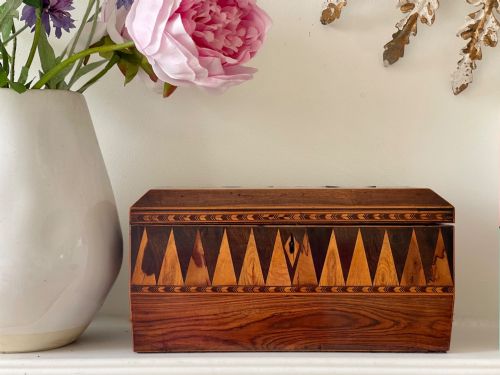
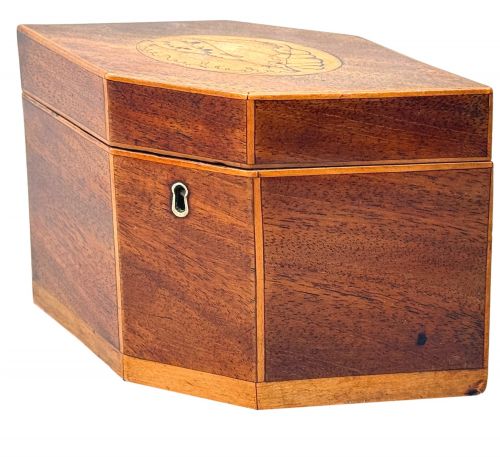
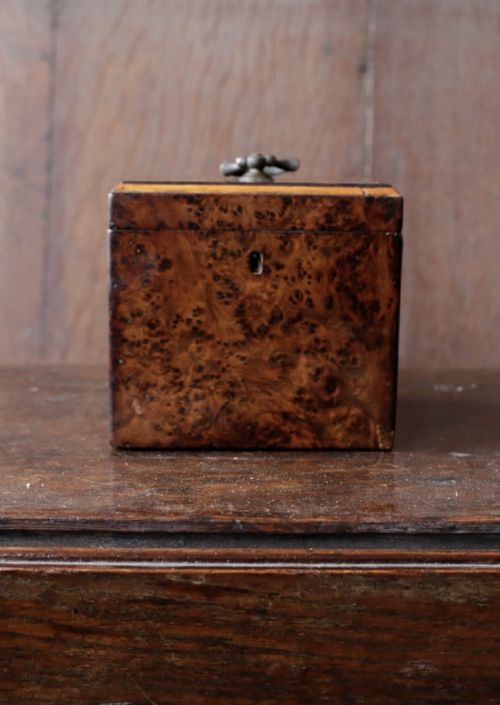
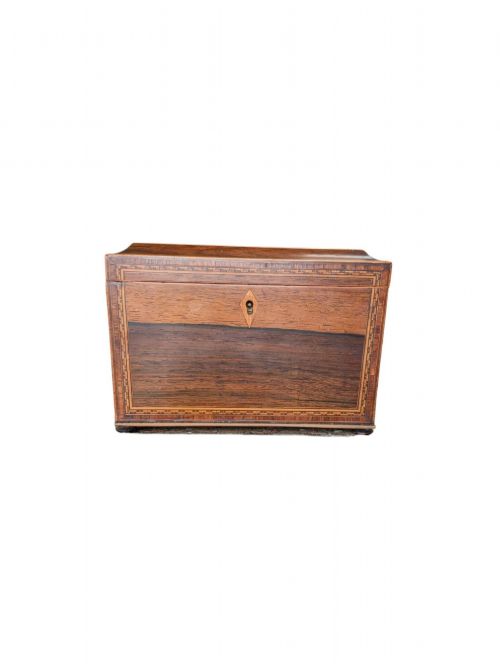


Georgian Marquetry Tea Caddy
A georgian marquetry tea caddy is a refined wooden box designed to store precious tea leaves, combining intricate decorative veneers with period craftsmanship.
Georgian Marquetry Tea Caddy
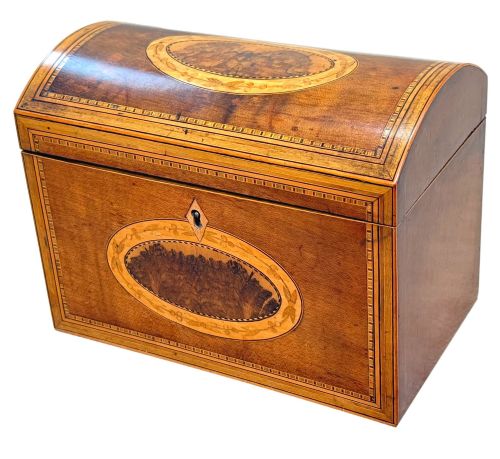
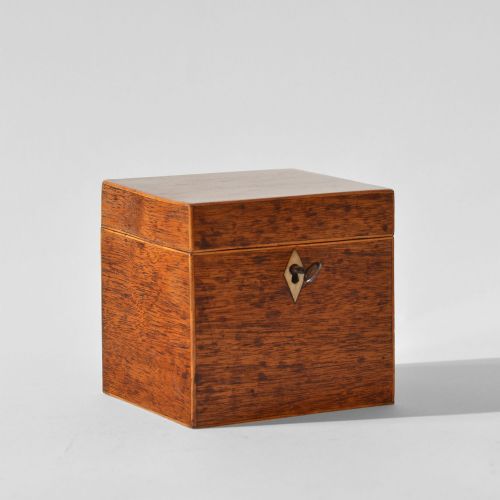
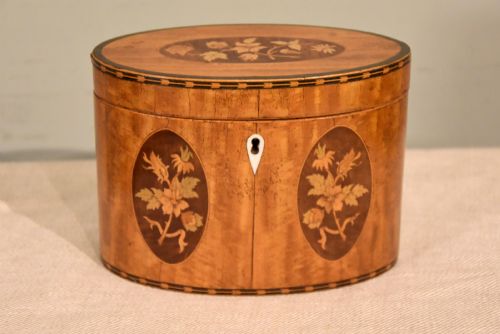
A georgian marquetry tea caddy is a specialised storage box created to protect and preserve expensive tea leaves during the eighteenth and nineteenth centuries. These pieces appear in various forms, including oval, hexagonal, octagonal, and sarcophagus shapes, often constructed with hinged lids and fitted interior compartments.
The objects span periods from the mid eighteenth century through the Regency and Victorian eras, reflecting shifting tastes in furniture design and decorative arts. Mahogany, satinwood, and rosewood serve as the primary foundational timbers for these boxes.
Makers utilised contrasting woods to build pictorial or geometric surfaces on the exterior panels. Buyers encounter examples featuring butterfly, shell, and floral basket motifs set into the timber surface.
Materials and construction
Craftsmen built the carcase of a georgian marquetry tea caddy using dense timbers such as mahogany, rosewood, and satinwood, applying thin veneers over the main structure. Boxwood, harewood, and other pale or stained woods were cut into precise shapes to form the pictorial or geometric veneers.
Inlayers embedded bone, mother of pearl, and brass details into the wooden surfaces to create contrast and texture. Tunbridge ware techniques also appear, utilising tiny mosaic wooden blocks to construct intricate patterns across the box.
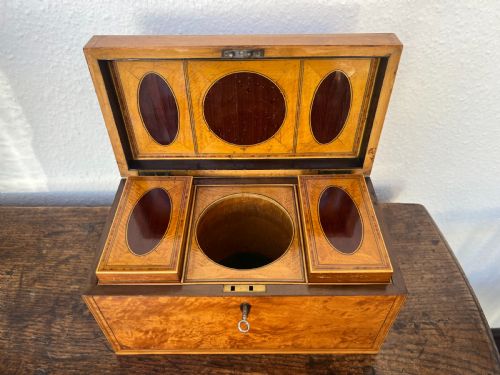
Interior elements frequently include lidded canisters and mixing bowls, constructed from matching woods and lined with foil or paper to maintain the aroma of the contents. Brass hinges and escutcheons secure the lids and provide functional hardware closure.
Georgian Marquetry Tea Caddy Retail Price Guide 2026
Typical asking prices for georgian marquetry tea caddy among the pieces listed under this phrase on Sellingantiques today, from the lower quarter to the upper quarter. They describe what is for sale here now, not the wider market.
Listings demonstrate the extensive use of satinwood, harewood, and rosewood as primary timber canvases for eighteenth and nineteenth century inlays.
Quality and execution
The standard of a georgian marquetry tea caddy depends significantly on the precision of the veneer work and the complexity of the inlaid motifs. Superior pieces display seamless integration of contrasting timbers without gaps or excessive filler.
The choice of foundational timber heavily influences the character of the object, with figured woods like burr yew, amboyna, and partridge wood commanding attention. The survival of original fitted interiors and internal lids further distinguishes finer examples from altered ones.
The Georgian Marquetry Tea Caddy Glossary
- Marquetry
- The art of applying decorative pieces of veneer to a structure to form intricate patterns or pictures. This technique defines the surface ornamentation of many period boxes.
- Teapoy
- A pedestal table designed specifically to support a tea caddy or hold tea equipment. These larger pieces often incorporate similar timber inlays and fitted compartments.
- Tunbridge ware
- Woodworking characterised by tiny mosaic blocks that form detailed pictorial bands or geometric designs. It appears frequently on Regency and nineteenth century boxes.
- Sarcophagus
- A box shape featuring a domed or steep-sided profile resembling a classical stone coffin. This architectural form became popular during the Regency period.
- Veneer
- A thin slice of decorative wood applied to a secondary timber base. Higher quality items utilise carefully selected figured veneers for visual depth.
Georgian Marquetry Tea Caddy: Frequently Asked Questions
What is a georgian marquetry tea caddy?
A georgian marquetry tea caddy is a decorative wooden box made to hold loose tea leaves securely. These containers feature patterned wood veneers across their exterior surfaces.
Craftsmen built them in various geometric shapes, including octagonal, oval, and sarcophagus forms. They often contain internal compartments for separating different types of tea.
How were these tea caddies used?
Tea was an expensive commodity in the eighteenth and nineteenth centuries, requiring secure storage under lock and key. The master of the house typically kept the key to control access to the leaves.
Inside the box, dual compartments held black and green teas, while a central recess often held a glass bowl for blending. Servants brought the caddy to the drawing room when tea was prepared.
How do I identify the period?
Dating relies on timber selection, structural form, and inlay style. Pieces from the eighteenth century frequently employ satinwood, harewood, and neoclassical shell motifs.
Regency examples often introduce rosewood, brass inlay, and heavier sarcophagus silhouettes. Cabinetmakers adjusted their designs in response to changing architectural fashions across these decades.
How should I care for a wood tea caddy?
Wooden boxes require stable environmental conditions away from direct sunlight and extreme humidity fluctuations. Excessive heat can cause old veneers to lift or crack over time.
Regular dusting with a dry cloth preserves the polished surface. Avoid using modern liquid polishes that might penetrate vulnerable timber joints or old inlays.