
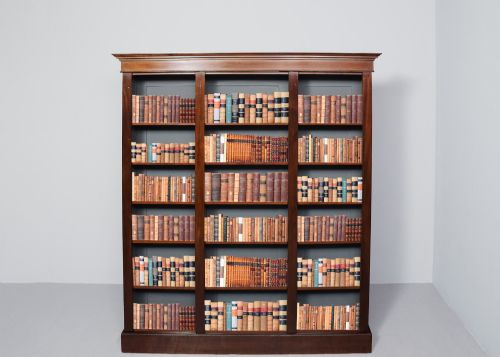
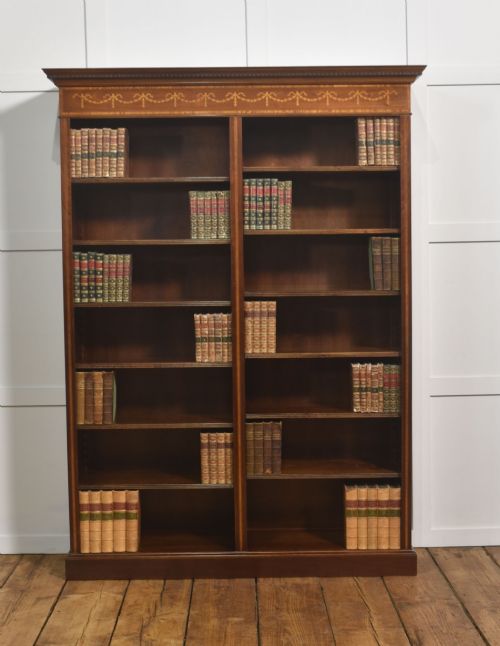
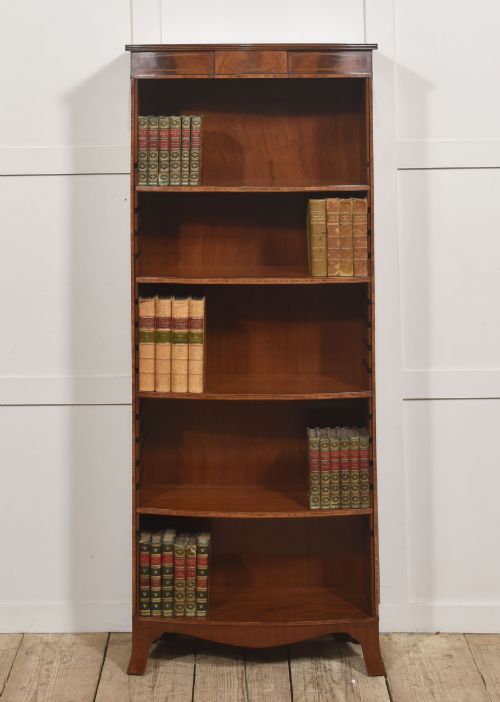


Sheraton Style Library Cabinet
These sheraton style library cabinet pieces bring classical proportion and refined timber to a room, offering both display and storage for serious collections.
Sheraton Style Library Cabinet
A sheraton style library cabinet provides disciplined storage for volumes and papers through glazed or open shelving, anchoring a study with formal architectural lines. When you search for a sheraton style library cabinet, you encounter pieces designed to hold books while exhibiting light, balanced proportions and disciplined symmetry. These large storage pieces bring order to a room, functioning as architectural anchors that command space without feeling overly heavy.
The versions most commonly met on this page belong to the Sheraton Revival period and the nineteenth century, executed in rich hardwoods with delicate decorative borders. Makers draw upon Georgian precedents, translating eighteenth-century pattern books into refined furniture intended for polite domestic interiors. You find grand breakfront formats alongside open bookcase variants, offering flexible solutions for housing a library.
Periods spanning from the Georgian era through Edwardian revivals appear among the listings, demonstrating a lasting appetite for classical restraint. The construction reflects a dedication to functional elegance, where shelving meets refined cabinetry to serve the needs of a collector. Each piece balances practical book storage with decorative cabinet-work suited to a formal library or study.
Materials and Construction
Cabinet makers relied principally upon mahogany and satinwood as the structural and visual foundation for these bookcases, often selecting timber with a fine grain and warm depth. These primary woods provide the necessary strength to support heavy shelves of books while offering a smooth canvas for decorative treatments. The choice of timber dictates the overall tone of the piece, ranging from deep reddish-brown mahogany to pale, luminous satinwood.
Surface embellishment relies heavily on boxwood inlay and contrasting crossbanding to frame panels and define the structural boundaries of the cabinet. Artisans also utilised brass fittings for locks and doors, alongside original painted decoration on select satinwood examples. These detailed touches lift the cabinet above mere utility, turning the exterior facade into a composition of balanced geometric zones.
Listings feature mahogany and satinwood timbers alongside glass, brass, and boxwood inlay.
Assessing Quality and Finish
The standard of a sheraton style library cabinet rests on the precision of its inlay work and the harmonious balance of its proportions. Finer examples display crisp, unbroken lines of boxwood and satinwood that follow the curves of a bow front or breakfront configuration without wavering. The integration of painted decoration, where present, reveals the hand of a skilled decorator through its fine line and restrained palette.
Structural integrity also separates standard utility from exceptional craftsmanship, visible in how doors hang and how breakfront sections project. The selection of timber grain across large expanses of mahogany or satinwood demonstrates the maker's eye for matching surfaces. Superior pieces maintain their physical and decorative equilibrium over centuries of use, preserving the architectural intent of the design.
Lamb And Co
The Sheraton Style Library Cabinet Glossary
- Breakfront
- A cabinet design where the central section projects forward from the flanking wings, creating a strong architectural rhythm across the facade. This arrangement breaks up the flat plane of a long wall and adds depth to the furniture.
- Crossbanding
- A strip of veneer applied across the grain of the primary timber around the border of a panel or door. This technique frames the surface and provides a neat, contrasting perimeter.
- Sheraton Revival
- A late nineteenth and early twentieth century movement that reinterpreted the light, neoclassical furniture designs of the eighteenth-century designer Thomas Sheraton. It champions refined proportions, satinwood, and delicate inlay.
- Satinwood
- A lustrous, yellowish-gold timber native to the tropics, prized for its fine texture and ability to catch the light. It serves as a primary wood or a decorative veneer in high-status cabinet-making.
- Boxwood
- A dense, pale wood frequently used for stringing and intricate inlay work because of its uniform colour and fine grain. It provides sharp contrast against darker timbers like mahogany.
Sheraton Style Library Cabinet: Frequently Asked Questions
How do I care for a satinwood cabinet?
Keep the wood away from direct sunlight and sudden temperature shifts to prevent the delicate satinwood veneer from drying out or splitting.
Dust regularly with a soft, dry cloth and apply a quality furniture wax sparingly only when the finish appears dry.
Are the shelves adjustable?
Many period bookcases feature fixed shelving or traditional wooden support slips rather than modern metal adjustment tracks.
Consider the height of your volumes before arranging a library inside these older timber compartments.
How do I distinguish Sheraton Revival from Georgian?
Sheraton Revival pieces date from the late nineteenth or early twentieth century and often show machine-sawn backing boards or later construction methods alongside period styling.
Georgian pieces exhibit eighteenth-century timber handling, hand-cut joints, and the natural patina of genuine age.