
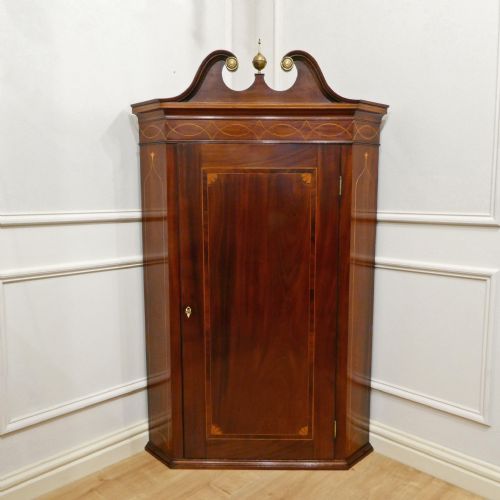


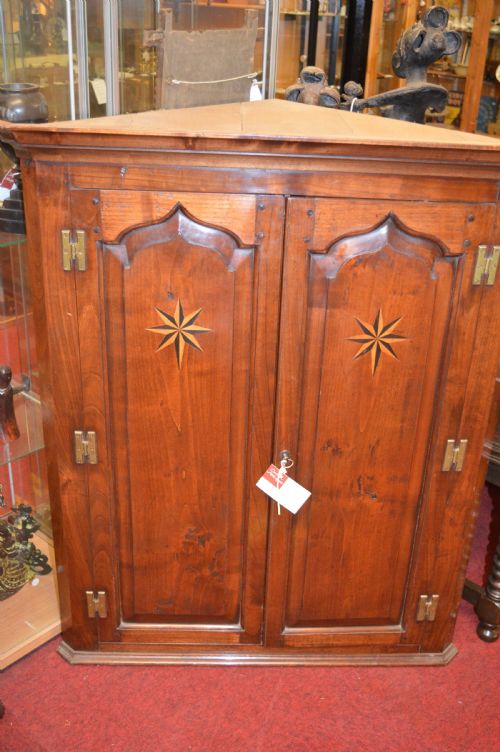


Sheraton Style Corner Cupboard
A sheraton style corner cupboard makes use of overlooked angles in a room, offering refined storage through classic proportions and understated geometry.
Sheraton Style Corner Cupboard
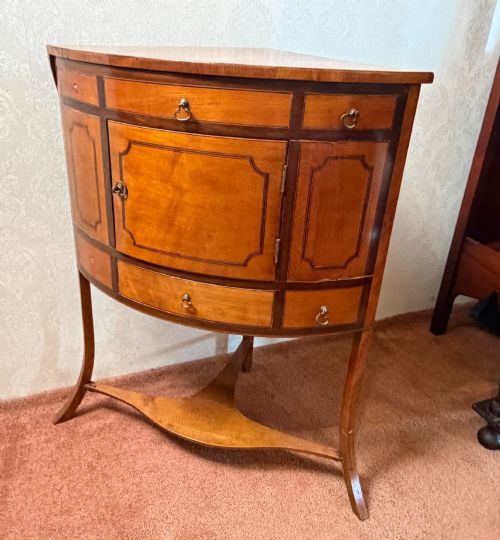
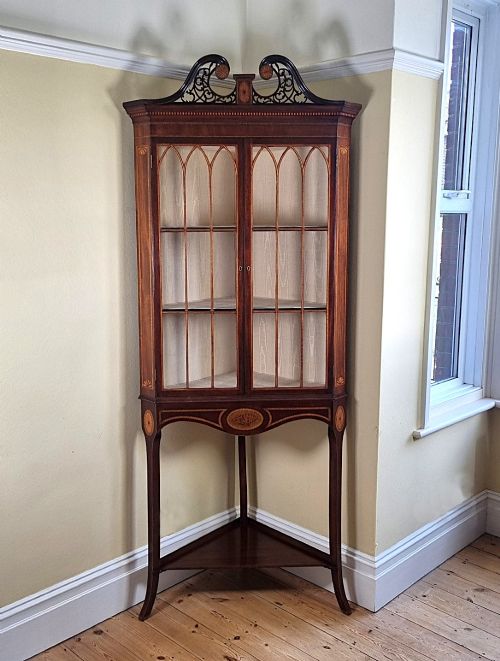
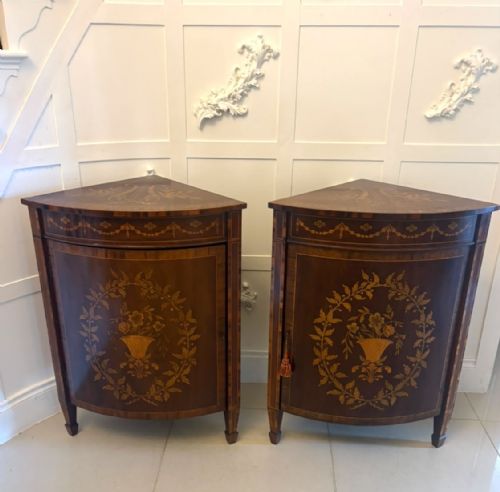
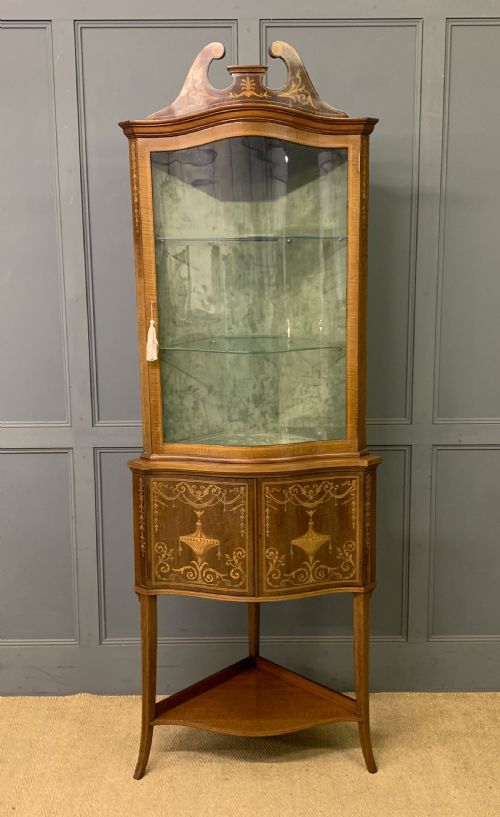
When you search for a sheraton style corner cupboard, you are looking at fitted timber cabinetry designed to tuck neatly into the right-angle intersection of two walls. The pieces on this page span several eras, including the Georgian period, the Victorian era, the Edwardian period, and the 18th, 19th, and 20th centuries. You will most frequently meet Edwardian examples and pieces from around nineteen hundred alongside earlier Georgian pieces.
The forms recorded in these listings include hanging cupboards, cabinets on stands, double corner cupboards, and even a folding corner wash stand. Materials range from solid mahogany to glass, satinwood, fruitwood inlay, marquetry, brass, and mirror. Styles stretch from strict Georgian to Sheraton Revival, Victorian, and neoclassical revival, giving you multiple ways to bring this angular form into a room.
Distinguishing quality across the range
The degree of hand-cut marquetry and the precision of the satinwood and fruitwood inlays separate standard production from finer cabinet work. Crispness in the timber mouldings and the balance of the proportions dictate how successfully the piece sits within a room.
The integration of original brass fittings and the clarity of the glass panels contribute further to the distinction between simpler utility pieces and more ambitious revival examples.
Listings span multiple eras including the eighteenth, nineteenth, and twentieth centuries, with periods ranging from Georgian to Edwardian and Victorian.
The Sheraton Style Corner Cupboard Glossary
- Sheraton Revival
- A late nineteenth and early twentieth century design movement that reinterpreted the lighter, neoclassical forms associated with Thomas Sheraton. Makers utilised satinwood inlay and mahogany to echo eighteenth-century elegance.
- Marquetry
- The art of applying thin decorative veneers of different timbers and materials to a structural surface to form elaborate pictures or patterns. It appears frequently on cabinet doors across these listings.
- Corner Cabinet
- A specialised storage piece built with a triangular footprint designed specifically to fit into a room corner. These items maximise floor space while displaying collections or concealing household goods.
- Satinwood
- A durable, lustrous timber imported from tropical regions, prized for its pale yellow colour and natural sheen. It served as a contrasting inlay material against darker mahogany carcases.
Sheraton Style Corner Cupboard: Frequently Asked Questions
What is a sheraton style corner cupboard?
A sheraton style corner cupboard is a triangular timber storage unit designed to fit snugly into the corner of a room, taking its design cues from the neoclassical proportions popularised in the eighteenth century and revisited during the Victorian and Edwardian eras.
These cabinets often feature glazed doors, mahogany construction, and delicate contrasting wood inlays such as satinwood or marquetry.
How were corner cupboards used?
Historically, these cupboards served to store and display prized ceramic tableware, glassware, or silver while making efficient use of awkward wall angles in dining rooms and parlours.
Today, they perform a similar function, offering display space behind glass panels or hidden storage behind solid timber doors without cluttering the main floor area of a room.
Where do I put a corner cabinet?
A corner cabinet belongs in any unoccupied ninety-degree wall junction where standard rectangular furniture would jut out or waste floor space. They work particularly well in dining rooms, hallways, or reception rooms to anchor an empty corner.
Because of their tapered shape, they draw the eye upward and outward, helping to balance the proportions of a compact or irregularly shaped room.
How do I date a corner cupboard?
Dating a corner cupboard involves examining the secondary timbers, the style of the joinery, the type of hinges, and the specific revival motifs used in the inlays. Pieces from the Georgian era show different construction methods compared to Edwardian Sheraton Revival pieces or items built around nineteen hundred.
Looking closely at the specific combination of mahogany, satinwood inlay, and glass panel construction helps clarify whether a piece originates from the eighteenth, nineteenth, or early twentieth century.