



Sheraton Revival Vanity
Sheraton revival vanity pieces are elegant late-nineteenth and early-twentieth-century furnishings defined by graceful classical proportions and delicate inlay, offering timeless utility for the home.
Sheraton Revival Vanity
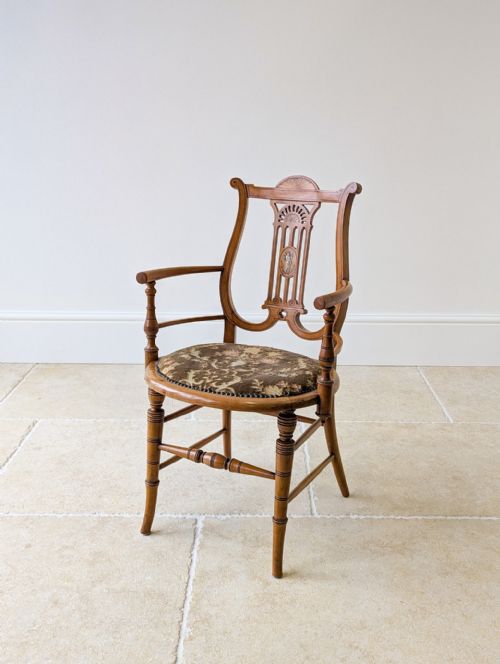
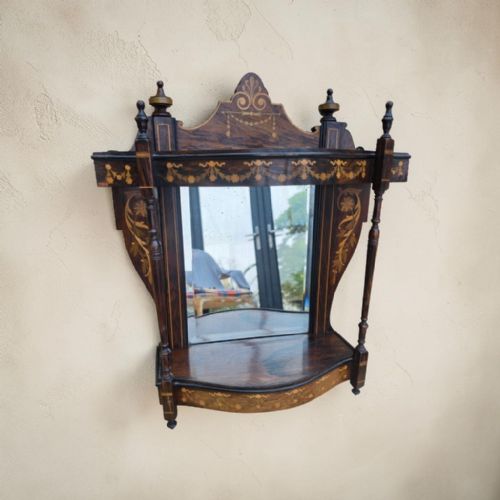
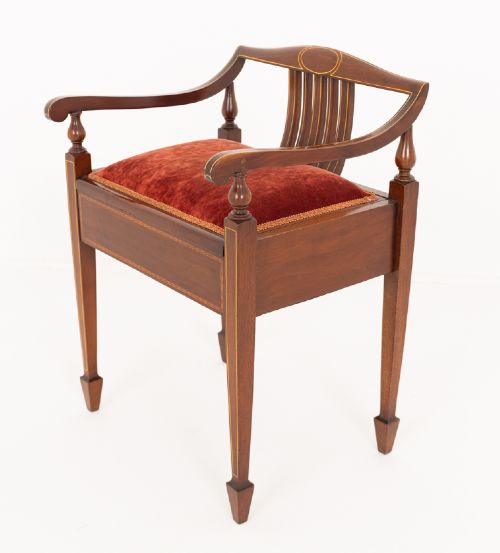
When you search for Sheraton revival vanity, you are looking at items designed during the Edwardian, late Victorian, and early twentieth-century periods that borrow the neoclassical grace of the eighteenth century. The selection includes dressing tables, mirrors, writing desks, and small seating forms created between 1880 and 1920.
The version you are most likely to meet on this page is an Edwardian dressing table or a mahogany writing desk featuring satinwood inlay and refined proportions. These pieces capture the lighter, airier domestic taste that succeeded heavier Victorian furniture.
Assessing Quality
The handling of secondary timbers and the retention of original brass fittings and silvered mirror glass further distinguish superior workshops. Finer items demonstrate seamless cabinetmaking where structural joinery remains entirely sympathetic to the neoclassical aesthetic.
Sheraton Revival Vanity Retail Price Guide 2026
Typical asking prices for sheraton revival vanity among the pieces listed under this phrase on Sellingantiques today, from the lower quarter to the upper quarter. They describe what is for sale here now, not the wider market.
The listings show pieces spanning from 1880 to 1920, predominantly constructed from mahogany and satinwood with boxwood inlay.
Edwards and Roberts·Gillows
The Sheraton Revival Vanity Glossary
- Bonheur du Jour
- A light lady's writing desk featuring a small set of drawers and compartments on the top surface. Originating in France, it became a popular form during the Victorian and Edwardian eras.
- Marquetry
- The art of applying pieces of veneer to a structure to form decorative patterns and pictures. Makers used various coloured woods to create floral or classical motifs on tabletops and drawer fronts.
- Satinwood
- A hard, durable timber with a characteristic golden-yellow sheen that takes a fine polish. It was widely utilised for banding and full veneer surfaces in late nineteenth-century cabinetmaking.
- Stringing
- A narrow strip of contrasting wood inlaid into grooves on table edges or drawer fronts. This linear detail defines the architectural lines characteristic of neoclassical revival furniture.
Sheraton Revival Vanity: Frequently Asked Questions
What is a Sheraton revival vanity?
A Sheraton revival vanity encompasses dressing tables, desks, and mirrors produced around the late nineteenth and early twentieth centuries. These furnishings emulate the lighter lines and classical ornamentation of eighteenth-century neoclassical design.
They serve both decorative and practical functions in domestic spaces, often combining mahogany or satinwood with delicate boxwood inlay.
How do I date these pieces?
Dating relies on identifying period characteristics associated with late Victorian, Edwardian, or early twentieth-century manufacture. Stylistic cues and construction methods help narrow the origin between 1880 and 1920.
Evidence in the wood types, such as the use of satinwood and specific inlay patterns, also points toward these specific decades.
Where were these pieces used?
These items were principally designed for bedrooms, boudoirs, and private dressing rooms in grand homes. Writing desks and small tables were equally suited to drawing rooms for correspondence.
Their compact scale allowed them to fit comfortably into lighter domestic interiors of the Edwardian period.
How should I care for satinwood?
Satinwood and mahogany surfaces require gentle maintenance using dry cloths to remove dust without harming the polished finish. Avoid placing furniture in direct sunlight to protect the natural golden tones of the wood.
Wax polishing can be applied sparingly to nourish the timber and preserve the historic sheen.