



Sheraton Revival Server
Sheraton revival server designs offer elegant proportions and fine inlay, bringing late eighteenth-century grace into Edwardian dining rooms.
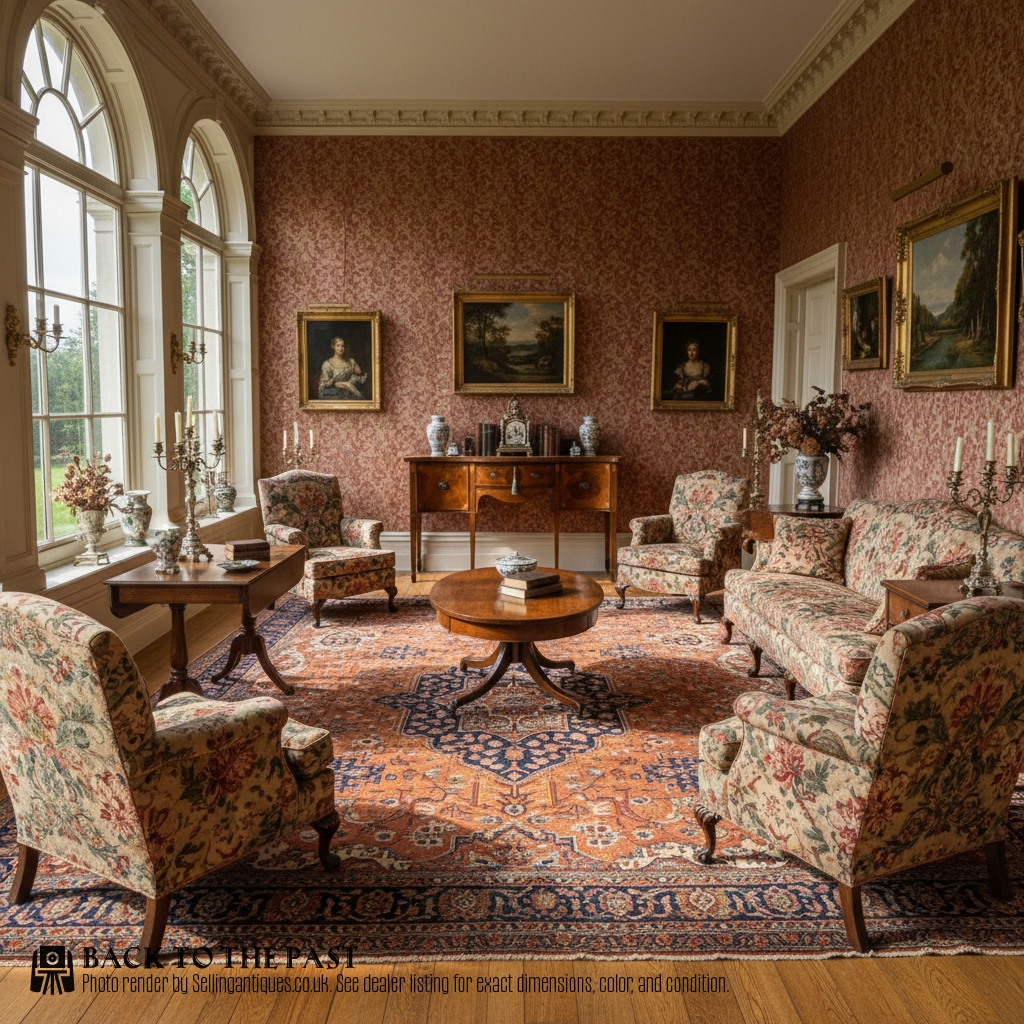
Sheraton Revival Server
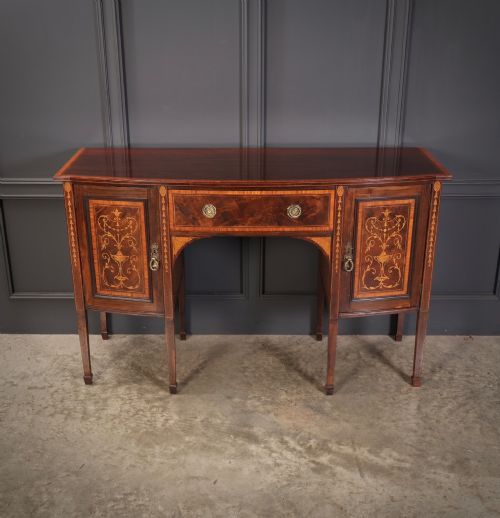
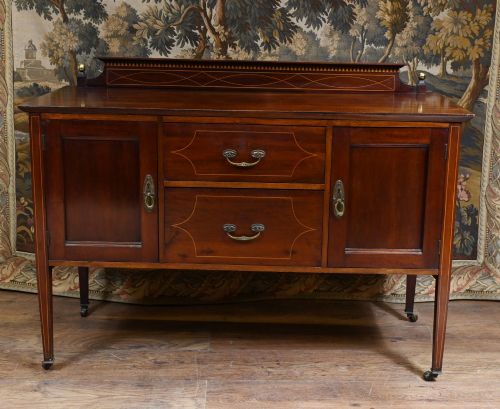
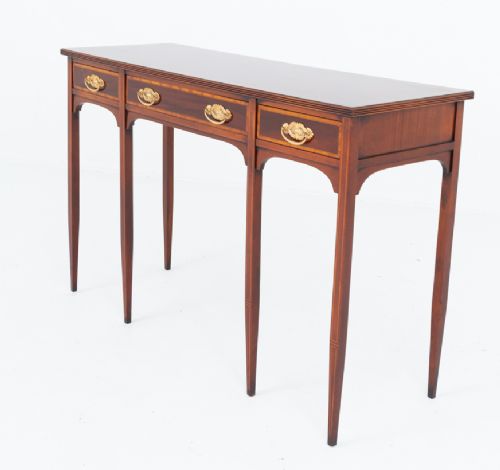
A sheraton revival server embodies the lightness and symmetry of the late eighteenth century, interpreted by makers working towards the end of the nineteenth century and into the Edwardian era. These pieces function primarily as serving tables, sideboards, and side cabinets designed for dining and drawing rooms.
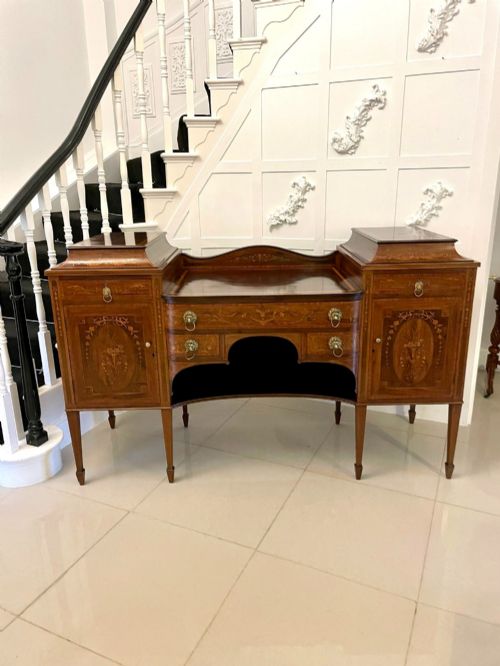
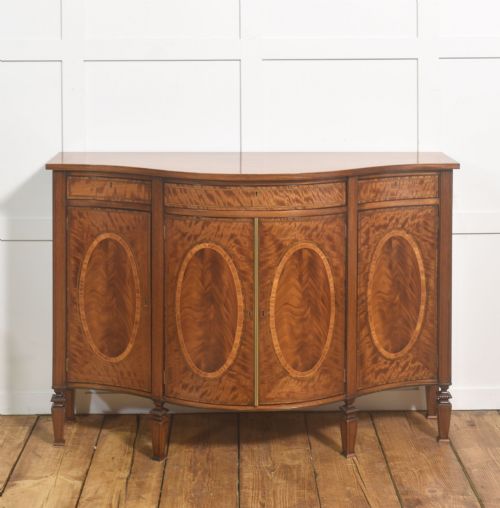
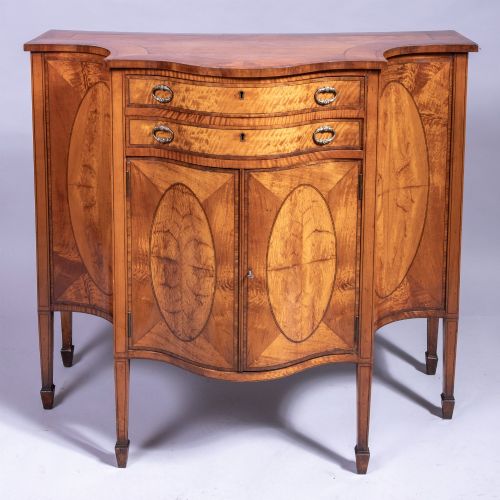
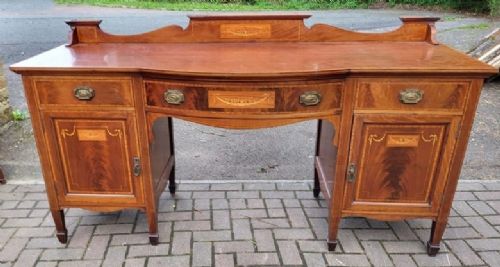
The version most commonly encountered on this page is constructed from mahogany, often enhanced with satinwood inlay, boxwood stringing, and marquetry motifs. Bow-front and serpentine shapes appear frequently, reflecting the preference for curved furniture during the Edwardian period.
Materials and Construction
Makers utilised solid timbers and veneers of mahogany and satinwood, applying boxwood inlay and marquetry to create contrasting borders and decorative panels. Brass hardware, including handles and key escutcheons, complements the timber surfaces.
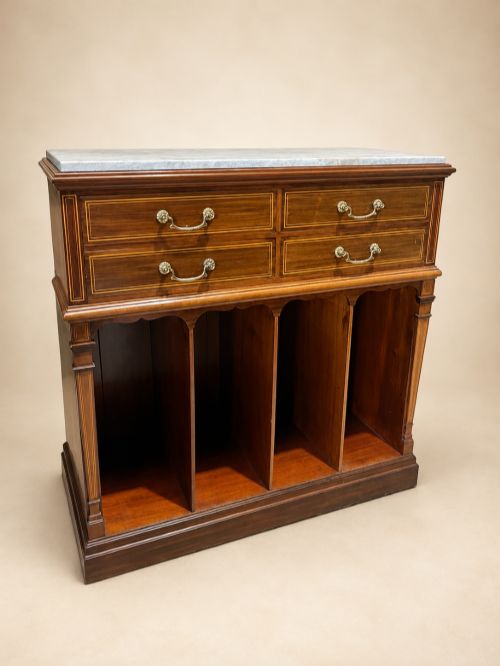
Surfaces frequently feature painted decoration alongside natural wood finishes, while select items incorporate marble tops. Cabinetmakers shaped the carcases into bow-front and serpentine outlines using flexible woods and precise joints.
Some servers hide secret cellaret drawers lined with lead to keep bottles cool during long Victorian dinner parties.
Distinguishing Quality
The standard of a sheraton revival server depends heavily on the precision of the marquetry and the choice of timber figure, such as flame mahogany or polished satinwood. Finer examples display meticulous hand-cut stringing and well-matched veneer grains across curved drawer fronts.
Structural integrity also separates standard production from superior workshops, visible in the snug fit of dovetailed drawers and the substantial weight of brass mounts. Simpler versions rely on straightforward mahogany panels with minimal inlay, whereas top-tier pieces integrate complex serpentine shapes and detailed floral motifs.
Hewetsons London·Howard And Sons
The Sheraton Revival Server Glossary
- Marquetry
- Decorative patterns formed by inserting pieces of wood, shell, or ivory into a veneered surface. This technique creates elaborate pictorial or geometric designs on the top and drawer fronts of servers.
- Satinwood
- A hard, yellowish-brown timber from tropical trees used extensively for veneers and banding. Its lustrous grain provides a bright contrast against darker woods like mahogany.
- Serpentine
- A furniture shape featuring a front line curved convexly in the centre and concavely at the sides. This contour requires advanced woodworking skill to execute properly on a sideboard carcase.
- Stringing
- Thin lines of contrasting wood inlay used to outline panels, drawers, and edges. Boxwood is frequently utilised for this linear decoration.
- Bow-front
- A cabinet front that curves outward in a convex shape. It represents one of the most popular configurations for Edwardian serving furniture.
Sheraton Revival Server: Frequently Asked Questions
How do I identify the period?
Identifying the period involves examining the timber selection, secondary woods, and the style of inlay. Pieces from the Edwardian era often feature brighter satinwood veneers and crisp boxwood stringing.
Earlier nineteenth-century examples tend to display denser mahogany and more restrained marquetry work. Hardware and internal drawer construction also offer clues to the exact date of manufacture.
Where were these servers used?
These servers were originally positioned in dining rooms and drawing rooms of substantial homes. They functioned as auxiliary surfaces for holding dishes, silverware, and serving platters during large meals.
Today, buyers place them in modern dining rooms, hallways, and living spaces where their narrow profile makes them practical storage units.
What woods are commonly found?
Mahogany serves as the primary structural timber for the vast majority of these pieces, often selected for its deep reddish-brown tone. Satinwood appears frequently as a contrasting veneer for drawer fronts and decorative panels.
Boxwood and various other tinted timbers are utilised for fine stringing lines and intricate marquetry details.