

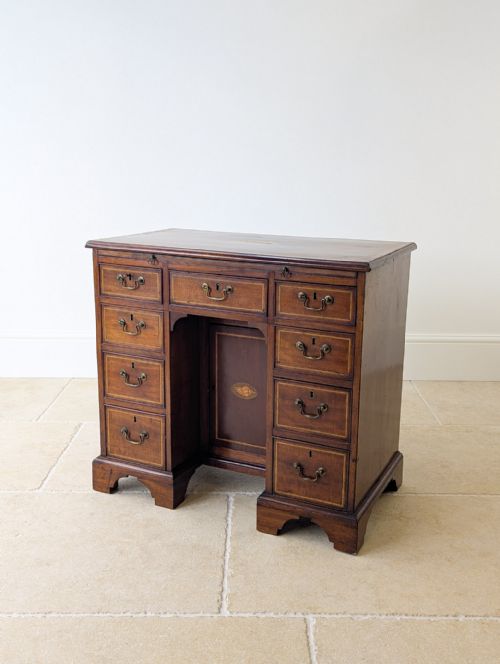


Sheraton Period Desk
A sheraton period desk brings refined neoclassical lines and figured mahogany or satinwood into a room, offering a functional writing space shaped by late eighteenth century design.
Sheraton Period Desk
A sheraton period desk encompasses writing tables, secretaire bookcases, tambour desks, and kneehole dressing tables originating primarily from the eighteenth century, George III era, and Regency periods. These pieces embody the lighter, geometric proportions championed during the neoclassical movement, moving away from heavier earlier furniture forms.
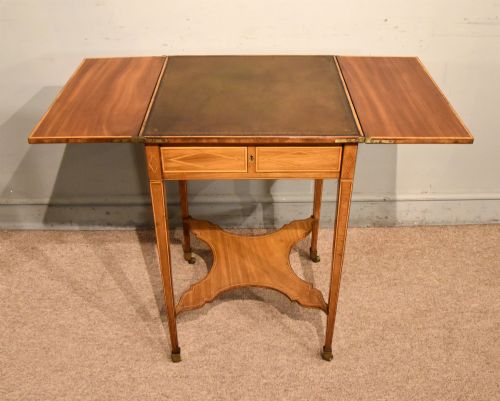
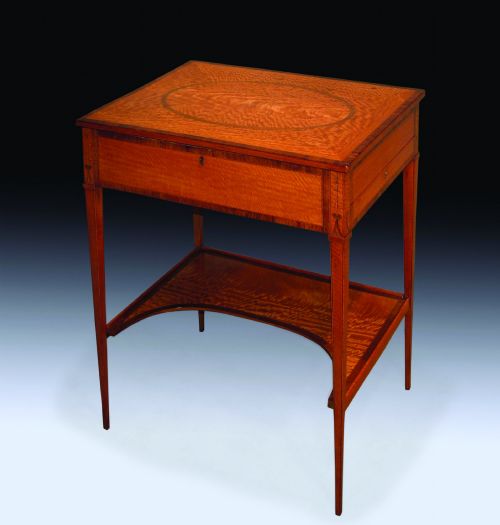
The version most frequently encountered on this page is constructed from mahogany, often enhanced with satinwood inlay or banding, taking the form of a refined writing table or a compact kneehole desk. Alongside desks proper, related writing furniture such as tambour desks, cylinder desks, and bonheur du jour tables appear within the selection.
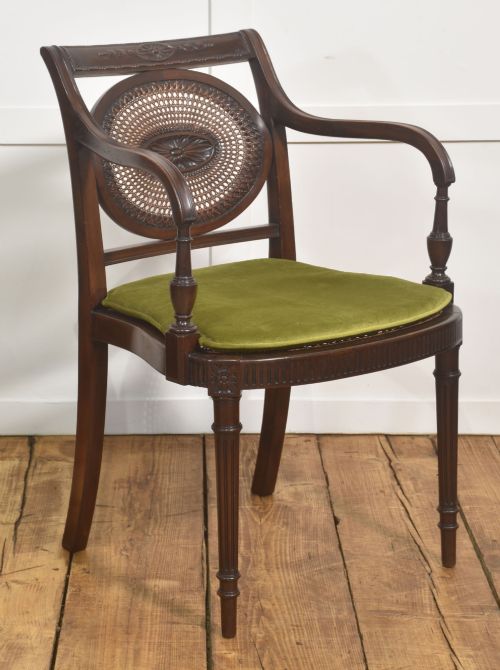
Design characteristics bridge the late eighteenth century and later revivals, including Edwardian interpretations that emulate the original proportions. While eighteenth century examples dominate, twentieth century Sheraton Revival pieces also feature among the desks and seating.
Materials and construction
Makers utilised solid mahogany and softwoods for foundational framing, applying finely figured mahogany veneers and contrasting satinwood inlay to exterior surfaces. Delicate stringing, satinwood banding, and crossbanding defined the geometric panels characteristic of the style.
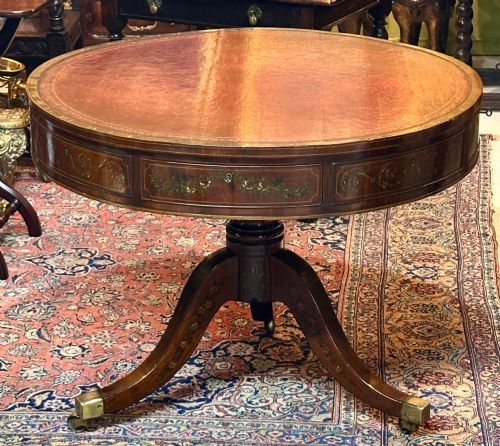
Interior compartments, drawers, and writing surfaces frequently incorporated secondary timbers such as oak, while specialised fittings utilised brass handles, hinges, and occasional silver mounts. Writing surfaces were traditionally lined with leather or fabric inserts tailored to the specific table or desk form.
Sheraton Period Desk Retail Price Guide 2026
Typical asking prices for sheraton period desk among the pieces listed under this phrase on Sellingantiques today, from the lower quarter to the upper quarter. They describe what is for sale here now, not the wider market.
Object forms span writing tables, tambour desks, bonheur du jour cabinets, and occasional tables.
Assessing quality and execution
Superior examples distinguish themselves through the precision of their timber selection, displaying highly figured mahogany and meticulously matched satinwood inlay rather than plain veneers. The crispness of the joinery, particularly in drawer linings and internal pigeonholes, separates workshop production from standard output.
Proportion and decorative restraint dictate the standing of a piece, with finer Sheraton desks maintaining balanced neoclassical lines without excessive ornamentation. Original hardware, intact leather or fabric writing surfaces, and well-executed secondary timbers enhance the integrity of the piece.
Gillows
The Sheraton Period Desk Glossary
- Satinwood
- A pale, lustrous hardwood native to the tropics, prized for its golden sheen and utilised extensively as a veneer and inlay material during the Sheraton period.
- Tambour
- A sliding door constructed from narrow vertical strips of wood glued to a canvas backing, allowing it to curve around a cylinder in desk and cabinet design.
- Secretaire
- A piece of furniture incorporating a pull-down writing flap or drawer that conceals a fitted interior of small drawers and pigeonholes.
- Bonheur du jour
- A light lady's writing desk featuring a small cabinet or set of shelves superstructure upon the main writing surface.
- Crossbanding
- A decorative border of veneer laid with the grain running perpendicular to the central panel, frequently utilised on drawer fronts and tabletops.
Sheraton Period Desk: Frequently Asked Questions
What defines a sheraton period desk?
A sheraton period desk is characterised by straight tapered legs, geometric rectangular proportions, and contrasting veneer work such as satinwood inlay on mahogany surfaces. These pieces date predominantly from the late eighteenth century and the Regency era.
The style reflects neoclassical restraint, prioritising lighter construction and elegant proportions over the heavier carved forms of earlier decades.
How do cylinder desks differ from standard writing tables?
Cylinder desks feature a curved, rolling wooden shutter that encloses the writing surface and interior compartments when closed. Standard writing tables remain open, offering a flat top supported by legs.
Both forms utilise fine veneers and sophisticated internal joinery, but cylinder desks provide secure concealment for correspondence and writing materials.
Where were these desks placed in a historic home?
These desks served in private chambers, morning rooms, and libraries, acting as functional writing spaces for correspondence and estate management. Smaller forms such as the bonheur du jour were designed specifically for ladies' private apartments.
Their refined appearance allowed them to sit comfortably in principal reception rooms rather than remaining confined to dedicated studies.
How do I distinguish eighteenth century pieces from Edwardian revivals?
Eighteenth century examples display the natural ageing of mahogany, hand-cut dovetails in the drawer construction, and period-appropriate secondary timbers such as oak. Edwardian Sheraton Revival pieces often exhibit twentieth century manufacturing techniques and distinct internal finishes.
Examining the construction of the drawer linings and the wear patterns on the timber helps clarify the true age of the piece.