


Sheraton Mahogany Dressing Mirror
These sheraton mahogany dressing mirror pieces bring refined Georgian and Edwardian craftsmanship to any tabletop, offering adjustable glass framed in rich timber.
Sheraton Mahogany Dressing Mirror
A sheraton mahogany dressing mirror provides a functional and decorative tabletop glass, often featuring small drawers integrated into the base for personal items.
The selections span distinct eras, moving from 18th-century George III examples through 19th-century interpretations and Edwardian Sheraton Revival pieces.
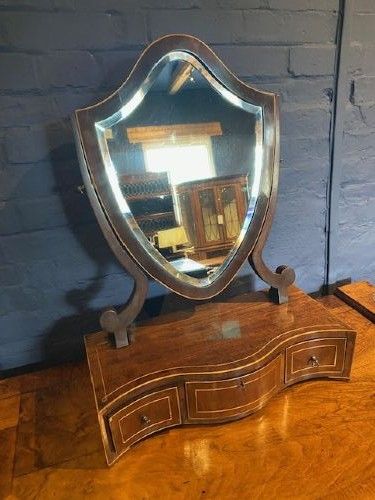
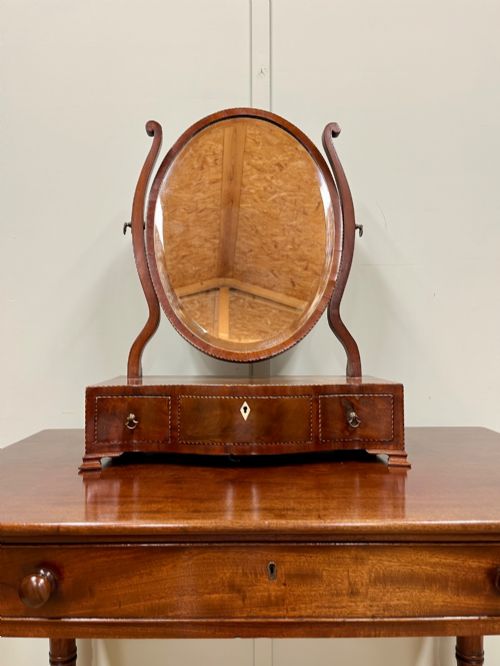
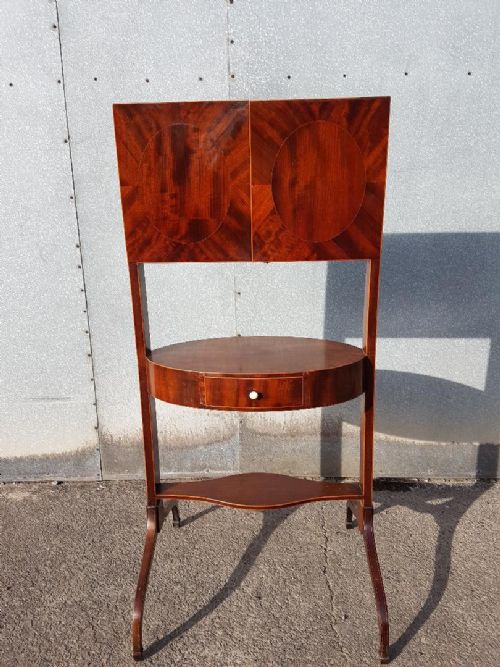
Forms vary from simple swing mirrors on uprights to larger bow-fronted, serpentine, and shield-shaped plates, alongside occasional cheval and dressing table combinations.
Materials and construction
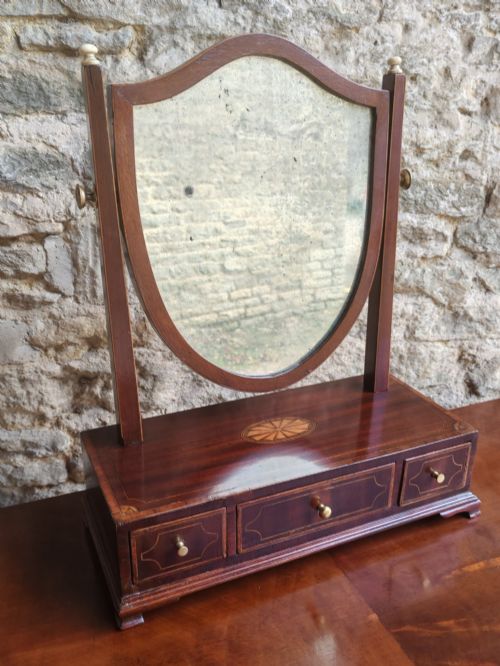
Makers utilised solid and veneered mahogany, frequently enhancing surfaces with contrasting boxwood inlay, satinwood stringing, and crossbanding.
Functional metal elements include brass mounts, pivoting side screws, and small turned bone or wooden drawer knobs.
Glass plates are set within shaped wooden frames, suspended between upright support arms mounted to stable plinth boxes.
Forms span simple swing plates, bow-front drawers, shield frames, and occasional cheval designs.
Distinctions in craftsmanship
Superior examples display finely figured flame mahogany veneers and precise, intricate boxwood inlay rather than plain timber surfaces.
The elegance of the frame profile, such as a well-proportioned shield or a neatly curved serpentine base, distinguishes finer pieces from simpler utilitarian designs.
Refined joinery in the drawer construction and original brass hardware indicate higher standards of period production.
The Sheraton Mahogany Dressing Mirror Glossary
- Bow-front
- A cabinet front that curves outward in a convex shape. This curved form appears frequently on the drawer bases of dressing mirrors.
- Cheval mirror
- A full-length dressing mirror suspended in a standing frame. These allow the glass to swing freely between vertical posts.
- Crossbanding
- A strip of veneer applied across the grain of the primary wood to form a border. It frames panels on drawer fronts and table tops.
- Serpentine
- A line that curves outward at the ends and inward in the centre. This undulating profile adds movement to drawer bases.
- Shield-shaped
- A glass frame shaped like a heraldic shield. This design is typical of late 18th-century dressing mirrors.
Sheraton Mahogany Dressing Mirror: Frequently Asked Questions
How do I date a dressing mirror?
Dating relies on stylistic clues like shield shapes, serpentine drawer layouts, and inlay materials. Earlier Georgian pieces often show hand-cut dovetails and distinct timber patination.
Later Edwardian revival items reflect modified proportions and machine-sawn elements while imitating the classic 18th-century aesthetic.
Are the mirror plates original?
Many surviving pieces retain their historic glass, which can exhibit light foxing, minor silver loss, or subtle distortions. These signs indicate genuine age rather than modern replacement.
Mirrors with completely clear, flawless glass often point to later restoration work during the life of the piece.
Where should I place a table mirror?
These mirrors suit dressing chests, sideboards, or dedicated writing and dressing tables. Ensure the supporting surface is stable and deep enough to bear the weight.
Keep them away from direct sunlight to protect the mahogany finish and prevent timber warping over time.
What is the difference between a toilet mirror and a dressing mirror?
Historically, both terms describe smaller mirrors designed to sit atop a chest or table for grooming. They function identically as adjustable swing glasses.
Larger variations occasionally incorporate small drawers or writing compartments within the base structure.