





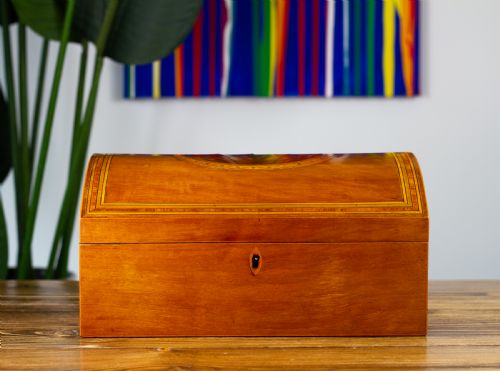


Sheraton Inlaid Tea Chest
A sheraton inlaid tea chest is a refined timber box designed to preserve leaf tea, prized for its geometry and contrasting veneers.
Sheraton Inlaid Tea Chest
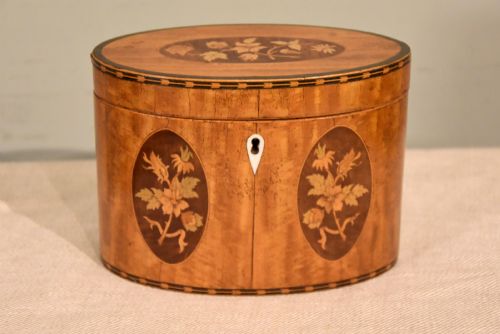
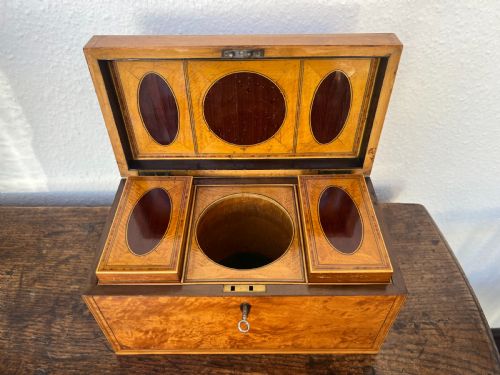
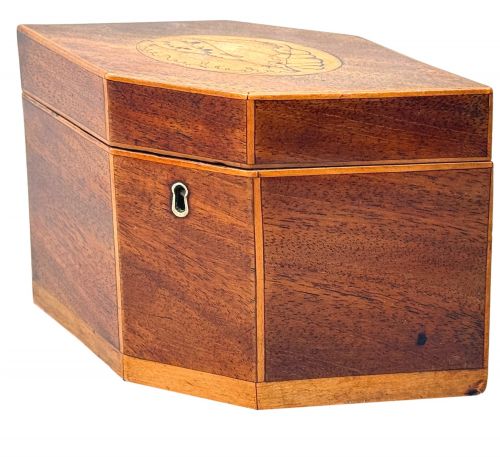
A sheraton inlaid tea chest takes the form of an oval, octagonal or hexagonal box built to hold loose tea leaves safely under lock. These small containers emerge primarily from the Georgian and late eighteenth century periods, reflecting an era when tea was a costly commodity requiring secure storage.
How they were made
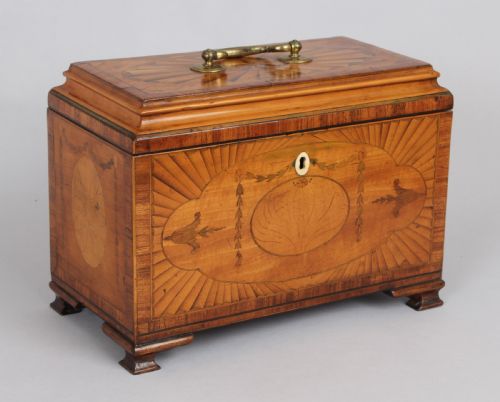
Carpenters constructed these tea chests using solid timbers like mahogany and satinwood, frequently applying contrasting veneers of boxwood, ebony and harewood. Surface decoration relies on precise wood inlay, creating pictorial elements like shells and butterflies without relying on paint.
Metal fittings such as brass provide structural security for hinges and escutcheons, while interior compartments occasionally incorporate bone details. The combination of varied exotic woods gives each chest its characteristic linear banding and geometric framing.
Sheraton Inlaid Tea Chest Retail Price Guide 2026
Typical asking prices for sheraton inlaid tea chest among the pieces listed under this phrase on Sellingantiques today, from the lower quarter to the upper quarter. They describe what is for sale here now, not the wider market.
The listings span the eighteenth and nineteenth centuries, featuring forms built from satinwood, mahogany, harewood and partridge wood.
What varies in quality
Quality rests upon the crispness of the geometry and the precision of the contrasting wood inlay rather than sheer scale. Finer examples display meticulous attention to grain direction and the harmonious pairing of satinwood with darker banding.
The choice of primary timber also dictates the tier of the piece, with richly figured partridge wood or unblemished satinwood sitting above simpler mahogany carcasses. Furthermore, the subtlety of the shell or butterfly motifs separates standard workshop output from exceptional work.
The Sheraton Inlaid Tea Chest Glossary
- Satinwood
- A light yellowish timber with a lustrous satin-like sheen, frequently used for the main surfaces of eighteenth century tea chests.
- Tea Caddy
- A container designed specifically for storing dry tea leaves, often subdivided internally for different varieties.
- Harewood
- Sycamore wood that has been stained to a greenish-grey tone, utilised for subtle contrast in detailed inlay work.
- Marquetry
- The art of forming decorative patterns on a wooden carcass by fitting together small pieces of various coloured veneers.
- Escutcheon
- A small protective plate surrounding the keyhole of a box or chest, usually cast in brass.
Sheraton Inlaid Tea Chest: Frequently Asked Questions
What is a sheraton inlaid tea chest?
A sheraton inlaid tea chest is a small wooden container built during the Georgian period to store expensive tea leaves securely.
These pieces use geometric shapes like ovals and hexagons, decorated with contrasting wood inlay and decorative veneers.
How were tea chests used originally?
Households used these locked boxes to keep valuable tea under the direct control of the master or mistress of the house.
Inside, the space was often divided to keep green and black teas separate before serving.
How do I identify a Georgian tea chest?
Georgian examples typically display characteristic wood choices like satinwood, mahogany and harewood, combined with classical Neoclassical proportions.
Look for hand-cut dovetails, brass escutcheons and precise geometric inlay rather than mass-produced uniformity.
How should I care for an antique tea chest?
Keep wooden tea chests away from direct sunlight and sudden temperature changes to protect the delicate satinwood veneers and internal timbers.
Apply a light wax polish occasionally to nourish the historic surface without sealing the wood.