


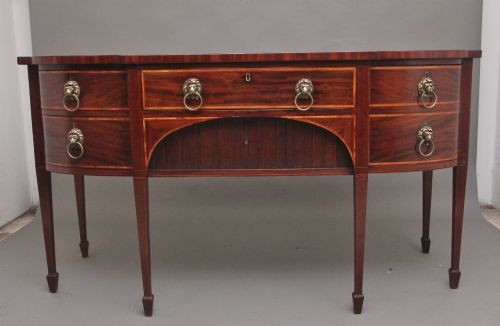

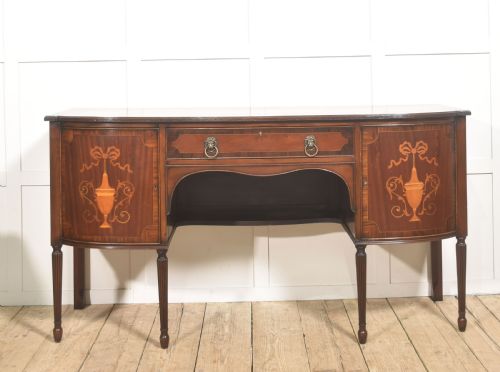


Sheraton Bowfront Table
A sheraton bowfront table brings refined curve and warm timber to a room, offering practical surface space with distinct period proportion.
Sheraton Bowfront Table
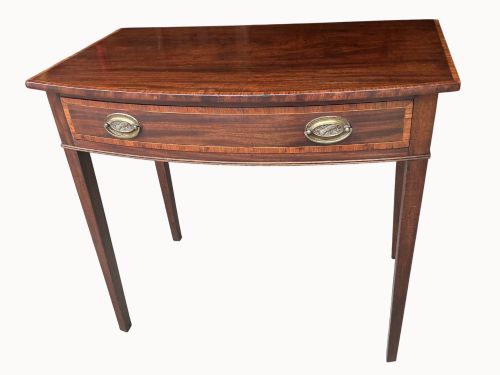
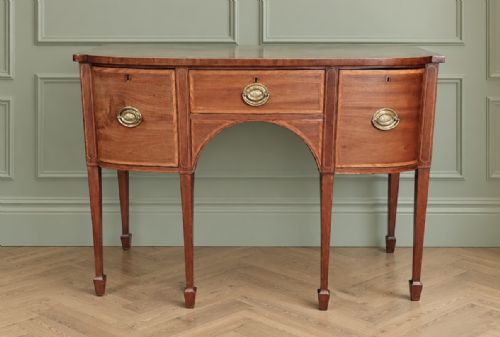
A sheraton bowfront table encompasses functional dining and serving furniture designed with a graceful, outwardly curving front edge. The selection ranges widely across forms, including side tables, servers, sideboards, dressing mirrors, and bedside cabinets.
Most examples you encounter stem from the Georgian and Edwardian eras, combining utilitarian storage or display with delicate neoclassical lines. Makers frequently utilised mahogany as the primary timber, shaping the distinctive sweeping facade to catch the light.
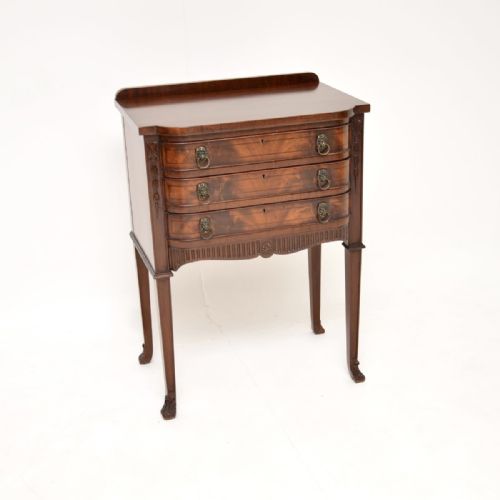
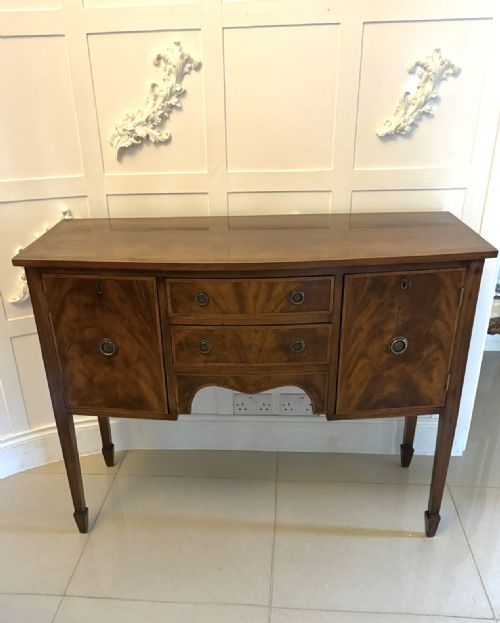
Sideboards and side tables dominate the available stock, alongside smaller items like toilet mirrors and bedside chests. These items served dining rooms and bedrooms alike, functioning as both decorative centrepieces and practical furniture.
How they were made
Cabinetmakers constructed these pieces primarily from solid and veneered mahogany, often selecting flame figures for visual depth on the curved drawer fronts. Workshops incorporated contrasting timbers such as satinwood, boxwood, and various wood inlays to create crisp geometric stringing and decorative borders.
The characteristic bowfront shape required precise joinery to bend or segment timber cleanly along the convex radius without compromising structural integrity. Drawer linings typically employed secondary woods, while brass hardware, including handles and escutcheons, provided functional contrast to the polished timber surface.
Listings feature items from the eighteenth century through to the 1930s, encompassing Georgian, Regency, Victorian, and Edwardian eras.
What varies in quality
The fineness of a piece rests heavily on the selection of timber veneers and the crispness of the inlaid details. Superior examples exhibit matched flame mahogany grains across the curved drawer banks, bordered by meticulously fitted satinwood and boxwood crossbanding.
Proportion and structural balance dictate the upper tier of craftsmanship, where legs taper cleanly and proportions remain harmonious whether the object is a large sideboard or a small side table. Lesser pieces often rely on plain timber stocks with simpler, heavier framing that lacks the refined lightness associated with the Sheraton style.
The Sheraton Bowfront Table Glossary
- Bowfront
- A convex curved cabinet or table front that swells outward from the centre. This design softens the room's angles while increasing internal capacity.
- Crossbanding
- A strip of veneer applied perpendicularly to the grain of the main surface. It forms a decorative border around tabletops or drawer fronts.
- Inlay
- A technique where pieces of contrasting wood or other materials are inserted into recessed cavities to form patterns. Boxwood and satinwood frequently serve this purpose.
- Flame mahogany
- A highly figured wood grain pattern resembling flickering flames. Cabinetmakers reserved this prized timber for prominent exterior surfaces.
Sheraton Bowfront Table: Frequently Asked Questions
How do I date a bowfront table?
Dating relies on examining secondary woods, construction methods, and the specific style of inlay work present on the carcass. Georgian examples generally display hand-cut dovetails and lighter internal framing compared to later Edwardian reproductions.
Hardware and finish also offer strong clues to the period of manufacture. Original brass handles and traditional shellac polish point directly to eighteenth or early nineteenth-century origins.
Where should I place a side table?
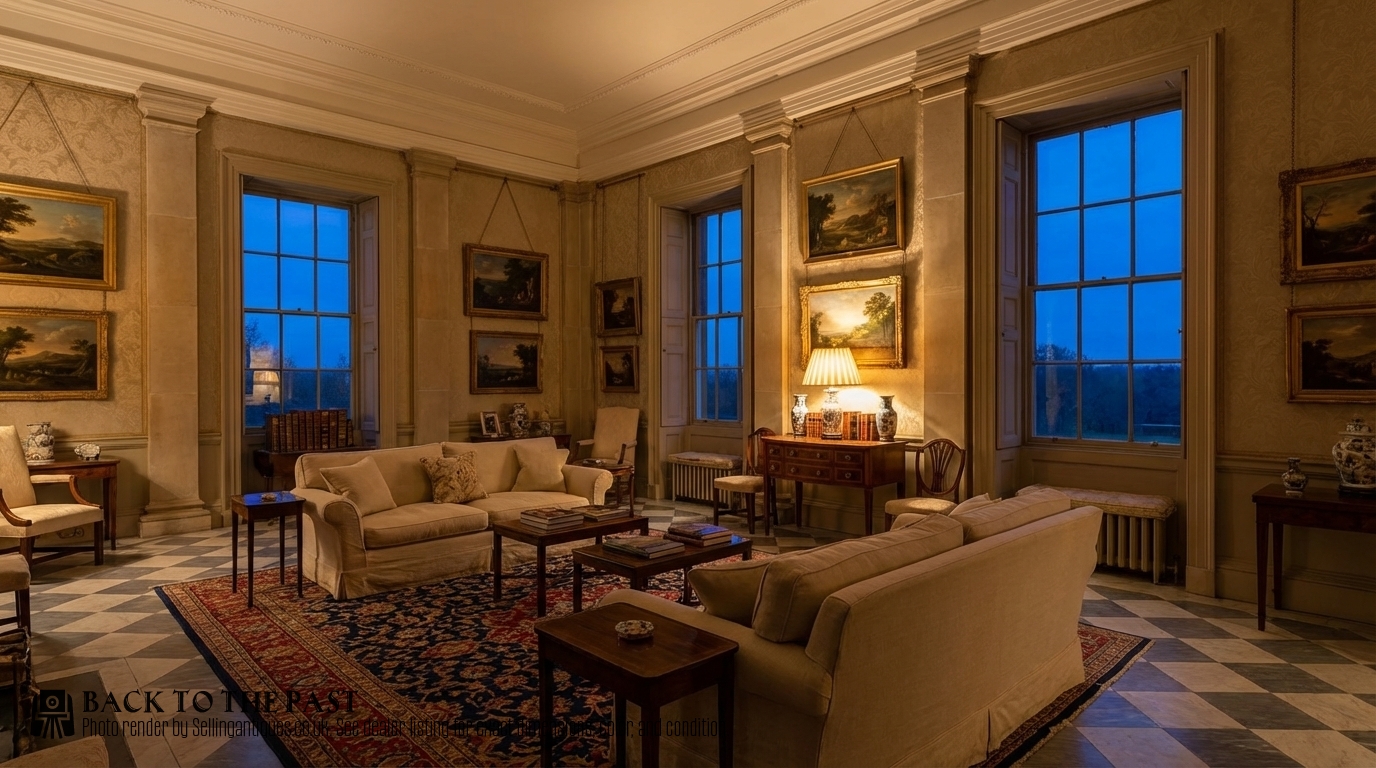
A side table suits hallways, dining rooms, and living spaces where a shallow profile keeps walkways clear. The curved front adds visual interest without protruding deeply into the room.
Pairing the table with a matching mirror or placing it beneath a painting creates a balanced focal point. Smaller versions function effectively as bedside cabinets or writing surfaces.
Are these tables sturdy enough for daily use?
Solid mahogany construction and traditional joinery make these pieces remarkably durable for everyday household tasks. Proper maintenance keeps the timber stable and the joints secure over generations.
Avoiding placement near direct heat sources prevents the wood veneers from drying out or lifting. Regular dusting and occasional waxing preserve the polished finish against normal wear.
What is the difference between a sideboard and a server?
A sideboard usually includes a combination of deep drawers and cupboards designed for storing dining linens and tableware. Its larger footprint anchors the dining room wall.
A server is lighter in construction, generally standing on taller legs with fewer drawers and no enclosed cupboards. This form acts primarily as a surface for presenting food and drink during gatherings.