




Sheraton Bedroom Table
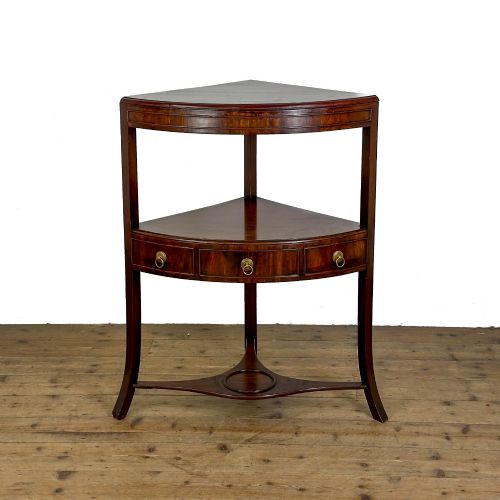
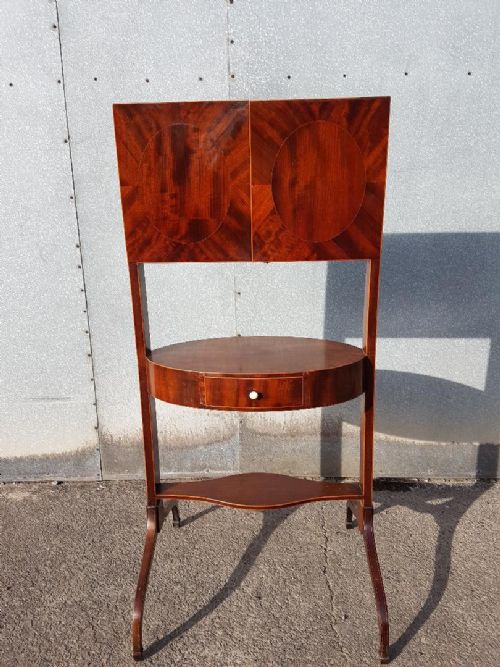
A sheraton bedroom table brings refined neoclassical lines to the chamber, offering understated elegance through polished mahogany and delicate satinwood inlay.
Sheraton Bedroom Table
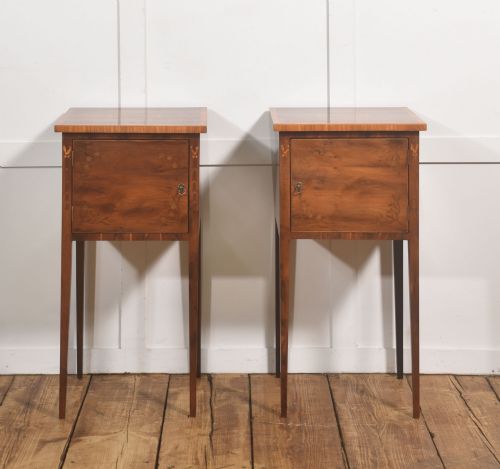
A sheraton bedroom table encompasses a range of refined furniture designed for the sleeping chamber, including bedside cabinets, nightstands, and dressing tables. These pieces date across the Georgian, Victorian, and Edwardian periods, demonstrating enduring neoclassical taste.
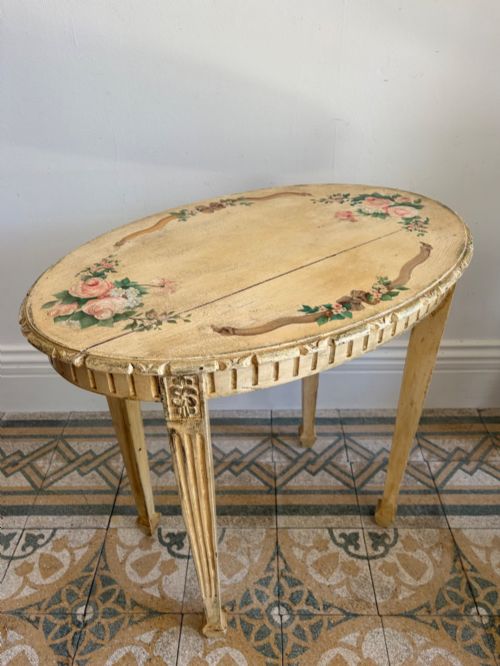
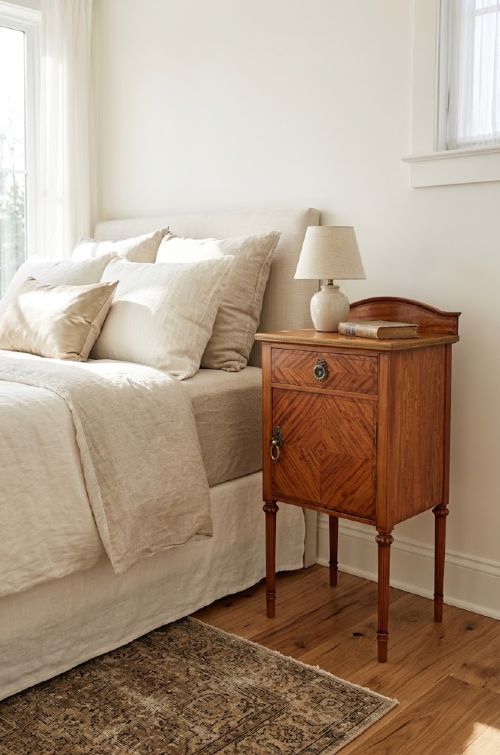
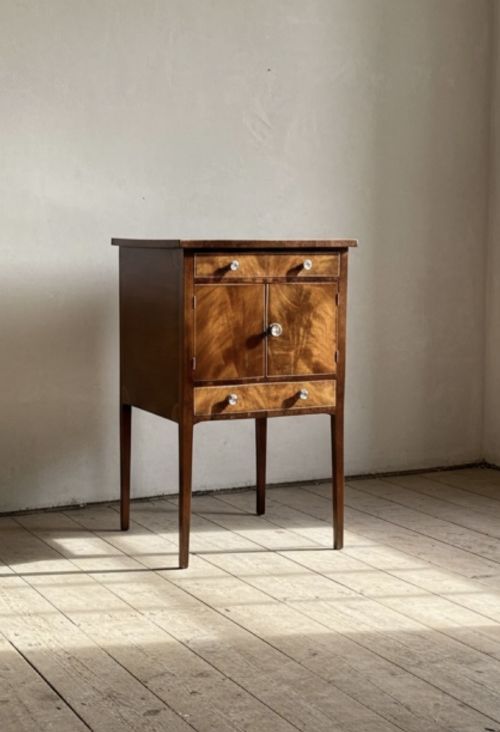
The version most commonly encountered on this page is the bedside cabinet or nightstand, frequently rendered in satinwood or mahogany. Dressing tables and washstands also appear, often featuring delicate inlay or crossbanding.
Origins span the eighteenth, nineteenth, and early twentieth centuries, capturing both original Georgian craftsmanship and later Sheraton Revival interpretations. Buyers select these tables to integrate period proportion and functional surface space into traditional rooms.
What varies in quality
Quality rests in the crispness of the inlay work and the selection of figured timber, such as symmetrical flame mahogany veneer or finely grained satinwood. Finer examples display meticulous attention to proportion, balanced crossbanding, and well-executed hand-painted details.
The integrity of secondary woods and the preservation of original brass fittings distinguish superior pieces from standard production. Construction depth is evident in the weight of the timber and the precision of the joinery rather than surface embellishment alone.
Some dressing tables hide triple mirrors designed to catch the morning light from every conceivable angle.
Gillows
The Sheraton Bedroom Table Glossary
- Satinwood
- A light-coloured, lustrous timber native to the tropics, prized for its golden sheen and smooth finish. It became a hallmark of refined neoclassical cabinet making.
- Crossbanding
- A decorative border technique where veneer strips are laid perpendicularly to the grain of the central panel. This frames the top or drawer front with contrasting grain direction.
- Boxwood
- A dense, pale wood utilised for fine stringing and inlay lines in eighteenth and nineteenth-century furniture. It provides sharp linear contrast against darker timbers.
- Sheraton Revival
- A late nineteenth and early twentieth-century movement replicating the lighter neoclassical forms of the Georgian designer Thomas Sheraton. Pieces from this era employ satinwood, mahogany, and delicate marquetry.
- Triplate dressing table
- A vanity table incorporating a three-section mirror arrangement, allowing multiple angles of reflection. It is a distinctive form found in period chamber furniture.
Sheraton Bedroom Table: Frequently Asked Questions
How do I identify a Sheraton Revival piece?
Sheraton Revival furniture dates from the late nineteenth or early twentieth century and mimics the lighter proportions of the eighteenth century. Look for characteristic satinwood finishes, painted neoclassical motifs, and tapered legs.
Construction methods and secondary woods from this later period typically separate them from original Georgian pieces, even when the stylistic vocabulary is identical.
Where were bedside cabinets placed?
Bedside cabinets and nightstands stood adjacent to the bed to hold chamber candlesticks, pocket watches, and personal items during the night. Enclosed cupboards kept chamber pots or night essentials out of sight.
Their compact scale allowed them to fit neatly beside period bed frames without dominating the chamber layout.
How should I care for satinwood?
Satinwood surfaces require gentle dusting with a soft, dry cloth to prevent abrasion. Avoid placing these tables in direct sunlight or near heat sources, which can dry out the delicate timber and veneer.
Application of appropriate furniture wax preserves the characteristic golden lustre without building up heavy residues over time.
What is the difference between a nightstand and a washstand?
A nightstand is designed primarily for bedside storage with a flat top and enclosed cupboard or drawer space. A washstand typically incorporates a marble top or a surface intended to support a washbasin and pitcher for morning ablutions.
While both belong to the bedroom suite, washstands often show evidence of water-resistant surfaces like marble or glazed tile.