




Shepherd and Sheep Artwork
Shepherd and sheep artwork captures the quiet rhythm of rural life through pastoral scenes rendered in oil and watercolour.
Shepherd and Sheep Artwork
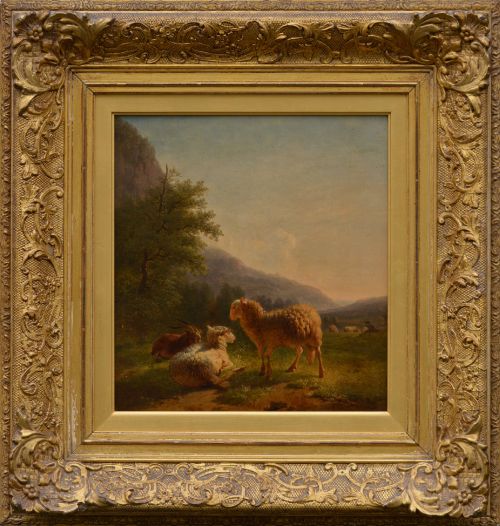
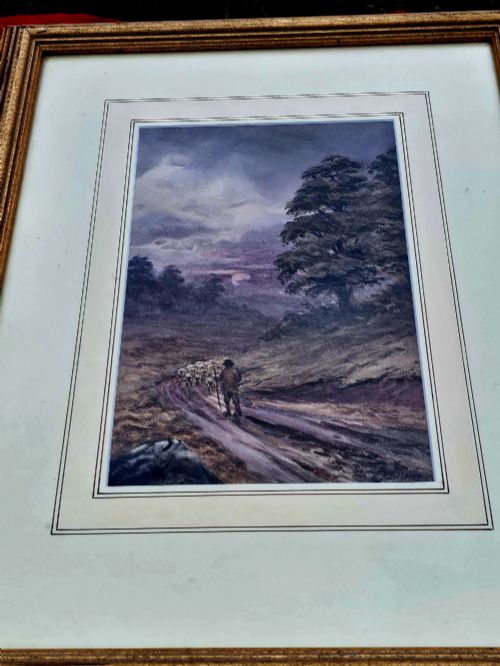
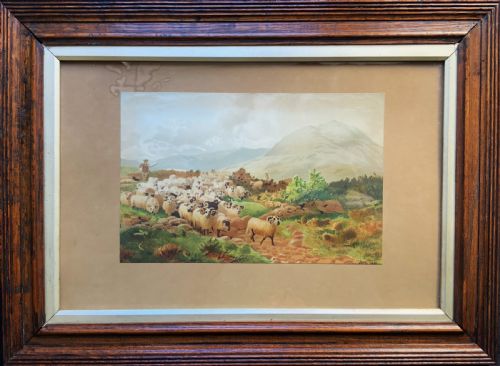
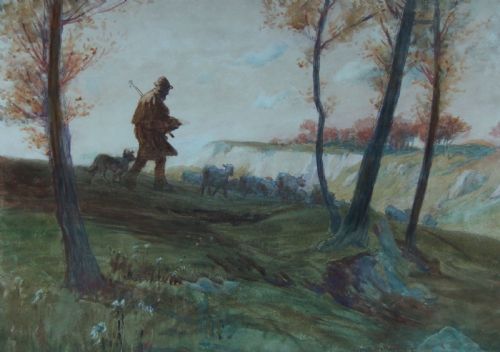
Shepherd and sheep artwork encompasses paintings that depict pastoral life, rural landscapes, and farming scenes from the nineteenth and early twentieth centuries. These pieces typically portray flocks in open fields, country lanes, and highland pastures under various weather conditions.
The selections available here range from traditional Victorian watercolours to British Impressionist oil paintings on canvas and wood. Buyers most frequently encounter framed works by regional artists working within pastoral and romantic traditions.
Common regional settings include Dorset, Sussex, and Yorkshire, anchoring the romanticised rural views in specific British locales. The physical objects take the form of wall art, finished with gesso and giltwood frames that reflect their period origins.
Materials and techniques
Artists created these pastoral scenes primarily using oil on canvas or watercolour applied to paper, mounted within protective glass and wooden framing. Giltwood and gesso were frequently utilised for the decorative frames that accompanied the finished paintings.
The techniques span traditional academic oil painting methods and the looser brushwork characteristic of British Impressionism. Watercolour works often employ fine washes to capture atmospheric light in rural landscapes and farmsteads.
The collection spans paintings from the nineteenth century through to the nineteen fifties, encompassing traditional romanticism and British Impressionism.
Quality and execution
Quality in these pastoral works rests upon the artist's ability to render the natural texture of wool, foliage, and changing atmospheric light. Stronger pieces demonstrate confident handling of medium, whether through the bold application of oil paint or the delicate control of watercolour washes.
The preservation of the original paper, canvas, and framing components contributes significantly to the integrity of the piece. Works that retain their period giltwood and gesso frames offer a more complete historical context.
Eugène Verboeckhoven·EJ Letheren·Henry Charles Fox·Herbert Royle·George Turner·A Winter Shaw·Owen Bowen·George Faulkner Wetherbee·William Greaves·Henry Birtles·Anthonij Anton Mauve
The Shepherd and Sheep Artwork Glossary
- Pastoral
- A genre of art that romanticises rural life, shepherds, and agricultural landscapes. It draws upon traditional ideals of harmony between humans, animals, and nature.
- Gesso
- A plaster-like mixture applied to wooden frames as a base for moulding and gilding. It provides a smooth surface for decorative details.
- Giltwood
- Wood that has been coated with a thin layer of gold leaf or gold paint. It was commonly used for framing fine art in the nineteenth century.
- British Impressionism
- An art movement focusing on everyday subject matter and the play of natural light, using visible brushstrokes. Painters in this style sought to capture transient atmospheric effects.
- Watercolour
- A painting method in which the pigments are suspended in a water-based solution. It is traditionally applied to paper to achieve translucent effects.
Shepherd and Sheep Artwork: Frequently Asked Questions
What subjects appear in shepherd and sheep artwork?
These paintings typically show flocks grazing in pastures, being driven along country lanes, or returning to farmsteads at dusk. Artists often placed emphasis on the relationship between the shepherd, the livestock, and the surrounding rural topography.
The settings frequently draw upon specific British landscapes, ranging from southern chalk downs to northern valleys and highland farms.
How do I care for antique watercolours?
Watercolours on paper require protection from direct sunlight to prevent the fading of pigments and discolouration of the paper support. Framing behind glass helps shield the delicate medium from airborne pollutants and moisture.
Maintaining stable indoor humidity levels prevents warping of the paper and damage to the underlying mount.
What periods do these paintings come from?
The available pieces originate primarily from the nineteenth and early twentieth centuries, spanning the Victorian and Edwardian eras. Stylistic shifts during this timeframe move from detailed romanticism towards impressionistic interpretations of light and atmosphere.
Dates associated with individual works often reflect the active painting period of the artist or the exhibition era.
Are the frames original to the artwork?
Many works retain their period gesso and giltwood frames, which reflect the framing conventions of the nineteenth and early twentieth centuries. Original frames complement the aesthetic of the painting and often show appropriate signs of age.
Some pieces may have been reframed later to suit changing interior tastes or to better preserve the artwork.