


Antique Country Lane Painting
These antique country lane painting works capture rural paths through nineteenth and twentieth century Britain in oil and watercolour.
Antique Country Lane Painting
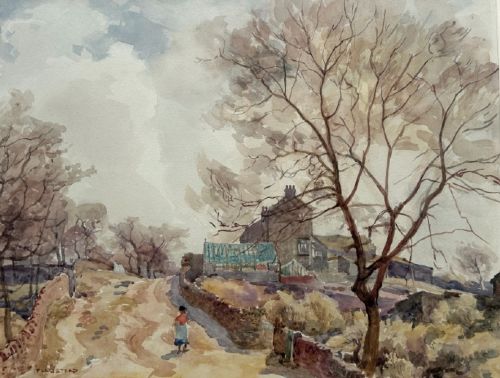
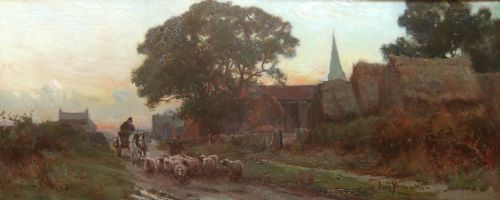
An antique country lane painting presents rural British topography through pastoral scenes, village roads, and wooded paths, often populated by figures, shepherds with flocks, or horse-drawn caravans. These works range from nineteenth century Victorian realists to twentieth century impressionists working in oil and watercolour.
You will encounter pieces from the Victorian era alongside Edwardian and mid twentieth century examples, executed on canvas, panel, paper, or board. The most frequent versions on this page combine traditional British landscape subjects with the distinct brushwork of provincial and academic artists.
How they were made
Artists applied oil paint or watercolour pigment onto stretched canvas, wooden panels, heavy paper, or card. Many works retain their original wood framing and protective glass to preserve the delicate pigments.
The technique relies on direct observation of light and atmosphere, building depth through layered oil glazes or transparent watercolour washes that define foliage, figures, and rural cottages.
Several lanes on this page come populated with wandering ducks, resting sheep, and wandering gypsy caravans.
What varies in quality
Quality rests upon the artist's handling of perspective, light, and anatomical proportion in figures and livestock, distinguishing accomplished academic output from simpler provincial work. Finer compositions integrate the lane naturally into the wider landscape while maintaining balanced colour harmonies.
The preservation of the original surface, minimal retouching, and the integrity of the original backing and framing materials all contribute significantly to the standing of an individual piece.
Edgar Woollatt·George Turner·Abraham Hulk Jnr·Henry Charles Fox·Walter Henry Sweet·William Luker Snr·John J Hamer·William Greaves·George Jackson·Edward Adveno Brooke·Frederick Hines·Robert Payton Reid·E Chaplin·P Arnold·Charles James Parry
The Antique Country Lane Painting Glossary
- Watercolour
- A paint consisting of water-soluble pigment that produces translucent washes on paper. This medium allows for rapid sketching of atmospheric rural light.
- Oil paint
- A slow-drying paint made with pigments suspended in a drying oil, typically linseed. It permits rich blending and textured impasto application across canvas or panel supports.
- Impressionism
- A style emphasising transient effects of light and spontaneous brushwork. Edwardian practitioners applied this approach to traditional rural British subjects.
- Victorian Pastoral
- A genre focusing on idealized rural life, frequently depicting shepherds, cottages, and agricultural labour along quiet tracks.
Antique Country Lane Painting: Frequently Asked Questions
What periods do these paintings cover?
The available selection spans from the nineteenth century through the Victorian and Edwardian eras into the mid twentieth century, specifically covering dates from the 1870s to the 1950s.
Most examples reflect late Victorian pastoral traditions or early twentieth century British impressionism.
What materials were used to create them?
Painters utilised oil paint or watercolour pigment applied to canvas, wood panels, paper, or card supports. Many works are preserved behind glass within period wooden frames.
Support materials often indicate the date and intended permanence of the artwork.
How can I tell different styles apart?
Victorian realists tend to provide detailed depictions of figures, cattle, and rural architecture, whereas Edwardian impressionists focus more on loose brushwork and changing light.
Subject matter also shifts from nineteenth century pastoral labour scenes toward quieter twentieth century village lanes.
How do I care for these watercolours and oils?
Keep watercolours away from direct sunlight to prevent pigment fading on the paper support. Oil paintings benefit from stable indoor humidity and occasional gentle dusting of the frame.
Original glass should remain intact on works on paper to protect the delicate media from atmospheric moisture.