
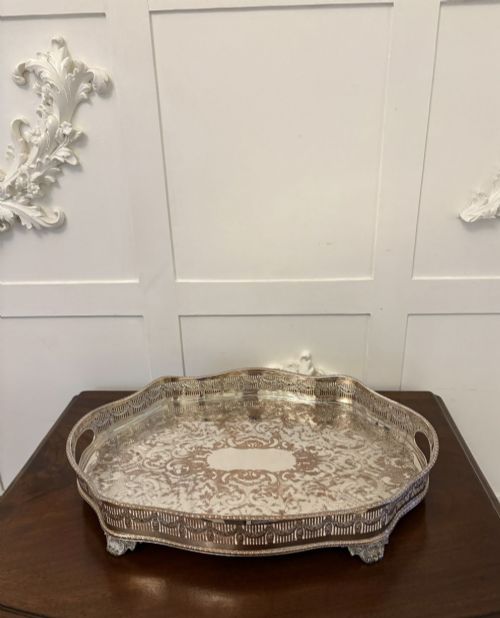


Sheffield Plate Serving Platter
A sheffield plate serving platter brings genuine Georgian and Victorian craftsmanship to the dining table through fused silver and copper.
Sheffield Plate Serving Platter
A sheffield plate serving platter encompasses a range of dining room items designed for presentation and service. Buyers find pieces spanning the Georgian, Victorian, and Edwardian periods, including meat domes, dinner plates, warming dishes, and large serving trays. These items formed the backbone of formal dining before modern metalworking techniques took over.
What varies in quality
The distinction between standard items and superior examples lies in the crispness of the chased or engraved decoration and the integrity of the underlying metal. Pieces that retain their original silver layer without excessive wear to the underlying copper show greater care from past owners and higher initial manufacture.
Substantial weight and balanced proportions indicate better construction, particularly in larger pieces like warming dishes and meat domes. Master silversmiths executed applied borders and handles with precision, ensuring that decorative elements integrate seamlessly with the main body of the platter.
Listings span the nineteenth and early twentieth centuries, recording materials from original Old Sheffield Plate and copper to later electroplated nickel silver and wood.
Henry Wilkinson·Matthew Boulton·Padley Parkin·J Dixon and Sons·Frank Cobb and Co·Cresswick·Lee and Wigfull·J H Potter
The Sheffield Plate Serving Platter Glossary
- Sheffield Plate
- A composite material made by fusing a thin sheet of silver to a thicker ingot of copper, developed in the eighteenth century. This predates modern electroplating methods and requires distinct care.
- Old Sheffield Plate
- An antique designation for items produced using the original fusion method rather than later chemical plating. Collectors prize these pieces for their soft lustre and historical importance.
- Meat Dome
- A large domed cover used to keep joints of meat warm on the dining table. They frequently feature cast handles and engraved family crests.
- Reticulated
- Having a network or net-like pattern, often seen in the pierced metal borders of Victorian serving trays. This openwork technique lightens the visual weight of large pieces.
- EPNS
- Electroplated Nickel Silver, a later base metal foundation introduced in the nineteenth century. It replaced older fusion methods with a uniform chemical application of silver.
Sheffield Plate Serving Platter: Frequently Asked Questions
How do I clean old sheffield plate?
Use a mild, non-abrasive silver cleaner and a soft cloth to preserve the thin layer of silver. Avoid aggressive rubbing that might reveal the copper base underneath.
Store pieces in a dry environment and handle them gently to maintain the historic surface finish.
What is the difference between old sheffield plate and silver plate?
Old sheffield plate involves physically fusing silver and copper sheets together under heat and pressure before rolling them into sheets. This method creates a different edge profile and ageing pattern.
Silver plate typically refers to later electroplated items where a thin coat of silver sits on a base metal via an electrical bath.
Can I use these platters for serving food today?
Many buyers use these pieces for display, but historic serving platters remain functional for dry foods and presentation. Ensure the surface is clean and free of harmful residues before placing food directly upon it.
Acidic foods should not remain in contact with older silver surfaces for extended periods.
How can I date a sheffield plate tray?
Examine the style of any engraved decoration, the shape of the handles, and the form of the maker's mark stamped into the metal. Georgian and Victorian pieces often show distinct manufacturing traits that help narrow down the decade.
Consulting historical maker mark registries provides precise attribution for stamped initials and symbols.