



Sheet Music Storage Chest
A sheet music storage chest keeps scores neat and protected, combining period craftsmanship with practical domestic order for any musician.
Sheet Music Storage Chest
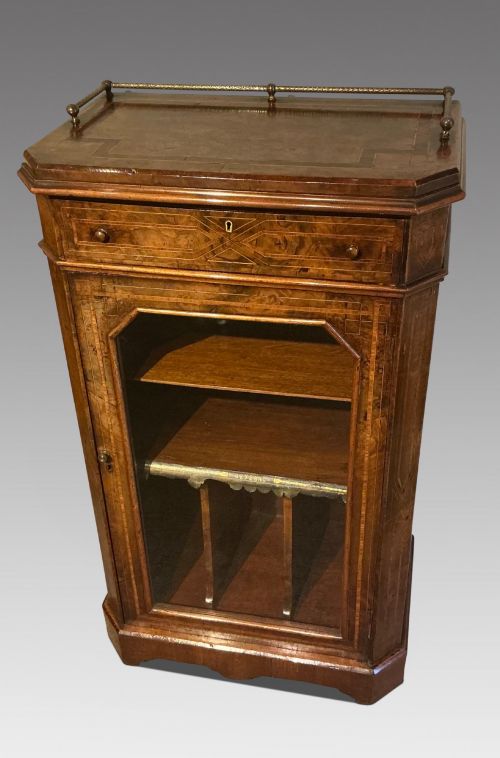
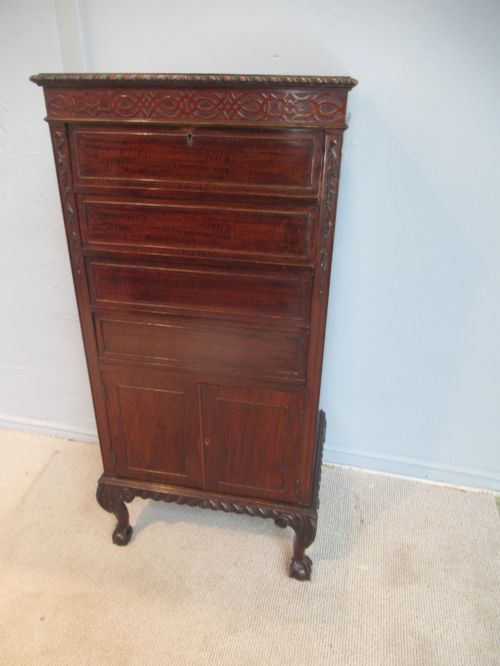
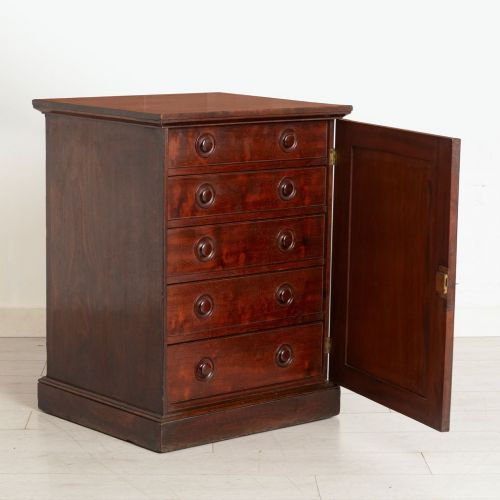
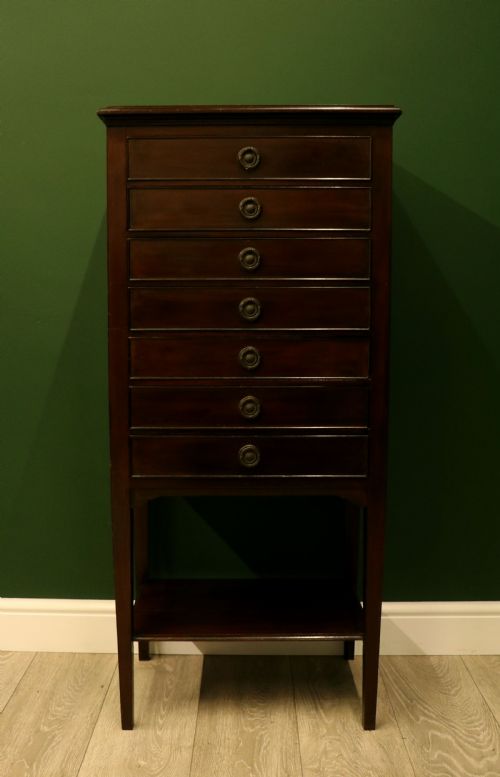
A sheet music storage chest on this page typically appears as a compact cabinet or filing unit designed specifically to hold unbound scores and folios. Buyers encounter these primarily from the Victorian and Edwardian periods, alongside pieces spanning into the early twentieth century.
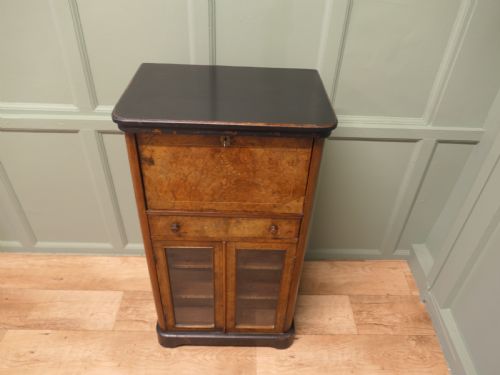
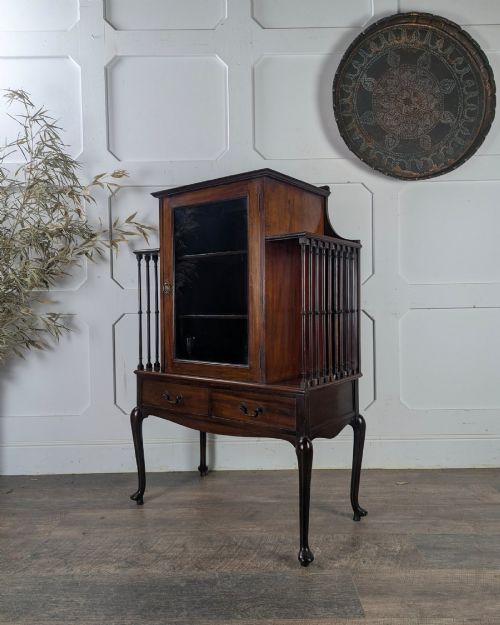
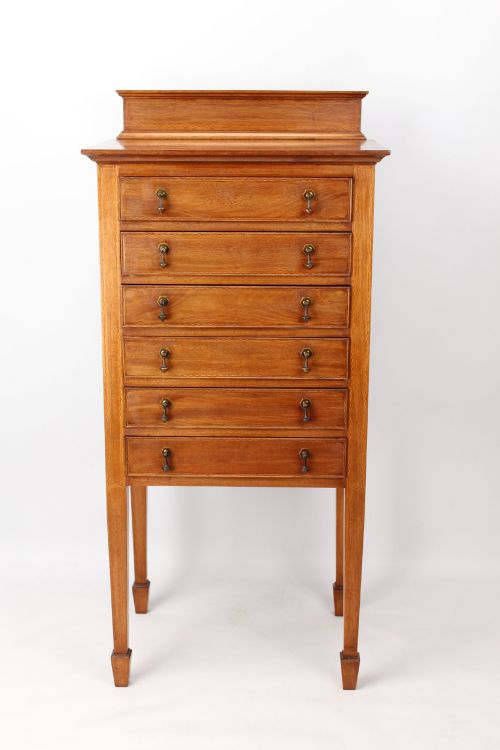
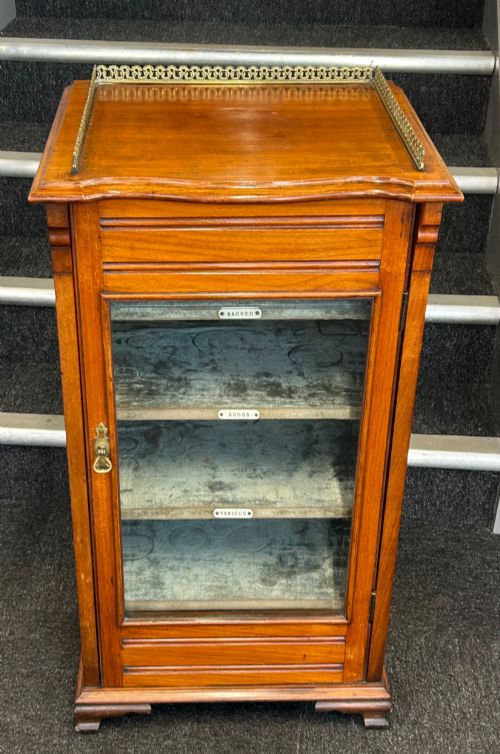
The standard forms include dedicated music cabinets, drop front units, and multi drawer filing chests. Many examples originate from the Edwardian era in mahogany or walnut, often featuring inlaid details or glazed doors.
Makers and designers of the period adapted standard cabinetry to suit the drawing room, resulting in slim, upright proportions that fit domestic spaces efficiently. These pieces function equally well today for holding documents, prints, or modern vinyl collections.
Materials and construction methods
Makers utilised solid timbers and veneers including mahogany, walnut, burr walnut, satinwood, and oak for the carcass construction. These woods were frequently enhanced with marquetry or delicate string inlay.
Hardware such as brass handles, hinges, and occasional metal fittings provide structural detail and functional operation. Glass panels appear on variants configured as display cases or bookcases.
Drawers and fall fronts were engineered to slide or drop smoothly, protecting the paper contents within from folding or bending.
Listings span from the 19th century through the Edwardian period into the 1930s, using mahogany, walnut, burr walnut, and satinwood.
Assessing quality in period cabinets
Quality separates through the choice of timber figure, such as burr walnut or figured mahogany, and the precision of the marquetry or string inlay. Superior examples display careful grain matching across the drawer fronts and doors.
The integrity of the internal drawer construction and the finish of the brass hardware indicate the original maker's standard. Finer pieces retain original glass, keys, and working locks.
Keeble London·Liberty
The Sheet Music Storage Chest Glossary
- Fall front
- A hinged door or panel that folds down to reveal internal compartments or writing surfaces. This mechanism is frequently found on cabinets designed for sheet music or documents.
- Marquetry
- Decorative woodwork where pieces of veneer are fitted into a ground material to form patterns or pictures. Craftsmen applied this technique to the surfaces of Victorian and Edwardian furniture.
- Canterbury stool
- A low piece of furniture combining seating with compartments for holding music or books. These items often feature upholstered tops.
- Inlay
- A technique where contrasting materials are set into recesses within a solid wood surface. Edwardian pieces on this page frequently employ this method using satinwood or lighter timbers.
- Folio cabinet
- A piece of furniture designed specifically to store large sheets of paper, prints, or musical folios flat. They provide shallow drawers to prevent damage to the contents.
Sheet Music Storage Chest: Frequently Asked Questions
What are sheet music storage chests used for?
These cabinets were originally manufactured to store unbound musical scores, sheet music, and folios in domestic drawing rooms and music parlours.
Today, buyers utilise them for organising documents, art prints, and modern media such as records.
How do I distinguish Victorian from Edwardian pieces?
Victorian cabinets typically feature darker timber tones, heavier proportions, and rich walnut or rosewood veneers.
Edwardian examples tend to look lighter and more refined, frequently incorporating satinwood stringing and inlaid mahogany.
Are the drawers large enough for modern sheet music?
Most period music cabinets feature shallow, wide drawers or drop fronts designed specifically for standard folio sizes.
Standard sheet music fits comfortably flat inside these compartments without folding or creasing.
How do I care for a wood music cabinet?
Keep the timber away from direct heat sources and strong sunlight to prevent the veneers from drying out or splitting.
Apply natural beeswax occasionally to nourish the polished mahogany or walnut surfaces.