
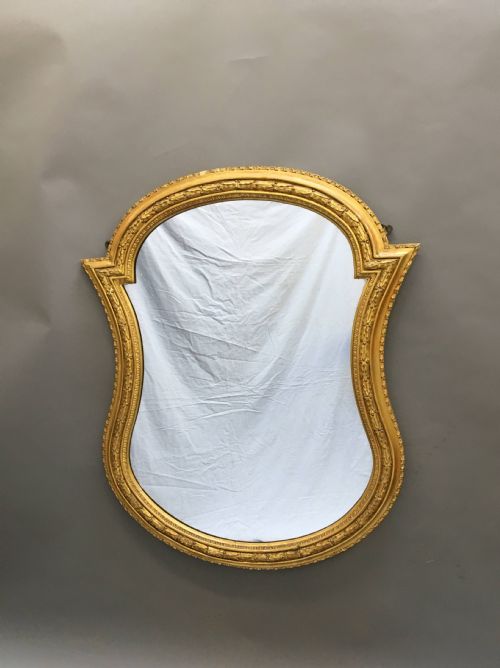


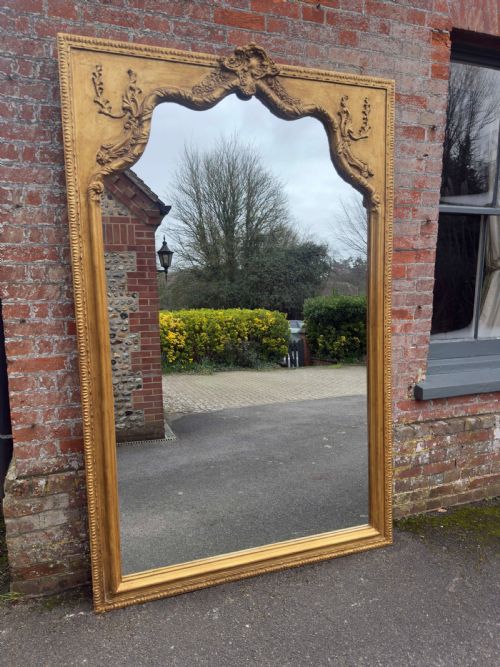


Shaped Gilt Frame Mirror
A shaped gilt frame mirror brings reflected light and decorative presence to a room, drawing the eye with curved profiles and metallic brilliance.
Shaped Gilt Frame Mirror
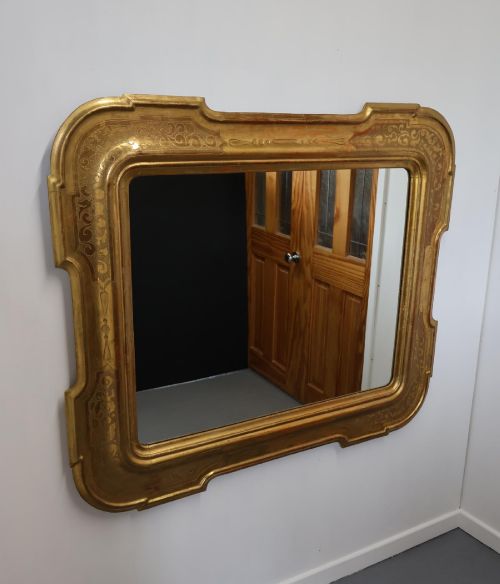
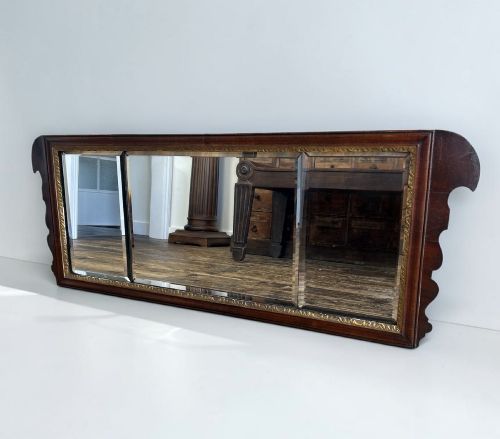
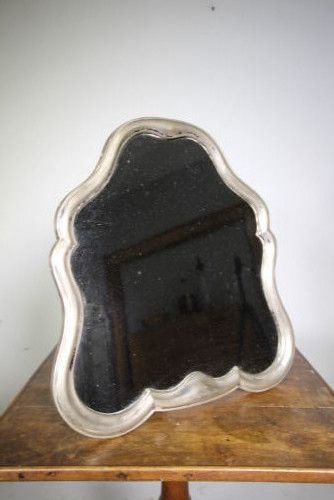
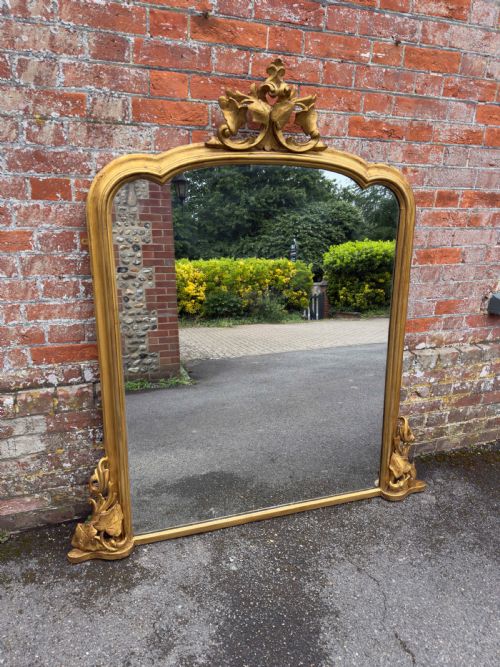
When you search for a shaped gilt frame mirror, you encounter pieces defined by curved contours, arched crests, and metallic gold surfaces. These objects function primarily as wall mirrors and overmantel mirrors, designed to hang above mantelpieces or anchor principal walls.
The pieces on this page span the nineteenth century alongside Georgian and early twentieth-century examples. English and French workshops dominate the selection, bringing variations in scale from modest wall pier glasses to grand overmantles.
Stylistic influences lean heavily toward Rococo Revival and French Chateau aesthetics, evident in asymmetrical scrolls, floral motifs, and serpentine framing. Continental and Italian interpretations also appear, offering hand-painted details or quatrefoil geometries.
How they were made
Carved wood and gesso form the structural foundation for the majority of these frames. Artisans shaped timber bases before applying layers of gesso, a plaster-like mixture that allowed for crisp moulding and deep relief carving.
Gilding was achieved through the application of gold leaf or silver gilt onto prepared surfaces, often burnished to catch the light. Walnut timber also appears, sometimes paired with parcel gilt highlights to accentuate grain and form.
Several pieces feature subtle rope twist mouldings, adding a tactile nautical texture to otherwise gilded elegance.
What varies in quality
The depth and crispness of the carved gesso decoration set individual examples apart. Superior pieces display sharply defined motifs, such as laurel leaves, rope twists, or ornate scrolls, whereas lesser examples show softer, shallower relief where smoothing has dulled the detail.
The integrity of the original gilding and the preservation of the mirror glass itself determine the character of the object. Hand-carved wooden frames with untouched gold leaf retain a depth of surface texture that distinguishes them from later reproductions.
The Shaped Gilt Frame Mirror Glossary
- Gesso
- A plaster-like material applied to wooden frame bases to create a smooth surface for carving and gilding. This mixture allowed artisans to build up intricate relief ornaments.
- Giltwood
- Timber that has been coated with gold leaf or metallic powder. It provides the warm, reflective finish characteristic of these frames.
- Overmantle Mirror
- A wide mirror specifically proportioned to hang above a fireplace mantel. These pieces often feature extended horizontal dimensions.
- Parcel Gilt
- A finishing technique where only specific portions of a wooden object, such as walnut framing, are highlighted with gold leaf. This creates a contrast between exposed wood grain and gilded details.
- Rococo Revival
- A nineteenth-century design style drawing on eighteenth-century French motifs. It is characterised by curving lines, asymmetric scrolls, and naturalistic plant forms.
Shaped Gilt Frame Mirror: Frequently Asked Questions
Where should I hang an overmantel mirror?
These large mirrors are traditionally mounted directly above a fireplace mantelpiece to reflect light and anchor the room's proportions.
They also function effectively on principal living room walls where their scale can balance substantial pieces of furniture.
How do I clean a gilt frame?
Dust the carved surfaces gently with a soft, dry brush to prevent accumulation without disturbing the delicate gesso or gold leaf layers.
Avoid liquid cleaners and harsh chemicals entirely, as moisture can damage historical gilding and underlying wood.
What is the difference between wall and overmantel mirrors?
Wall mirrors are generally proportioned for vertical hanging in hallways, bedrooms, or between windows as pier glasses.
Overmantel mirrors are constructed with broader horizontal dimensions suited to the width of fireplace surrounds.
How do I identify a nineteenth-century frame?
Examine the construction methods visible on the reverse, including timber ageing, fixings, and the composition of the gesso base layers.
Nineteenth-century examples frequently utilise hand-carved wood beneath the gesso rather than modern moulded resin composites.