


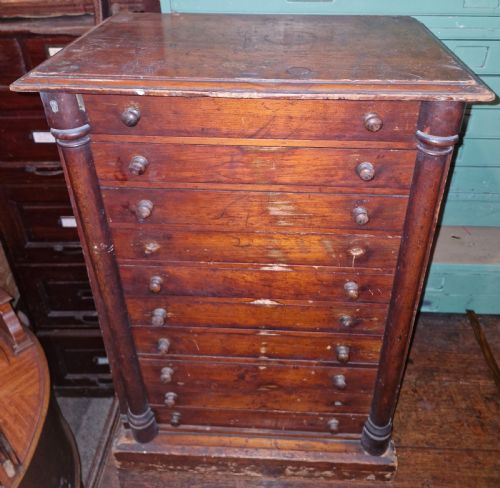


Shallow Mahogany Chest
A shallow mahogany chest offers compact storage with distinct period character, prized by collectors for its fine timber and efficient proportions.
Shallow Mahogany Chest
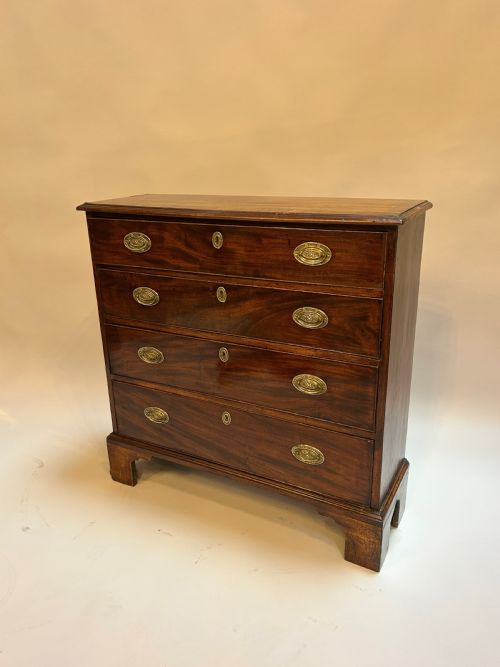
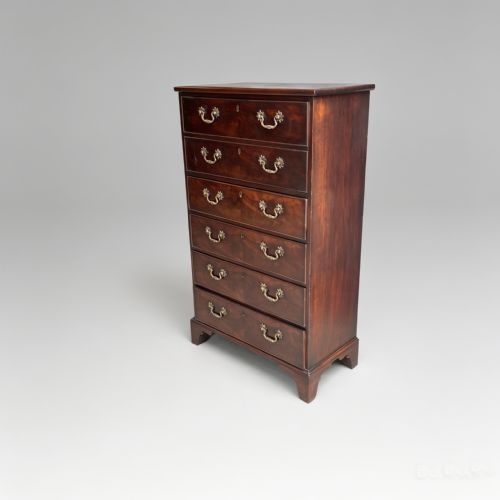
A shallow mahogany chest provides compact drawer storage within restricted depths, appearing in forms such as narrow chests of drawers, secretaire chests, and specialised specimen or collectors cabinets. These pieces date across multiple eras, spanning from the seventeenth century through the Victorian and Edwardian periods.
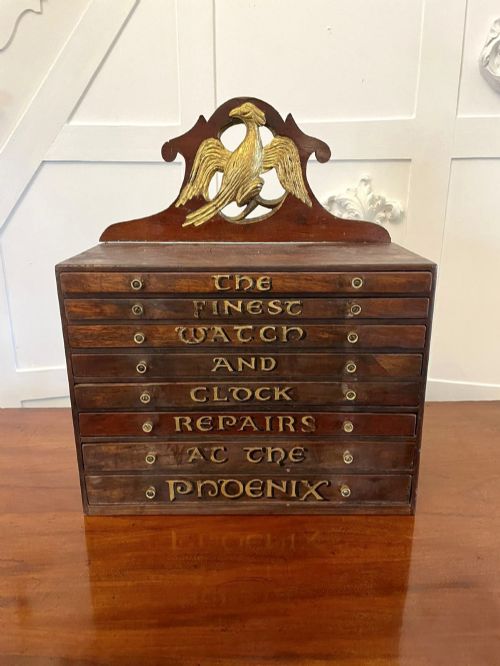
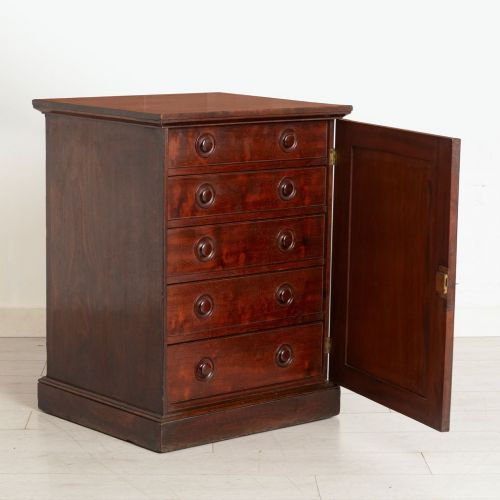
The selection ranges from tall nineteenth-century specimen chests and large multi-drawer cabinets designed for natural history collections to floor-standing folio cabinets and watch repairer chests. Mahogany forms the primary structural timber across these diverse functional types.
Buyers frequently encounter Victorian examples featuring numerous small drawers alongside Georgian and eighteenth-century formats. Each variation adapts the shallow profile for specific storage needs, whether for papers, watch parts, or geological specimens.
What varies in quality
Quality rests upon the selection of timber figures, such as flame mahogany or burr walnut, and the precision of the internal drawer construction. Pieces featuring extensive multi-drawer arrangements or named maker attribution demonstrate superior workshop execution.
The integration of decorative elements like boxwood inlay and the retention of original brass hardware elevate the standing of individual cabinets. Proportion, restrained ornamentation, and original surface patination distinguish finer examples from standard production.
Shallow Mahogany Chest Retail Price Guide 2026
Typical asking prices for shallow mahogany chest among the pieces listed under this phrase on Sellingantiques today, from the lower quarter to the upper quarter. They describe what is for sale here now, not the wider market.
Several cabinets retain traces of their original contents, including hundreds of microscope slides and nineteenth-century egg collections.
Brady of Edmonton·Charles William Schofield·Standish
The Shallow Mahogany Chest Glossary
- Flame mahogany
- A veneer figure displaying undulating, flame-like patterns derived from the branch junctions of the tree. This decorative grain enhances the visual depth of drawer fronts.
- Specimen cabinet
- A specialised piece containing numerous shallow drawers intended for organising natural history objects like insects, eggs, or minerals. These cabinets prioritize internal compartmentalization.
- Folio cabinet
- A tall or floor-standing storage unit designed to hold large paper sheets, prints, or maps. The shallow proportions prevent large documents from sliding or folding over.
- Secretaire chest
- A chest of drawers incorporating a fitted writing drawer with a drop-front desk surface. This combination merges workspace and drawer storage into one compact footprint.
- Boxwood inlay
- Contrasting pale wood inserted into dark mahogany surfaces in geometric or linear patterns. It provides crisp definition along drawer edges and borders.
Shallow Mahogany Chest: Frequently Asked Questions
What were shallow mahogany chests originally used for?
These chests served specialised storage functions in studies, libraries, and workshops, holding items ranging from documents and prints to scientific specimens and watch parts.
The shallow depth ensured that contents remained easily visible and accessible without requiring deep, heavy drawers that might damage fragile collections.
How do I date a shallow mahogany chest?
Dating relies on examining the timber construction, drawer dovetailing techniques, hardware styles, and overall proportions relative to known Georgian, Regency, or Victorian design characteristics.
Secondary woods and internal layout details also provide strong chronological markers when specific maker labels are absent.
Where should I place a shallow mahogany chest?
Their restricted depth makes these chests well-suited for narrow hallways, landings, or compact reception rooms where standard furniture would project too far into the space.
Keep them away from direct sunlight and heat sources to protect the mahogany polish and prevent veneer timber from drying out.
How do I maintain the mahogany surface?
Maintain the finish by dusting with a soft, dry cloth and applying traditional beeswax sparingly to nourish the timber grain when needed.
Avoid silicone-based sprays or excessive moisture, which can degrade the historic polish and lift delicate mahogany veneers.