

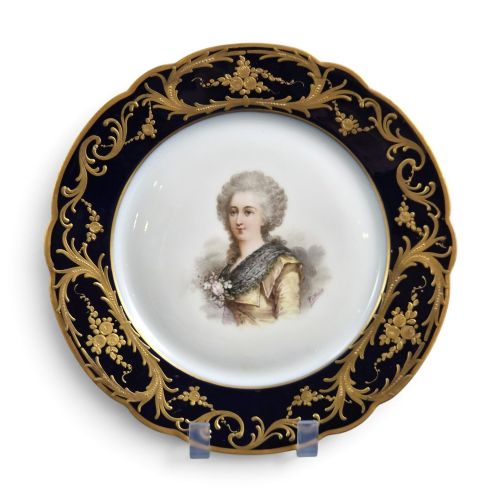


Sevres Style Dish
A sevres style dish brings French porcelain elegance to a room, offering the painted scenes and gilded detail collectors prize.
Sevres Style Dish
When you search for a sevres style dish, you encounter decorative porcelain produced in France during the eighteenth and nineteenth centuries, often echoing royal court aesthetics. The pieces on this page span cabinet plates, trinket boxes, and large serving dishes from the nineteenth century.
The designs draw on historical French revival movements, showing particular influence from French Rococo Revival, Louis XVI Revival, and French Neoclassical styles. Common forms include round boxes, oval dishes, comports, and soup tureens bearing painted portraits, landscape scenes, or battle motifs.
How they were made
Makers fashioned these pieces from porcelain, applying rich enamel colours such as cobalt blue and bleu céleste to the ceramic body. Hand-painted vignettes, including Watteau scenes and historical portraits, form the focal point of many items.
Artisans finished the porcelain with gold leaf, gilding, and ormolu mounts to enhance the decorative impact. Metal mounts in ormolu frequently frame bowls and boxes, adding structural weight and a polished metallic contrast to the painted surfaces.
Sevres Style Dish Retail Price Guide 2026
Typical asking prices for sevres style dish among the pieces listed under this phrase on Sellingantiques today, from the lower quarter to the upper quarter. They describe what is for sale here now, not the wider market.
Among the painted scenes on these dishes, medieval battle scenes clash cheerfully with delicate eighteenth-century courtly romances.
What varies in quality
The standard of hand painting dictates much of the distinction between ordinary and exceptional pieces. Finely detailed portraits and complex battle scenes require greater artistic skill than repetitive floral motifs or simple gilt borders.
The application and preservation of gilding also separate examples. Thick, burnished gold leaf and well-cast ormolu mounts demonstrate superior workshop practices compared to thinner painted-on metallic finishes.
Samson Paris
The Sevres Style Dish Glossary
- Bleu Céleste
- A bright sky-blue enamel ground colour used extensively on decorative porcelain. It provides a vivid backdrop for painted reserve panels.
- Ormolu
- Gilded bronze used for decorative mounts on porcelain vessels and boxes. This technique gives metal a rich gold appearance.
- Comport
- A raised dish or bowl used for serving fruit or displaying items on a table. These pieces often feature pedestal bases and ornate handles.
- Rococo Revival
- A nineteenth-century design style reviving eighteenth-century asymmetrical scrollwork and naturalistic motifs. It appears frequently in the handles and frames of these dishes.
Sevres Style Dish: Frequently Asked Questions
What is a sevres style dish?
A sevres style dish is a decorative French porcelain piece created in the manner of the famous Sèvres factory. These items often feature hand-painted scenes and rich gilding.
They encompass various forms including cabinet plates, oval dishes, and large serving platters originating mostly from the nineteenth century.
How were these dishes used?
Many of these pieces served primarily as decorative items for display in cabinets or on walls rather than for dining. Cabinet plates and comports showed off wealth and artistic taste in formal reception rooms.
Smaller vessels like round boxes and trays held trinkets or served sweetmeats during gatherings in nineteenth-century French homes.
How do I identify the period?
Dating relies on examining the porcelain body, enamel colours, and the style of the painted decoration. Nineteenth-century interpretations often combine Rococo Revival or Neoclassical elements with characteristic cobalt and bleu céleste grounds.
Maker marks and the specific nature of the hand-painted scenes also help narrow down the production era.
How do I care for antique porcelain?
Antique porcelain requires gentle handling to protect delicate enamel and gold leaf details. Dusting with a soft, dry cloth is usually sufficient for maintenance.
Keep pieces away from direct sunlight to prevent fading of the hand-painted colours and avoid using chemical cleaners on the gilding.