

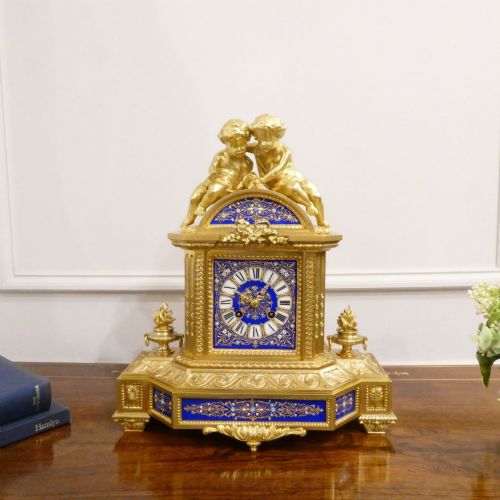
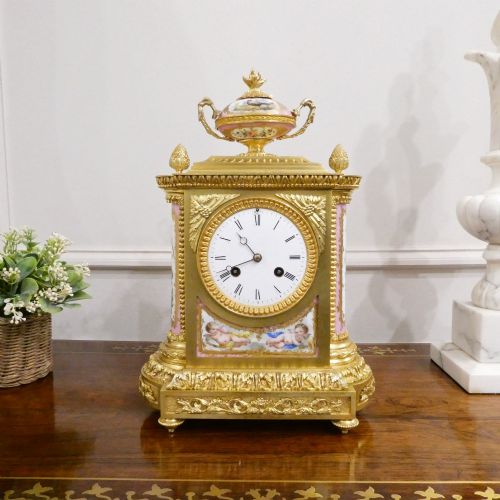
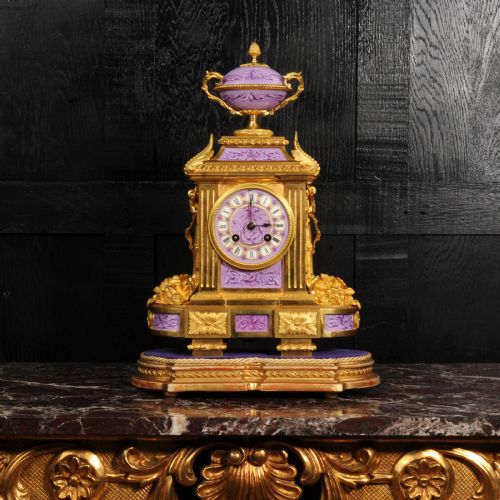
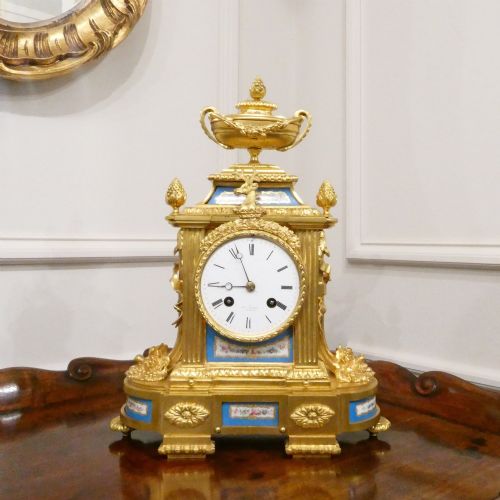


Sevres Porcelain Table Clock
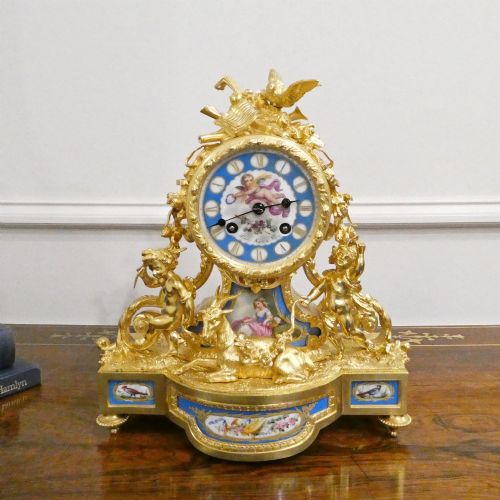
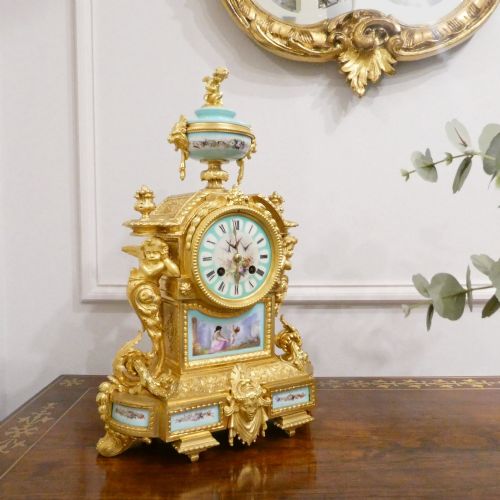
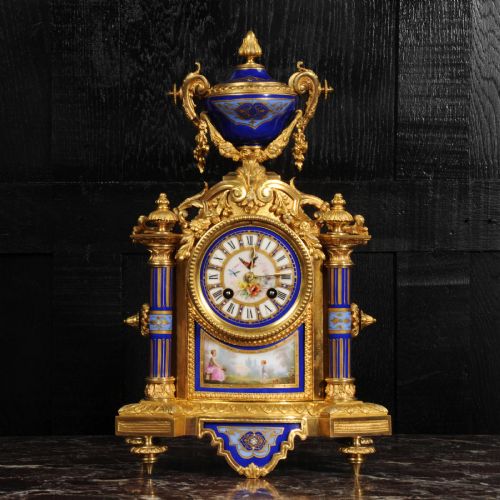
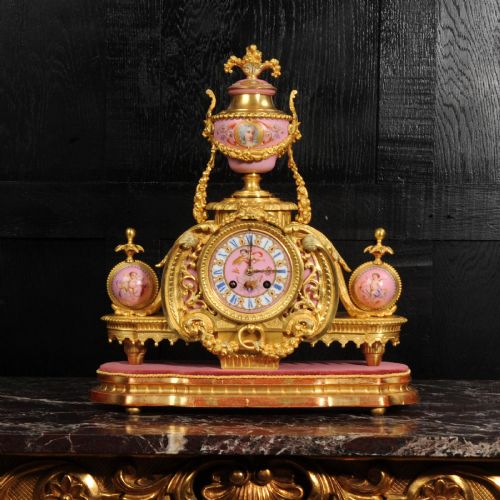
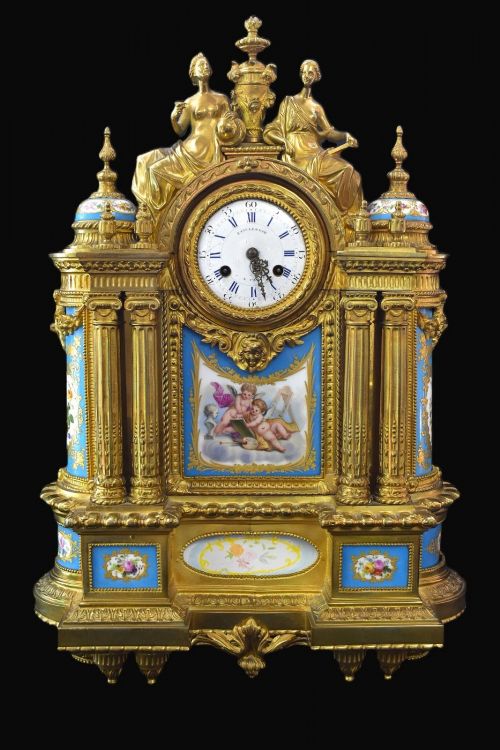
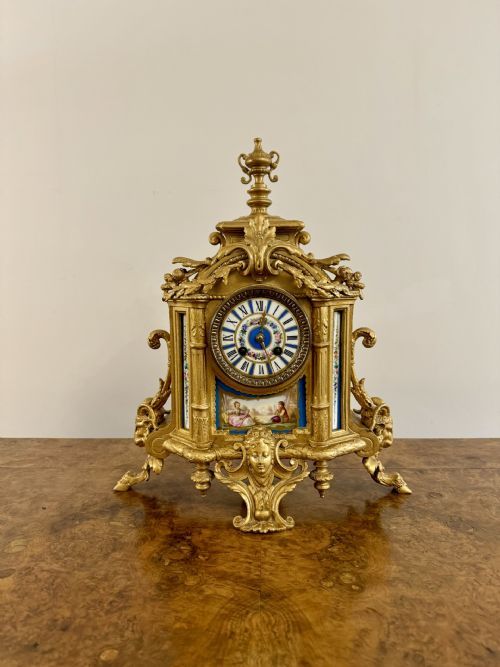
A sevres porcelain table clock brings together glazed ceramic panels and gleaming gilt metal mounts from nineteenth-century French workshops.
Sevres Porcelain Table Clock
A sevres porcelain table clock is a mantel timekeeper combining hand-painted ceramic plaques with cast metal cases. These objects date primarily from the nineteenth century, spanning periods from eighteen fifty to eighteen ninety.
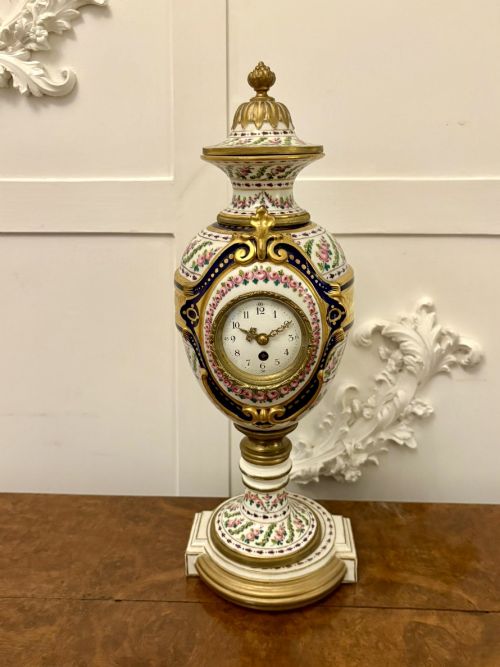
Makers housed these movements in architectural or urn-shaped forms typical of French Rococo Revival and Louis XVI styles. The typical piece places painted porcelain panels within a heavy ormolu or gilt bronze framework.
Victorian examples and Napoleon III pieces dominate the available selection, often taking the form of drum head clocks or tall mantel pieces. Each combination reflects the nineteenth-century taste for decorative French horology.
How They Were Made
Craftsmen cast cases in brass, bronze, and gilt metal, then applied fire-gilding to create the ormolu finish. Ceramic elements arrived as porcelain panels, dials, and vases, painted by hand and glazed before assembly into the metal frames.
Clockmakers built mechanical movements featuring brass gear trains, often signed by prominent Parisian makers. Enamel dials and glass covers completed the face, while wood components occasionally formed internal structural supports.
Sevres Porcelain Table Clock Retail Price Guide 2026
Typical asking prices for sevres porcelain table clock among the pieces listed under this phrase on Sellingantiques today, from the lower quarter to the upper quarter. They describe what is for sale here now, not the wider market.
Listings demonstrate that ormolu, gilt bronze, and gilt metal serve as the primary casing materials alongside porcelain.
What Varies in Quality
Quality depends on the crispness of the gilt bronze chasing and the detail within the hand-painted porcelain panels. Heavier ormolu castings with deeper relief work distinguish finer specimens from standard production models.
Signed movements by known horologists elevate a piece above unsigned factory examples. The integration between the ceramic components and the metal chassis dictates the structural harmony of the clock.
Japy Freres·Jean-Baptiste Delettrez·Achille Brocot·Henry Marc·Etienne Lenoir·PH Mourey·Miroy Freres
The Sevres Porcelain Table Clock Glossary
- Ormolu
- Gilt bronze or gilt metal created by applying a gold amalgam to a bronze base. This technique produced the bright, reflective metallic finish seen on French clock cases.
- Drum Head Clock
- A clock design featuring a circular movement housing mounted on a decorative base. This specific form resembles a drum resting upon a plinth.
- Louis XVI Style
- A neoclassical design vocabulary characterised by symmetry, straight lines, and classical motifs. It influenced nineteenth-century French clock cases through urn shapes and foliate mounts.
- Rococo Revival
- A nineteenth-century artistic movement reviving eighteenth-century asymmetrical scrollwork and natural motifs. Cases from this period display flowing organic forms and C-scrolls.
- Enamel
- A glassy substance fused to metal surfaces through firing to create smooth dials and decorative plaques. It provided a durable, bright white background for clock numerals.
Sevres Porcelain Table Clock: Frequently Asked Questions
How do I wind a antique French clock?
Most nineteenth-century mechanical movements require a key to tension the springs via winding arbors on the dial. Care must be taken not to overwind the mainspring.
Consulting a professional clockmaker for initial setup ensures the movement beats in beat and operates safely.
What periods do these clocks date from?
The available evidence shows these timepieces originate in the nineteenth century, with specific dates spanning from eighteen fifty to eighteen ninety. Victorian and Napoleon III periods are common.
Stylistic markers such as Louis XVI Revival and French Rococo Revival help define the exact era of manufacture.
Are these clocks suitable for daily use?
These historical timepieces function as reliable household clocks when properly serviced and adjusted. Many listings indicate movements have been fully restored and run as intended.
Placement should avoid direct sunlight and dramatic temperature fluctuations to protect the delicate porcelain and gilt surfaces.
How do I identify the maker?
Maker signatures typically appear stamped on the brass backplate of the mechanical movement inside the case. Dial faces may also bear the retailer or maker name.
Comparing these stamps against nineteenth-century horological records reveals the workshop of origin.