

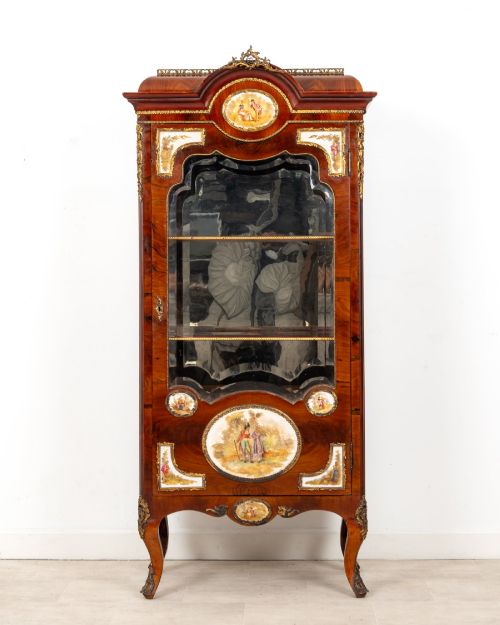
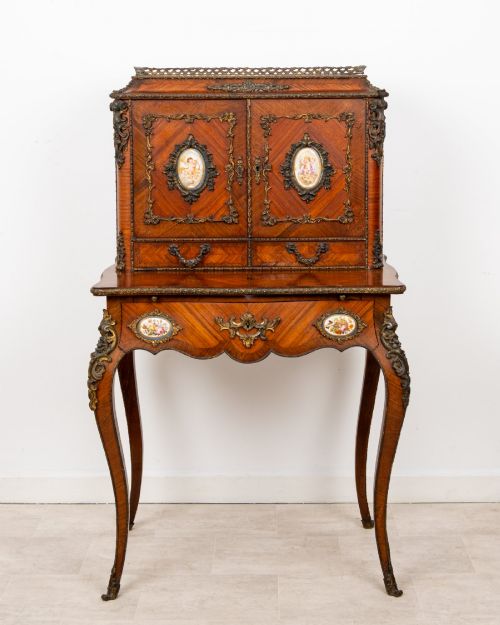


Sevres Porcelain Mounted Cabinet
A sevres porcelain mounted cabinet brings the opulent revival of nineteenth-century French courts directly into a room through hand-painted plaques and heavy gilt bronze.
Sevres Porcelain Mounted Cabinet
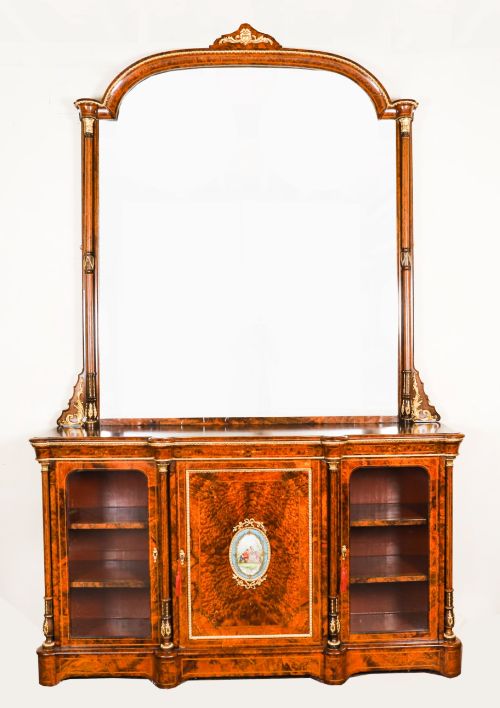
A sevres porcelain mounted cabinet combines fine timber cabinetry with glazed ceramic plaques, often framed in cast metal mounts. These pieces emerge primarily from nineteenth-century workshops inspired by earlier French royal tastes.
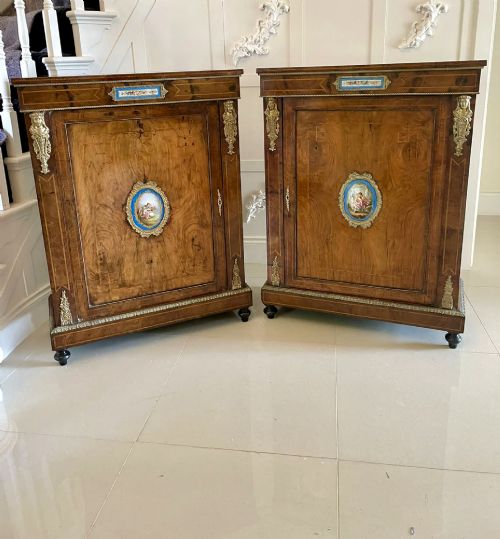
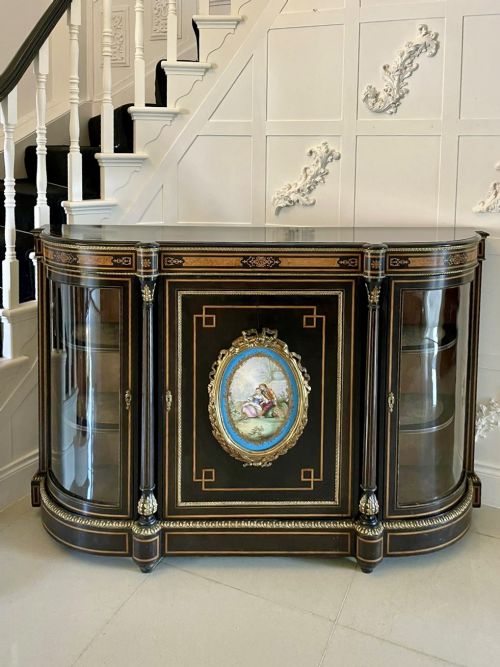
Buyers encounter forms ranging from large three-door credenzas and side cabinets to compact writing desks and pier cabinets. The walnut, kingwood and ebonised carcasses provide dark backgrounds that highlight the bright porcelain plaques.
Materials and Construction
Cabinet makers utilised dense hardwoods including walnut, kingwood and satinwood, frequently laid with burr veneers to create rich grain patterns. Ebonised finishes and amboyna also appear, offering contrasting dark tones.
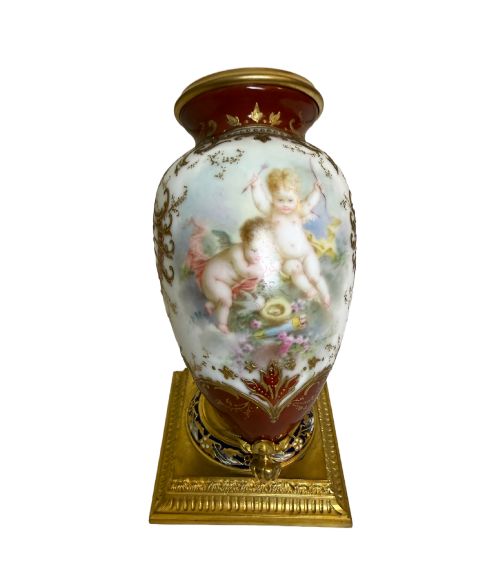
Mounts of ormolu and gilt bronze secure the ceramic plaques to the furniture carcasses alongside glass panels. The porcelain plaques feature painted scenes or floral motifs, fired and glazed before integration into the cabinetry.
Sevres Porcelain Mounted Cabinet Retail Price Guide 2026
Typical asking prices for sevres porcelain mounted cabinet among the pieces listed under this phrase on Sellingantiques today, from the lower quarter to the upper quarter. They describe what is for sale here now, not the wider market.
Several writing desks manage to look both intensely serious about correspondence and entirely ready for a royal tea party.
Markers of Quality
Quality rests in the crispness of the gilt bronze chasing and the delicacy of the hand-painted porcelain plaques set into the timber. Heavy, finely detailed mounts distinguish superior examples from simpler production pieces.
The choice of cabinet timbers and veneer selection signal the maker's ambition, with intricate marquetry and well-matched burr walnut elevating the piece. Structural balance and the integration of marble tops further separate standard furniture from exhibition-grade examples.
The Sevres Porcelain Mounted Cabinet Glossary
- Ormolu
- Gilded bronze used for decorative mounts and framing elements. This technique gives metal a rich gold appearance that complements ceramic plaques.
- Credenza
- A low cabinet, frequently featuring central and side doors with glass panels. These pieces often serve as display surfaces for decorative objects.
- Bonheur du jour
- A small writing desk featuring an upper cabinet with shelves or drawers. Originating in France, these pieces combine workspace with display capacity.
- Pier cabinet
- A narrow cabinet designed to stand against a wall space between windows. Such pieces maximise vertical display potential in period drawing rooms.
- Kingwood
- A dense tropical timber with distinctive dark violet-brown grain. Cabinet makers selected this wood for high-status French revival furniture.
Sevres Porcelain Mounted Cabinet: Frequently Asked Questions
How were these cabinets used?
These pieces served as display and storage furniture in nineteenth-century drawing rooms and salons. Owners used them to showcase porcelain collections alongside books and correspondence.
The flat surfaces and glass doors allowed hosts to display valuable ceramics while keeping items protected from dust. Writing desks within this group provided a dedicated surface for correspondence alongside lockable compartments.
Where should I place a cabinet?
A porcelain mounted cabinet requires a stable environment away from direct sunlight and strong heat sources. Such placement protects delicate timber veneers and prevents structural movement.
Positioning these pieces against interior walls ensures they remain secure and visible. Lower credenzas work well in dining rooms or living spaces, while narrow pier cabinets suit smaller alcoves.
How do I date these pieces?
Dating relies on stylistic markers, timber types and the execution of the bronze mounts. Most items date from the nineteenth century, reflecting periods of French revival taste.
Key indicators include the use of ebonised woods, kingwood veneers and specific revival styles such as Louis XV or Napoleon III. Construction methods inside drawers and carcases also confirm nineteenth-century manufacturing techniques.
Are all plaques genuine Sevres?
Plaques on nineteenth-century revival furniture often imitate the famous French porcelain factory styles rather than originating from the royal works. Makers across France and Britain produced painted porcelain panels to satisfy demand for opulent furnishings.
Evaluation depends on the artistic quality of the painting and the integration into the mountings. The term Sevres frequently describes the decorative style of the ceramic panels rather than a verified factory origin.