

Seventeenth Century Wooden Chest
A seventeenth century wooden chest brings domestic history directly into a room, offering robust storage built from solid timber.
Seventeenth Century Wooden Chest
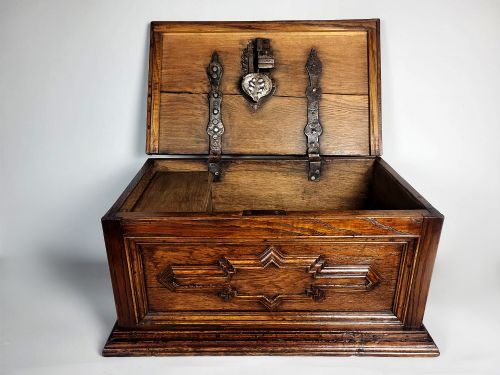
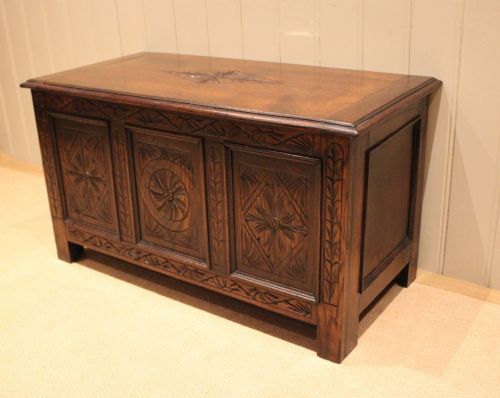
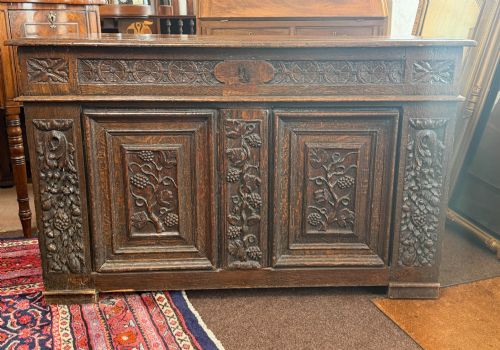
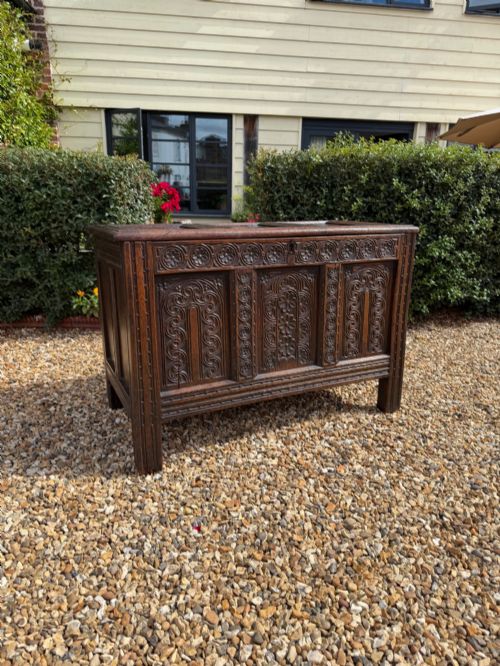
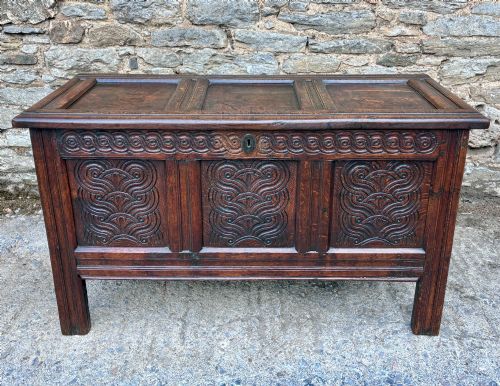
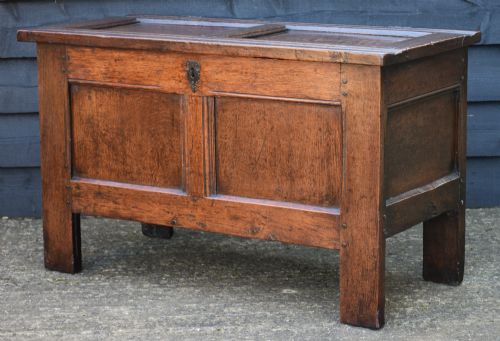
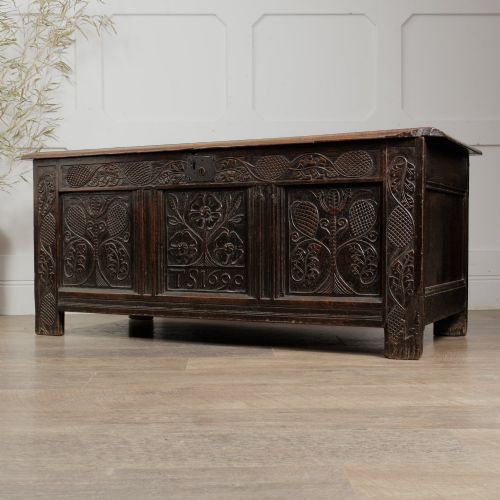
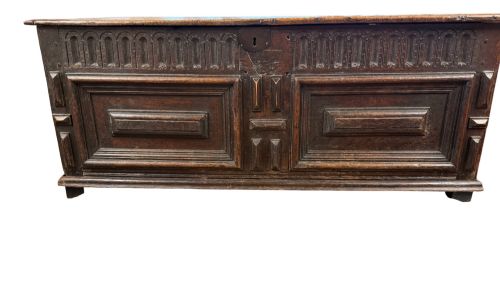
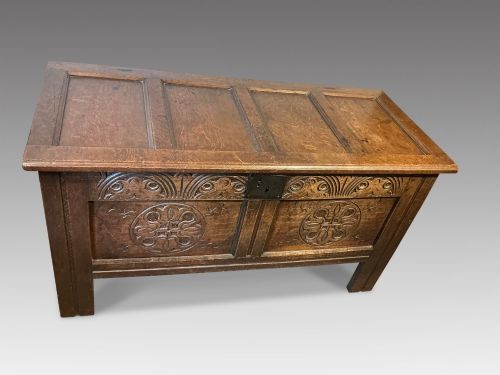
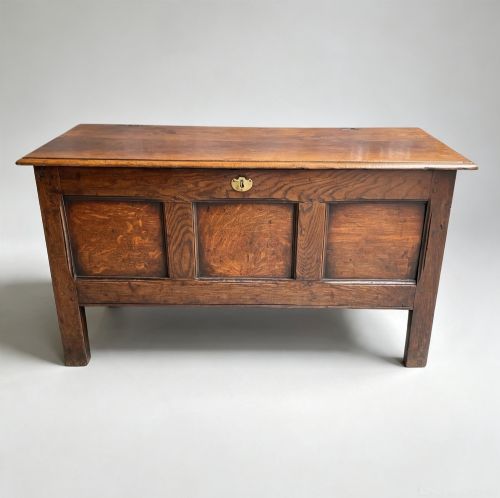
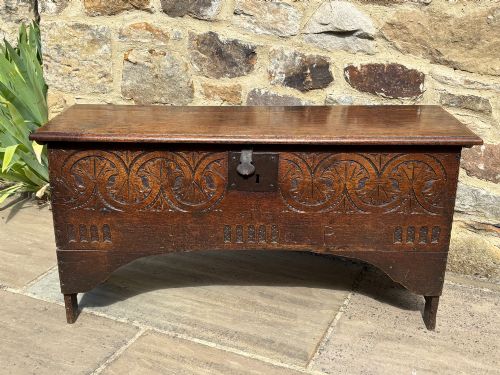
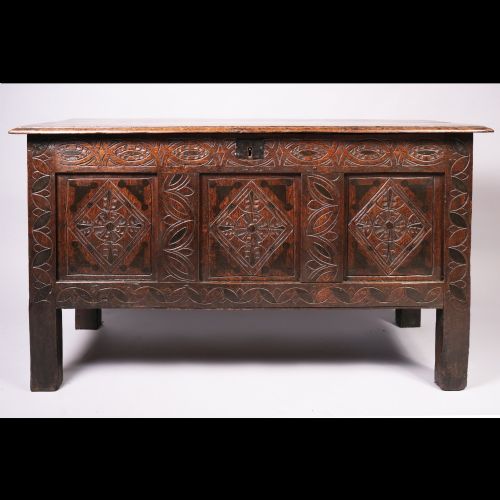
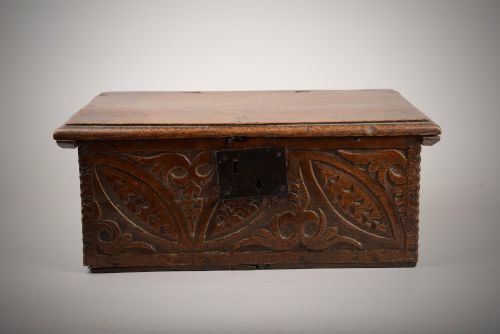
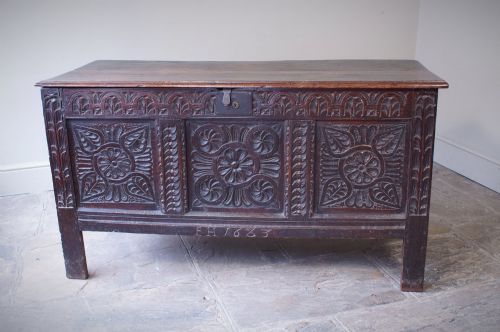
A seventeenth century wooden chest primarily appears on this page as an oak coffer, box, or early chest of drawers originating from regional British workshops. Buyers encounter panelled coffers, sword chests, and small table boxes designed for secure storage in domestic interiors. These pieces range from plain utilitarian trunks to highly decorated examples carrying regional carving styles.
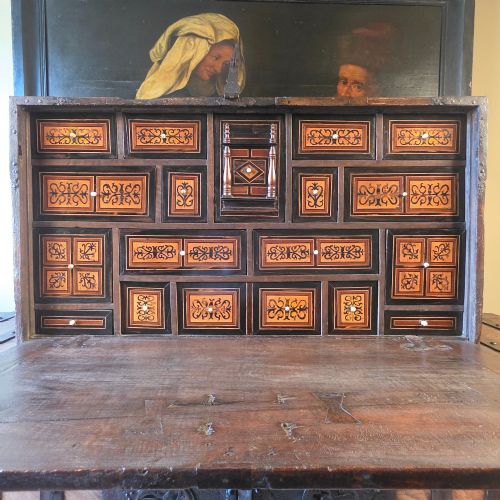
The material record shows a heavy reliance on domestic timbers, predominantly oak alongside walnut and fruitwood, shaped into sturdy storage furniture. Regional variations emerge from places such as Wales, Dorset, and Leeds, showing local construction methods and decorative preferences. Certain items also incorporate internal drawers, inlay, or specialised locking mechanisms intended for valuables.
Materials and construction
Construction relies heavily on joined and panelled solid timber, principally oak, supported by iron or steel hardware like hinges and complex locks. Wood inlay, boxwood, and fruitwood frequently provide decorative contrast against the darker body of the primary timber. Carpenters utilised traditional joinery methods such as mortise and tenon to give these storage pieces structural durability.
Surface decoration involves hand carving, arcading, linenfold panelling, and seaweed marquetry executed with simple chisels and gouges. Metal components like brass and wrought iron secure lids and drawers while adding functional detail to the exterior form.
Some seventeenth-century desk boxes retain ink stains inside their small internal drawers left by writers over three centuries ago.
Assessing the execution
Quality separates through the integrity of the original timber, the crispness of the hand carving, and the survival of primary surfaces. Pieces retaining original steel locks, iron hinges, and untouched patination command greater interest than those altered or stripped over time.
Structural proportion and regional distinctiveness also define the standard, as balanced small-scale proportions and well-executed joinery demonstrate superior workshop capability.
Thomas Dennis
The Seventeenth Century Wooden Chest Glossary
- Cofer
- A large strongbox or chest used for storing valuables, clothes, or documents. These form the majority of surviving domestic storage furniture from the period.
- Arcaded
- A row of arches supported by piers, carved into woodwork as a decorative motif. This style frequently appears on the front panels of seventeenth-century furniture.
- Linenfold
- A style of wood carving representing folded linen or parchment. It is commonly found on panels of early chests and coffers.
- Marquetry
- The art of applying pieces of veneer to a structure to form decorative patterns. Examples include intricate seaweed designs executed in walnut.
- Mule chest
- A storage chest fitted with one or more drawers at the base. This form bridges the evolution between the traditional cofer and the modern chest of drawers.
Seventeenth Century Wooden Chest: Frequently Asked Questions
What is a seventeenth century wooden chest?
A seventeenth century wooden chest is a heavy storage container built primarily from solid oak, walnut, or fruitwood by period carpenters. These pieces served households as secure receptacles for clothing, valuables, and domestic goods.
Surviving examples include plain coffers, intricately carved boxes, and early mule chests with lower drawers. Their construction reflects the domestic needs and joinery techniques of the seventeen-hundreds and earlier decades.
How were these chests used originally?
Households utilised these heavy chests to store textiles, valuable documents, silverware, and other portable wealth safely away from dust and damp. Because domestic architecture featured few fitted cupboards, movable wooden containers performed the storage function for most possessions.
Smaller boxes and desk variants sat upon tables for writing or keeping personal items secure under lock and key. Larger coffers doubled as seating benches around the hearth when closed.
How do I live with a wooden chest?
Placing a wooden chest in a modern room requires stable humidity and protection from direct heat sources like radiators to prevent timber splitting. They function well as coffee tables, hallway benches, or bedroom storage units.
The sturdy flat lids support everyday objects while the interior holds blankets, linens, or books out of sight.
How can I tell periods apart?
Distinguishing periods involves examining the joinery methods, decorative motifs, and hardware styles employed in the construction. Early seventeenth-century pieces often feature geometric carving, arcading, and heavy pegged frames.
Later decades show the introduction of drawer configurations, walnut veneers, and marquetry influenced by changing continental tastes. Tool marks and ironwork also provide clues to the approximate decade of manufacture.