


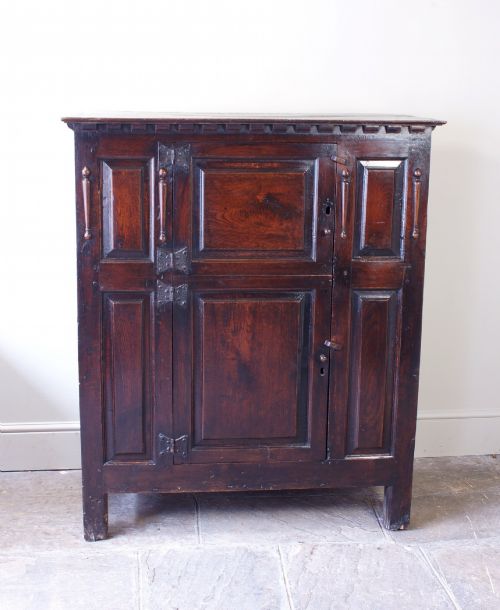


Seventeenth Century Oak Stand
A seventeenth century oak stand brings substantial timber and period joinery into a room, offering both historic utility and distinct architectural presence.
Seventeenth Century Oak Stand
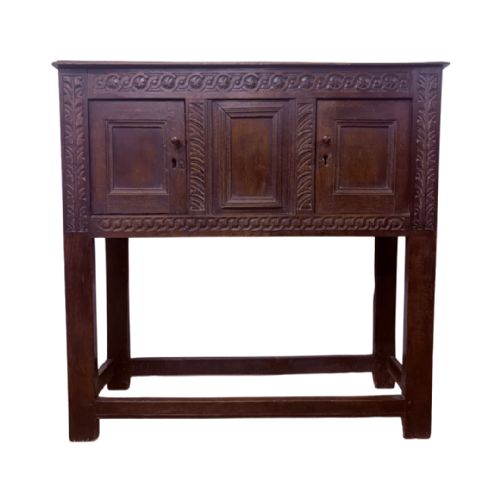
When searching for a seventeenth century oak stand, buyers encounter a robust category of early English furniture designed for storage and display. These pieces range from authentic seventeenth-century joined and carved examples to later revival interpretations from nineteen twenty.
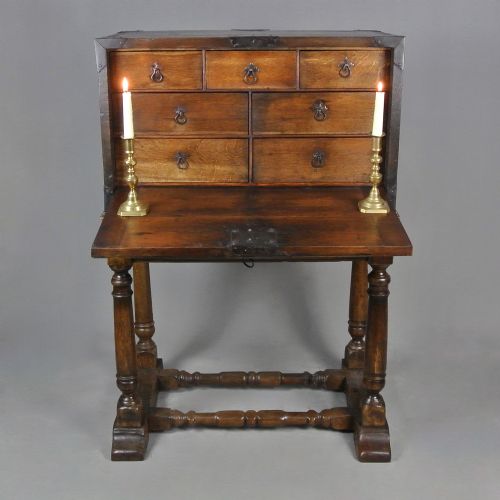
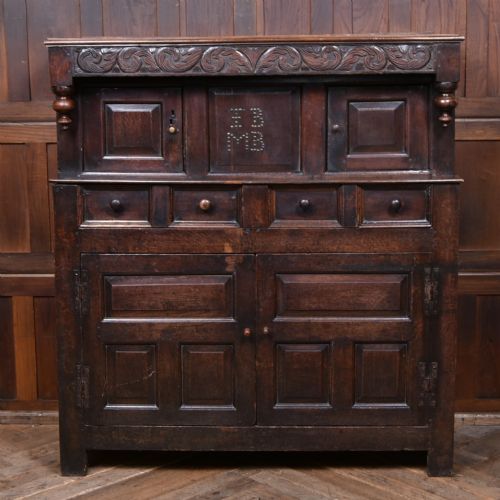
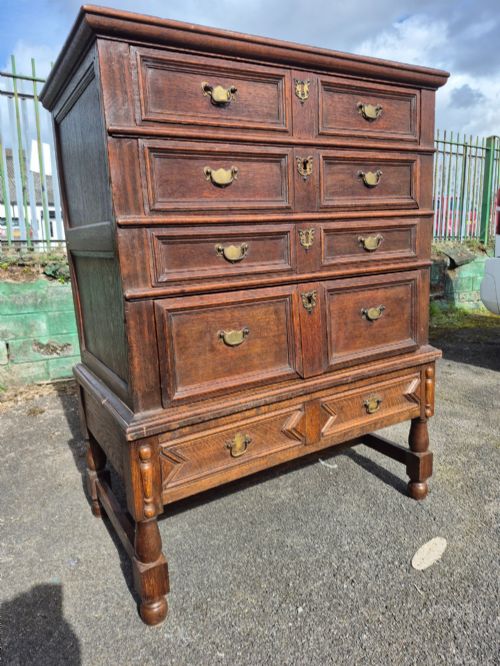
The selection on this page centres on elevated forms, including chests on stands, side cabinets, court cupboards, and hutch variations. Authentic period pieces share the room with Jacobean style interpretations produced centuries later.
Buyers are most likely to meet joined construction, carved detailing, and utilitarian forms intended to hold domestic goods or valuables. The timber used throughout these examples is English oak, often showing deep patination and historic wear.
How they were made
Construction relies upon traditional joined oak framing, utilising mortise and tenon joints secured with wooden pegs rather than modern fasteners. This method provides the structural rigidity necessary to support heavy timber cupboards and chests over centuries.
Surface decoration involves hand carving directly into the English oak timber, producing geometric panels, strapwork, and initialled motifs. Metal elements such as brass and iron appear as hinges, locks, and strong box reinforcements.
Hardware and fixings are hand-wrought, reflecting the blacksmith's craft of the period. The timber itself is left with a natural or historic waxed finish that highlights the grain and medullary rays characteristic of quarter-sawn oak.
Listings span seventeenth-century origins alongside nineteen-twenty revival pieces, constructed primarily in English oak with brass and iron hardware.
What varies in quality
Quality in these pieces rests upon the integrity of the original timber and the depth of the hand-carved ornamentation. Pieces retaining their original stands and unblemished joined construction command greater interest than those altered or substantially rebuilt over time.
The crispness of the period carving distinguishes finer workshops from simpler provincial work. Surface patination, showing decades of handling and wax accumulation, separates untouched examples from those stripped or overly restored in later eras.
The Seventeenth Century Oak Stand Glossary
- Joined oak
- Furniture constructed using mortise and tenon framing joined with wooden pegs. This technique preceded the widespread use of nailed or screwed joints in domestic cabinetry.
- Court cupboard
- A formal seventeenth-century storage piece featuring an enclosed upper section and an open or enclosed lower tier. These items were used in principal rooms to display plate and store provisions.
- Strong box
- A heavily reinforced portable chest designed to secure valuables and documents. These containers incorporate iron straps and robust locking mechanisms.
- Chest on stand
- A two-part form consisting of a drawer chest elevated upon a separate frame or stand. This configuration lifted storage off damp floors and facilitated easier access.
Seventeenth Century Oak Stand: Frequently Asked Questions
What is a seventeenth century oak stand?
A seventeenth century oak stand refers to elevated storage forms, including chests, cabinets, and cupboards raised on frames. These pieces utilise English oak and traditional joinery.
They reflect the domestic requirements of early households, combining structural timber framing with practical compartments for storage and display.
How do I date an oak stand?
Dating relies upon examining construction methods, tool marks, and timber shrinkage. Pegged mortise and tenon joints and hand-wrought iron indicate early periods.
Revival pieces from nineteen twenty often display machine-cut elements and lighter timber weights compared to seventeenth-century joined work.
Were these stands used for storage?
Yes, these stands and elevated cabinets served as primary storage for household valuables, textiles, and documents. Raising the compartment kept contents away from damp floors.
Strong boxes and chest variants provided secure containment for important family possessions during the seventeenth century.
What is Jacobean style furniture?
Jacobean style encompasses furniture produced during the early seventeenth century and later revival periods. It is characterised by heavy proportions and dark oak timber.
Surface enrichment typically includes chip-carved panels, geometric mouldings, and strapwork rather than applied veneers.
How should I care for old oak?
Historic oak requires stable room humidity and protection from direct sunlight to prevent timber splitting. Regular gentle waxing maintains the surface patination.
Avoid modern silicon polishes, which can penetrate open grain and alter the historic finish of the timber.