

Set Six Mahogany Chairs
When sourcing set six mahogany chairs, you are selecting a coordinated suite of seating designed to anchor a dining room with timber warmth and period proportion.
Set Six Mahogany Chairs
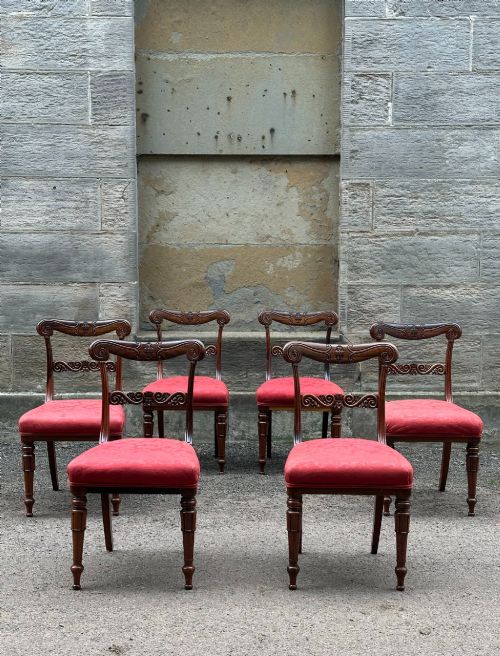
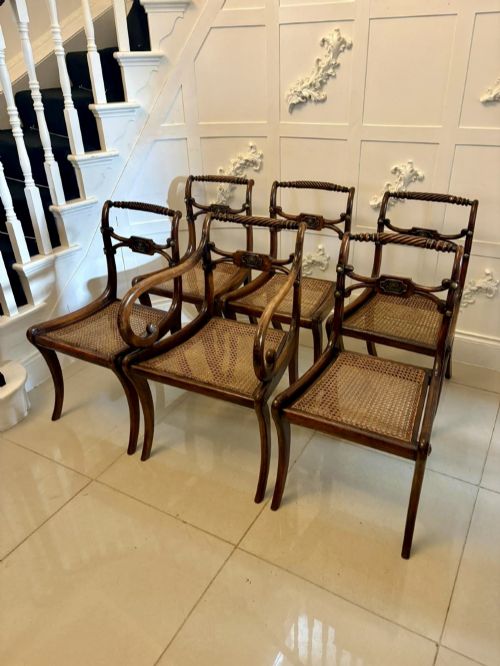
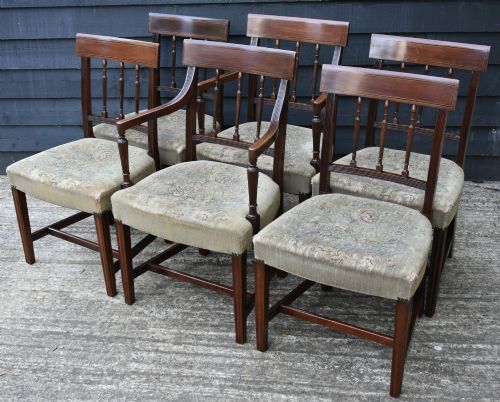
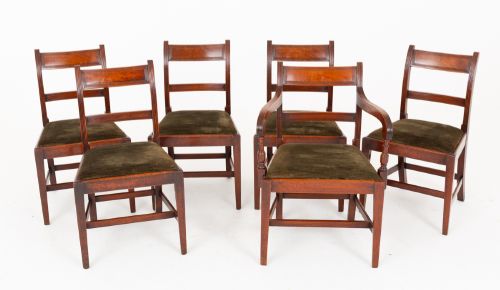
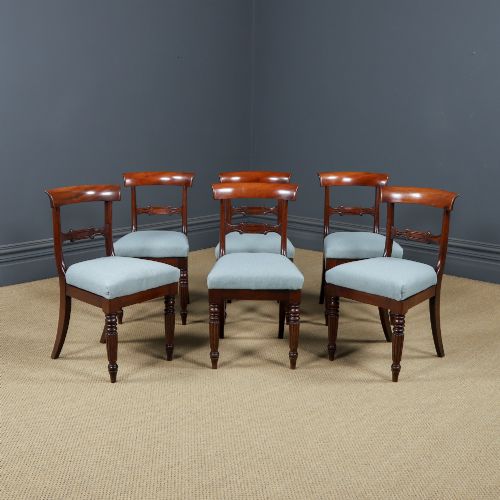
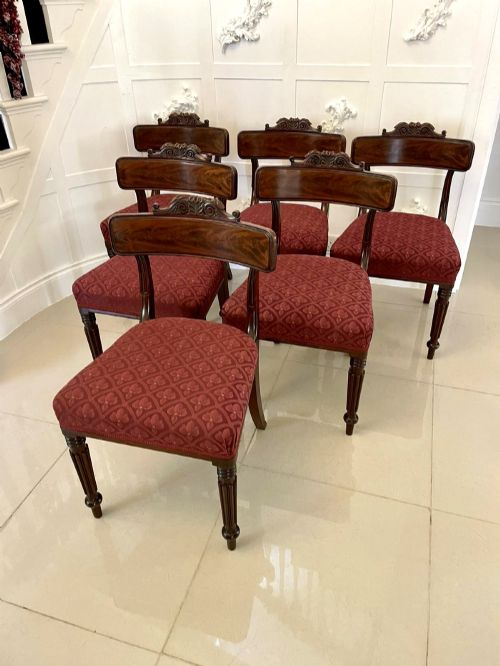
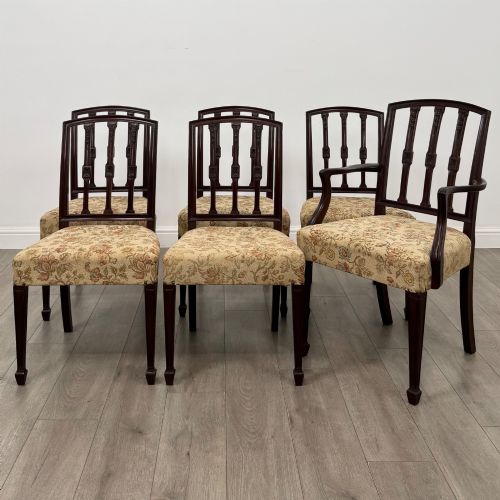
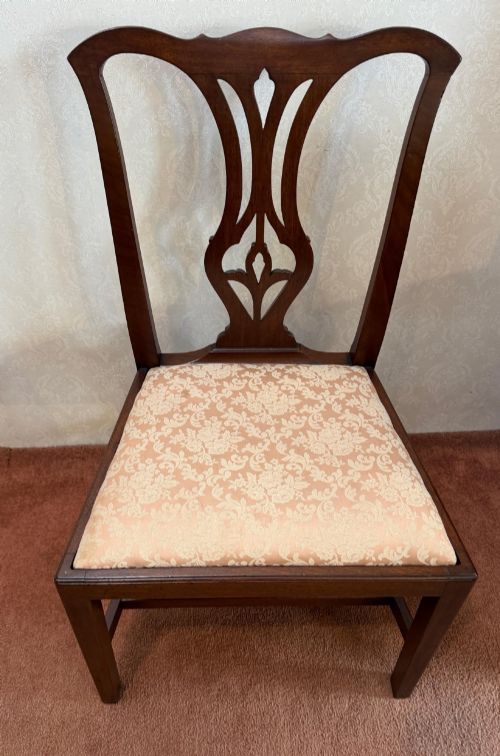
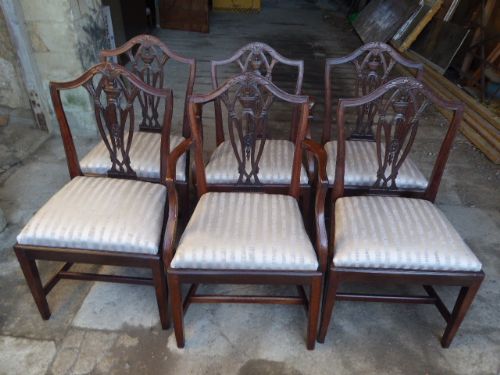
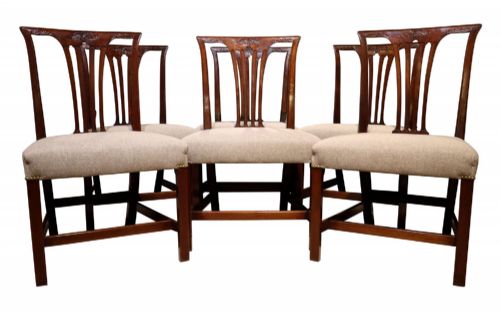
A set six mahogany chairs represents the standard dining table configuration found across the Georgian, Regency, and Victorian periods. Buyers encounter matching dining chairs, library chairs, and occasionally hall chairs configured as six single seats or a combination including carvers with arms.
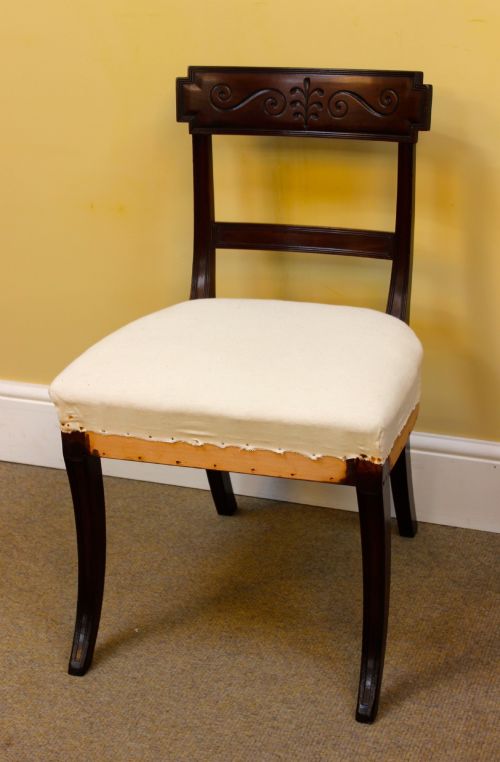
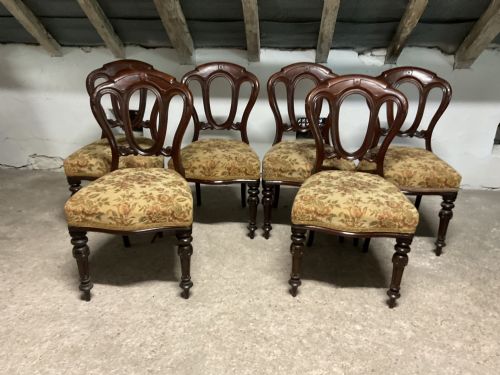
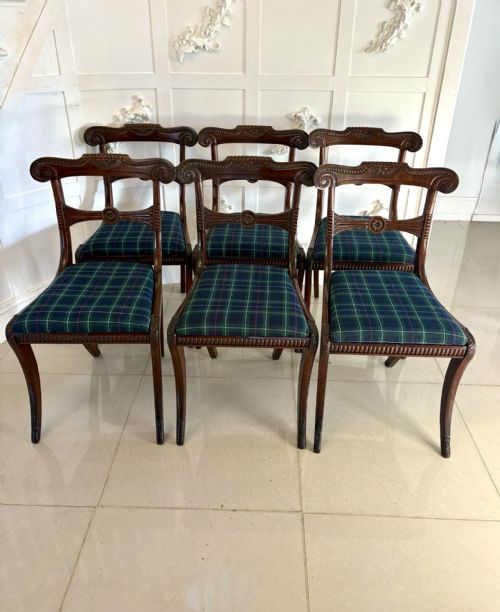
The profile shifts from the upright proportions of 18th-century George III and Hepplewhite designs to the curved bar backs of the Regency era and the rounded balloon backs of Victorian iterations. These sets originate from domestic dining rooms where uniformity of timber and design demonstrated social standing.
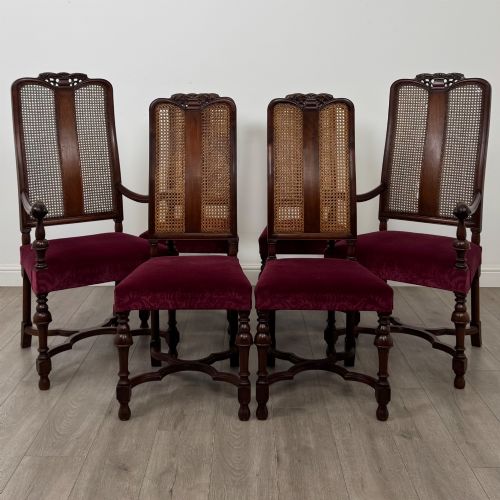
Revival pieces from the Edwardian era also appear frequently, emulating earlier Chippendale and Georgian styles with executed carving and varied foot details. Selecting a set of six provides practical seating capacity while maintaining historical aesthetic continuity.
Timber and Construction Techniques
Makers relied primarily on solid and veneered mahogany, sourced for its rich grain, strength, and deep natural colour that aged gracefully under wax polishing. Certain pieces utilise Cuban mahogany, known for its density and dark figuring, while later examples incorporate turned and reeded components.
Joinery techniques relied on mortise and tenon joints to secure the frames, ensuring structural rigidity across the seat rails and back splats. Upholstery materials including horsehair, fabric, velvet, and cane were integrated into drop-in or fixed seats, secured with tacks over webbing.
Listings feature mahogany dining chairs spanning the Georgian, Regency, Victorian, and Edwardian eras, incorporating cane seats and upholstered pads.
Distinguishing Quality and Craftsmanship
The upper tier of sets displays crisp, hand-carved details on the crest rails and splats, whereas lesser examples rely on shallower moulding or cast ornaments. Timber selection dictates visual depth, with highly figured grain and uniform matching across all six frames separating fine cabinet work from utility production.
Structural integrity depends on the tightness of the original joints and the retention of solid timber blocks in the seat corners. Sets that retain matching proportions, original timber patination, and unaltered frame geometry command greater appreciation than assembled groups or heavily restored suites.
Gillows
The Set Six Mahogany Chairs Glossary
- Bar back
- A horizontal cross-rail forming the central support of a chair back, frequently curved to fit the spine. This design is prevalent in Regency and William IV dining chairs.
- Carver
- An armchair designed to match a set of single dining chairs, traditionally placed at the head of the table. These feature integrated armrests matching the style of the back and legs.
- Balloon back
- A rounded, continuous backrest frame shaped like an oval or hot-air balloon. This form defines many mid-to-late 19th-century Victorian dining chairs.
- Sabre leg
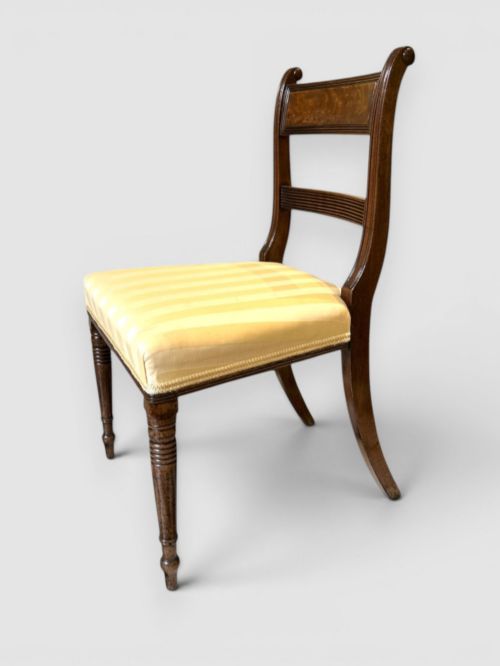
- A concave, outwardly curved leg tapering toward the foot, characteristic of the Regency period. It provides stability while lending a lighter visual line to the seating.
- Reeded leg
- A column carved with parallel convex mouldings that resemble inverted fluting. This decorative turning appears frequently on Regency and early 19th-century chair legs.
- Splat
- The vertical wooden strip down the middle of a chair back connecting the crest rail to the seat. Cabinet makers shaped these into urn, ladder, or shield configurations.
Set Six Mahogany Chairs: Frequently Asked Questions
How do I identify Regency chairs?
Regency chairs typically feature curved bar backs, reeded or sabre legs, and classical motifs derived from Greek and Roman design. They often incorporate brass inlay or dark mahogany tones.
Looking closely at the joinery and timber grain helps distinguish authentic early 19th-century production from later revival pieces made around the turn of the 20th century.
Were sets of six always made together?
Many sets were commissioned as a unified group of six or more for domestic dining rooms. However, some surviving groups were assembled later from single chairs of identical pattern.
Checking the uniformity of timber grain, slight variations in hand-carving, and construction marks underneath the seat rails reveals whether the group originated from a single workshop batch.
What is the difference between single and carver chairs?
Single chairs are armless dining seats designed to fit compactly around a table in multiples. Carvers are larger armchairs intended for the host and hostess.
Traditional dining suites of six usually comprised five singles and one carver, or occasionally a pair of carvers accompanied by four single chairs.
How should I care for mahogany dining chairs?
Mahogany requires consistent environmental conditions away from direct heat sources and strong sunlight to prevent timber shrinkage and veneer lifting. Regular dusting with a soft cloth preserves the wax finish.
Applying a quality beeswax periodically nourishes the grain and enhances the natural depth of the wood without building up synthetic residues.