
Set of Wooden Side Chairs
A set of wooden side chairs brings timeless seating to a table, combining useful dining forms with period character.
Set of Wooden Side Chairs
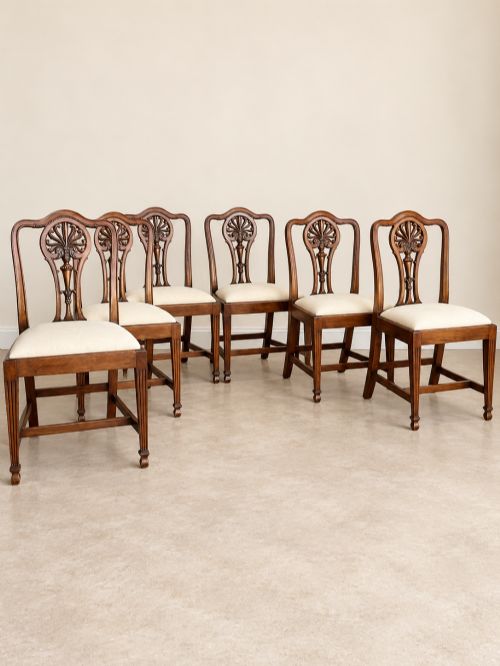
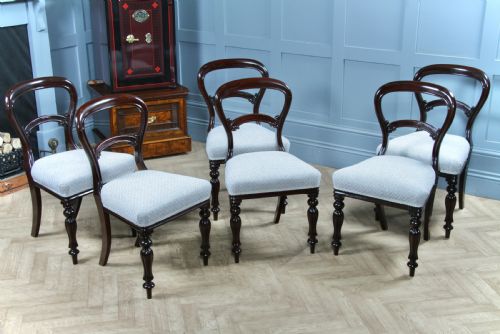
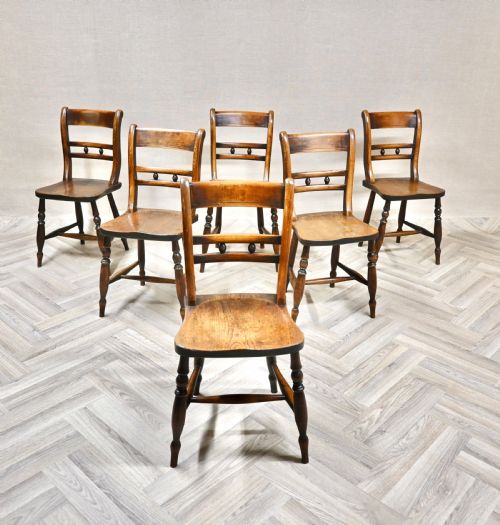
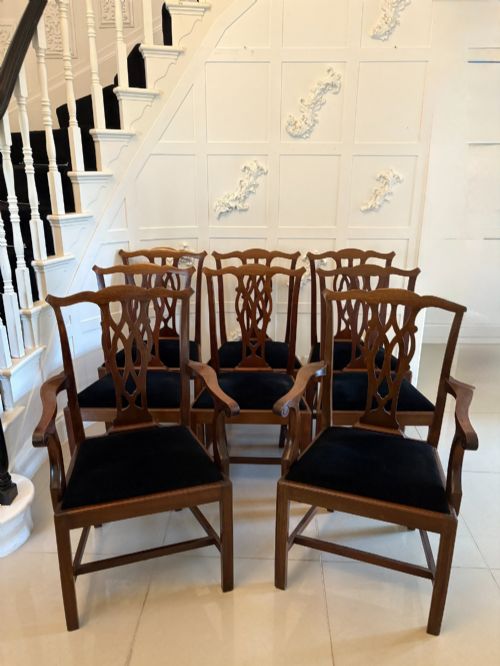
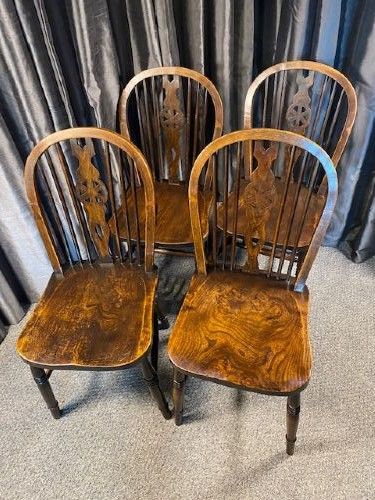
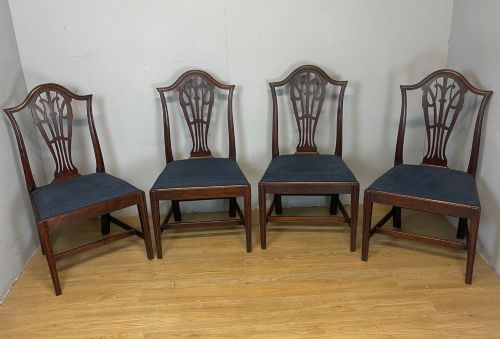
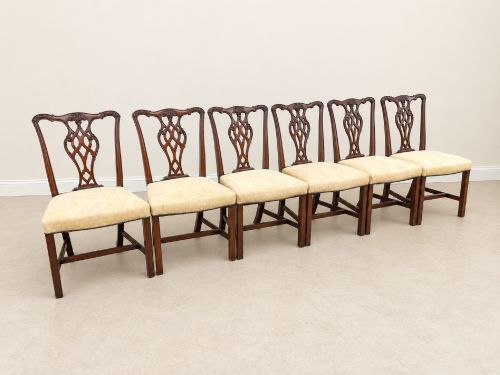
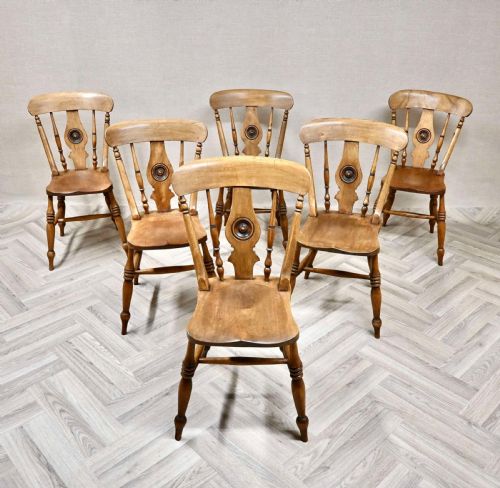
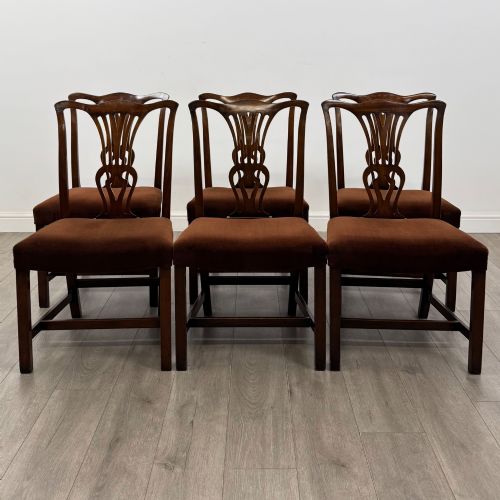
A set of wooden side chairs comprises matching or harmonised seating designed primarily for dining rooms, halls, and salons without armrests. These groupings span multiple centuries, from formal Georgian mahogany designs to robust Victorian kitchen windsors and arts and crafts oak seating.
Buyers encounter various configurations, ranging from smaller sets of four up to larger gatherings of ten or twelve pieces. Regional country pieces utilise elm, beech, and ash, whilst formal urban examples typically showcase mahogany, walnut, or oak.
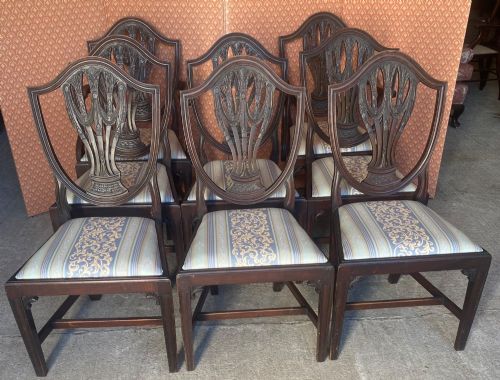
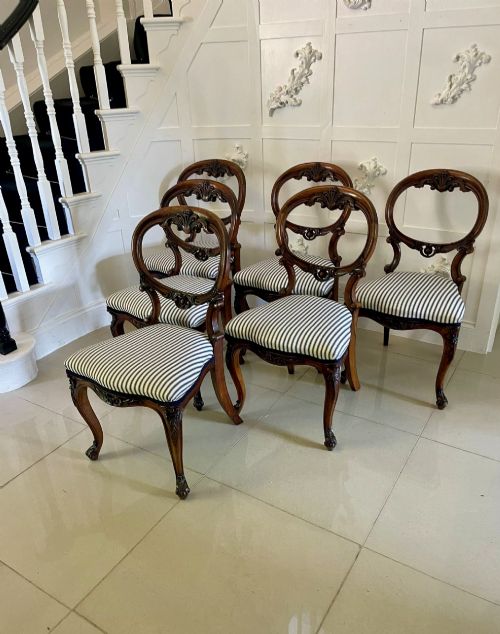
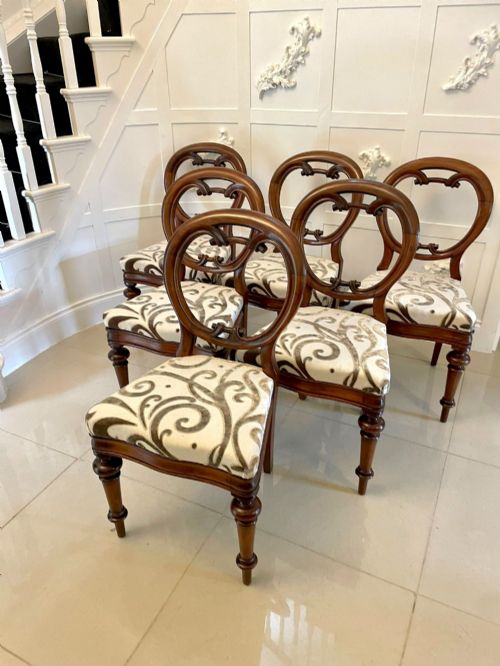
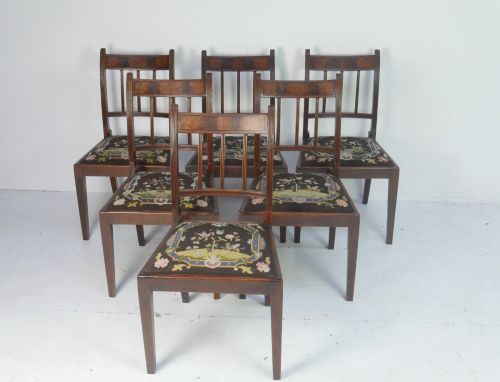
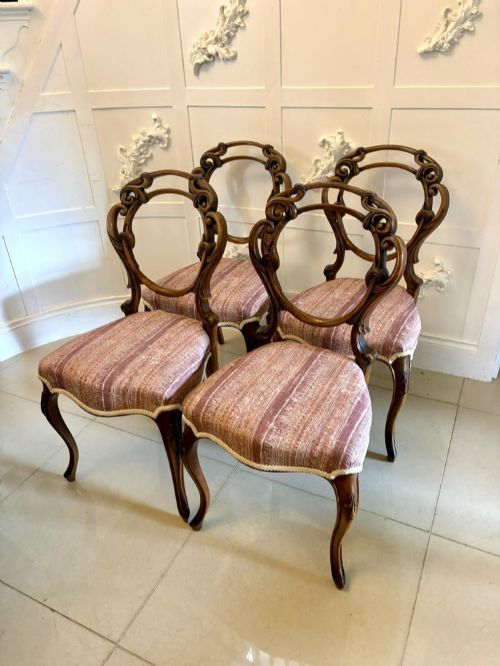
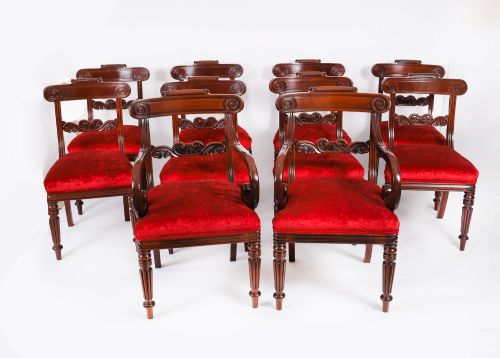
The typology encompasses distinct regional styles such as Windsor kitchen chairs, balloon back dining chairs, and neoclassical shield back or bar back forms. Each grouping reflects the domestic interior fashions of its specific period, from the Regency era through to the early twentieth century.
Materials and construction methods
Cabinetmakers utilised dense hardwoods like mahogany, walnut, and oak for formal dining sets, often employing carved decoration, brass inlay, or decorative faux veneers. Country seating relied on indigenous timbers such as elm, beech, and ash, frequently combining different woods within a single chair for structural strength.
Joinery methods depended heavily on the intended function and style, utilising traditional mortise and tenon joints for rigid frame construction in formal dining chairs. Windsor and country kitchen chairs incorporated turned spindles and steam-bent components locked into solid contoured wooden seats.
Distinctions in quality and finish
Quality rests upon the crispness of carved details, the integrity of timber selection, and whether a grouping retains its original matching components rather than being assembled later. Superior sets demonstrate careful timber matching across every chair in the group, maintaining uniform grain patterns and colour.
The structural stability of the frame and the retention of original surface patination distinguish finer examples from heavily restored or mismatched assemblies. Finer urban dining chairs display precise joinery and refined proportions, whilst country examples achieve merit through robust construction and honest wear.
Maple and Co
The Set of Wooden Side Chairs Glossary
- Balloon back
- A rounded, oval-shaped chair back popular during the Victorian period. This upholstered or open wooden form resembles the silhouette of a hot air balloon.
- Windsor
- A traditional chair construction featuring turned spindles inserted into a solid wooden seat rather than a framed back. These sturdy country seats frequently employ elm for the seat and beech or ash for the bentwood components.
- Harlequin set
- A collection of chairs that are closely matched in style, period, or material rather than being cast from a single original workshop batch. These groupings allow buyers to assemble larger seating sets with period harmony.
- Shield back
- A dining chair back shaped in the outline of a heraldic shield, popularised during the eighteenth century by designers like Hepplewhite and Sheraton. This refined neoclassical form requires precise cabinetmaking skills.
Set of Wooden Side Chairs: Frequently Asked Questions
How many chairs come in a standard set?
Sets typically range from four to twelve chairs, depending on the original dining capacity required for larger homes or intimate parlours. Harlequin groupings also combine similar historical chairs to reach larger numbers.
Buyers often select quantities based on standard dining table lengths, mixing armchairs at the heads with side chairs along the flanks.
What is the difference between side chairs and armchairs?
Side chairs are built without armrests, allowing them to tuck neatly beneath dining tables and save valuable floor space in dining rooms and parlours. Armchairs feature supportive side rests and usually sit at the heads of a dining table.
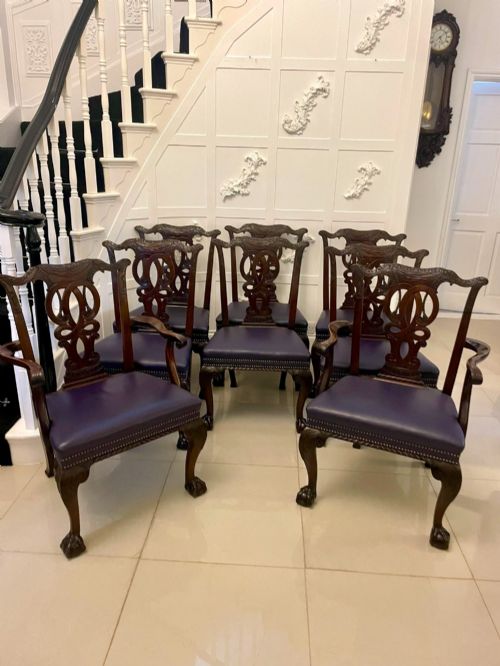
Many larger historical dining sets include a combination of several side chairs alongside matching armchairs for the hosts.
How do I identify the period of wooden chairs?
Dating relies on examining the timber species, joinery techniques, turning styles, and overall stylistic motifs characteristic of specific reigns and centuries. Georgian pieces often showcase fine mahogany carving, whilst Victorian examples frequently feature balloon backs or heavy turned legs.
Comparing the construction methods beneath the seat provides further clues regarding the era of manufacture.
Are upholstered seats original?
Many antique chairs have been reupholstered multiple times over the centuries to match changing interior design fashions and fabric preferences. The underlying webbing, stuffing, and outer textile often reflect twentieth or twenty-first-century materials.
The wooden frames beneath the upholstery remain the primary indicator of the piece's true age.