


Set of Four Kitchen Chairs
A set of four kitchen chairs brings sturdy everyday seating from farmhouse and cottage interiors directly to the modern table.
Set of Four Kitchen Chairs
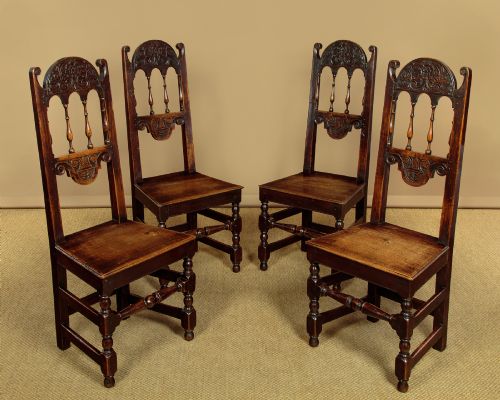
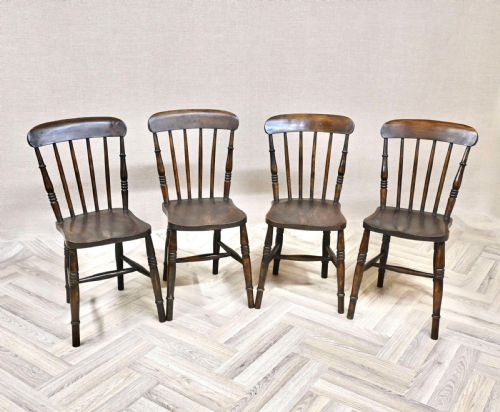
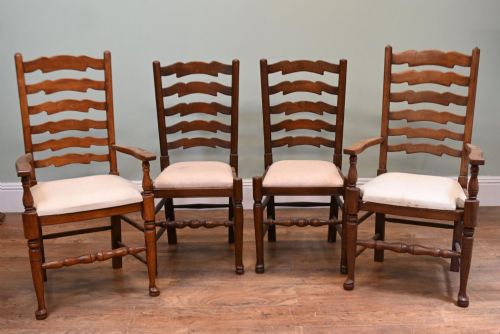
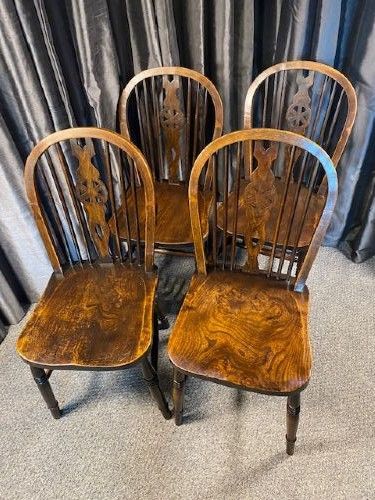
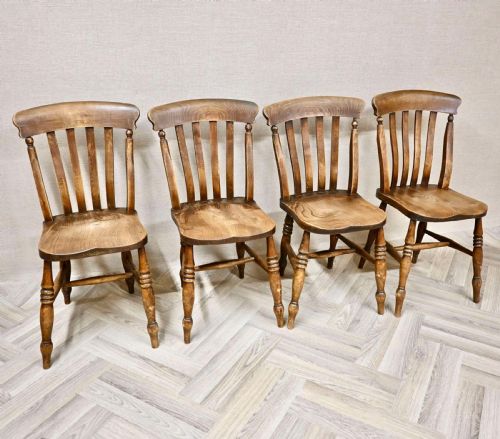
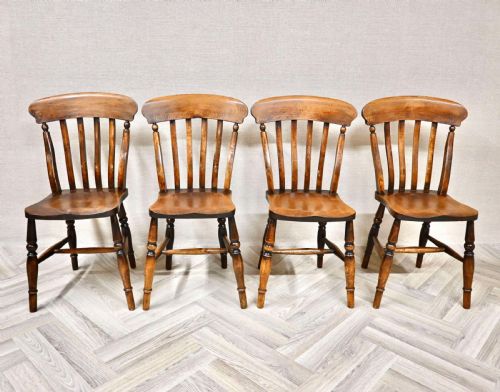
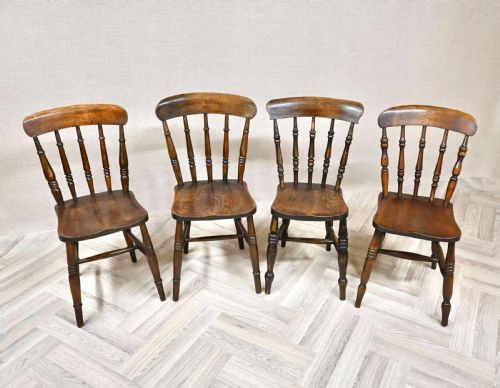
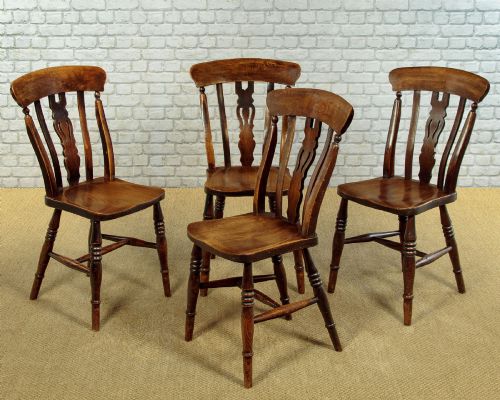
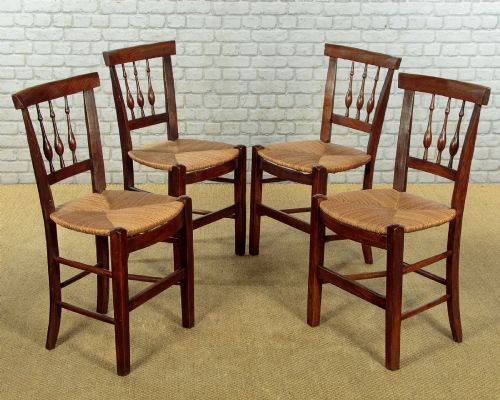
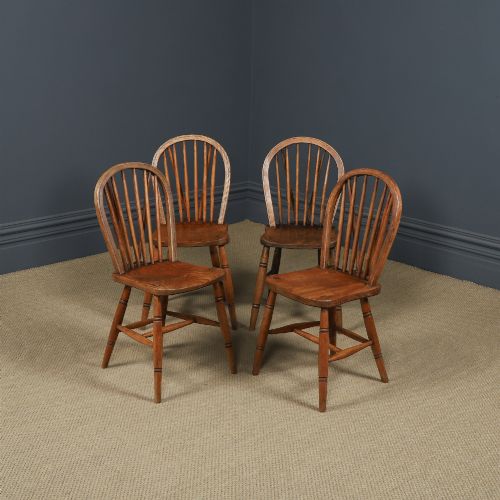
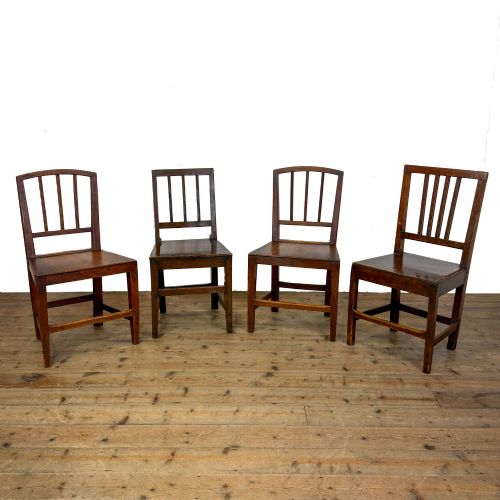
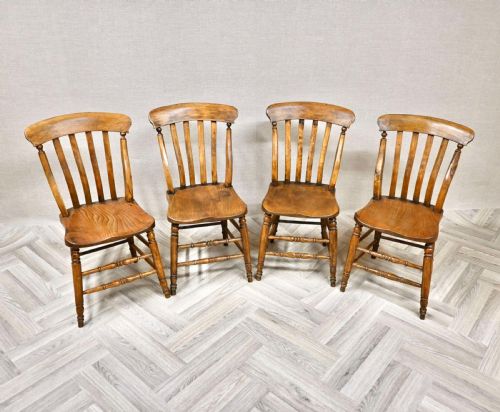
A set of four kitchen chairs comprises matched or complementary groups of antique seating designed for domestic dining and daily use. These pieces emerge primarily from nineteenth-century English country workshops, with Windsor designs appearing frequently alongside ladderbacks and stickbacks.
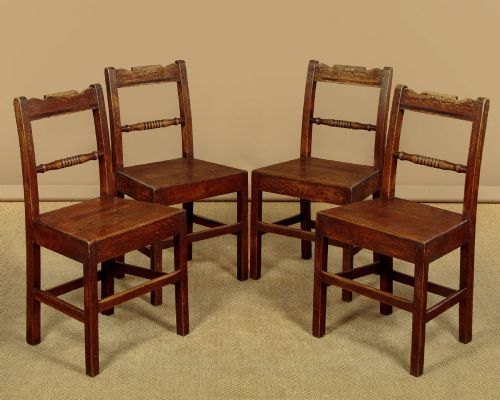
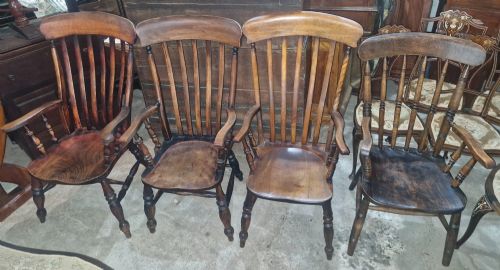
Buyers encounter regional variations such as Welsh cottage chairs, Shropshire farmhouse seating, and Lancashire styles alongside Victorian oak and elm creations. The grouping often reflects traditional domestic dining arrangements from the 1800s through the early twentieth century.
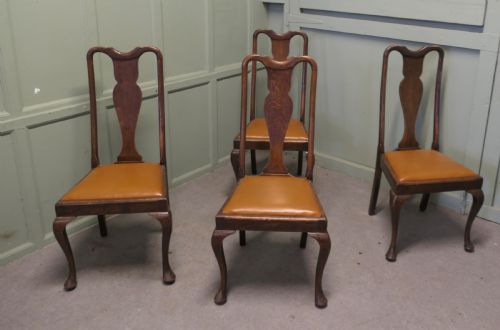
Many examples combine rustic vernacular forms with robust construction, utilising woods native to rural Britain. The selection ranges from simple farmhouse stickbacks to refined Queen Anne revival oak dining chairs.
Materials and construction methods
Traditional makers built these chairs using strong native timbers, frequently pairing elm for shaped seats with ash or beech for turned spindles and steam-bent hoops. Oak also appears widely across Victorian and Edwardian dining sets, providing considerable structural rigidity.
Set of Four Kitchen Chairs Retail Price Guide 2026
Typical asking prices for set of four kitchen chairs among the pieces listed under this phrase on Sellingantiques today, from the lower quarter to the upper quarter. They describe what is for sale here now, not the wider market.
Listings feature eighteenth-century origins up to 1930s deco designs, utilising elm, beech, oak, ash, rush, and fabric.
Distinguishing quality in country seating
Quality rests upon the integrity of the timber selection, particularly the thickness and figuring of solid elm seats and the matching of turned components across all four pieces. Harlequin sets show intentional variation in period design, whereas matched Windsor sets demand uniform spindle turning and consistent proportions.
Structural survival defines the best examples, noting the retention of original stretchers, double stretchers, and untouched surface patination built up through decades of domestic use. Expert craftsmanship shows in the balanced rake of the legs and the comfortable ergonomic sweep of steam-bent backrests.
The Set of Four Kitchen Chairs Glossary
- Windsor chair
- A wooden chair built with a solid sculpted seat into which the legs and back spindles are directly tenoned. These regional classics formed the backbone of rural English domestic seating.
- Lathback
- A chair design featuring a horizontal wooden slat or lath set into the centre of the backrest. This variation offers robust support compared to traditional thin vertical spindles.
- Penny seat
- A solid timber seat featuring a circular depression carved or adzed into the surface for comfort. The indentation resembles the round shape of an old penny.
- Harlequin set
- A group of four dining chairs that share a similar period style or silhouette rather than matching precisely. These sets were often assembled over time from individual pieces.
- Stretcher
- Horizontal wooden rods connecting the legs of a chair to provide structural stability. Double stretchers offer additional reinforcement under heavy use.
Set of Four Kitchen Chairs: Frequently Asked Questions
How do I care for antique wooden kitchen chairs?
Keep wooden chairs away from direct heat sources and sudden temperature shifts to prevent the timber from splitting. Apply a microcrystalline wax occasionally to nourish the surface finish.
Avoid using modern liquid polishes that contain silicone. A gentle wipe with a dry cloth maintains the historic patination safely.
Are these chairs suitable for daily dining use?
Most nineteenth-century country chairs were built for rugged domestic labour and handle modern dining well. Solid elm and ash constructions offer remarkable durability for everyday seating.
Check that the joints remain firm and the stretchers secure before heavy daily employment. Professional tightening ensures stable use around the family table.
How can I date a set of kitchen chairs?
Dating relies on examining tool marks, timber selection, and assembly methods visible beneath the seat. Hand-turned spindles and adzed elm seats generally point toward the nineteenth century.
Styles evolved from early Georgian proportions to heavier Victorian farmhouse designs and Edwardian revival pieces. Comparing the turning patterns across the set helps confirm whether the chairs originated together.