

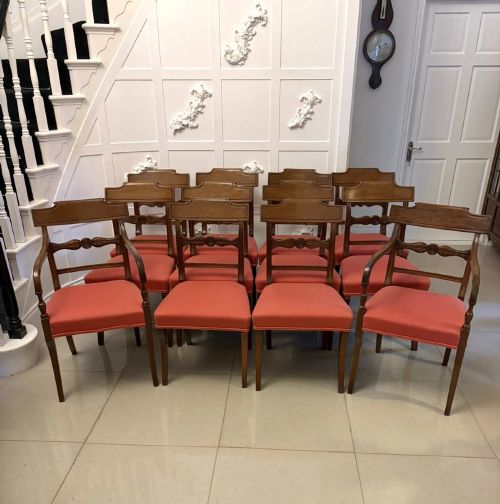
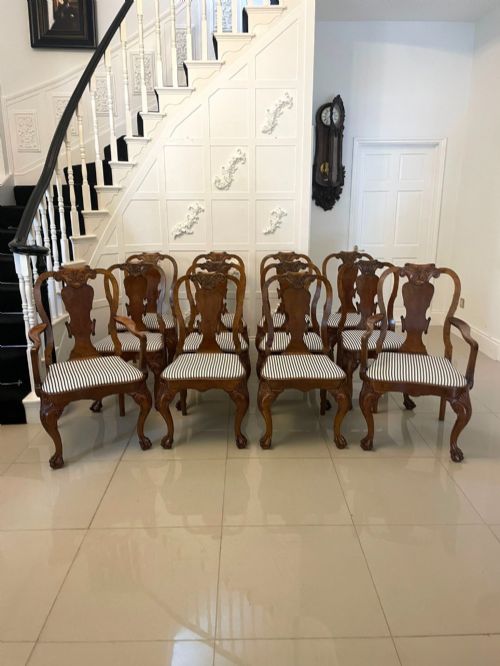
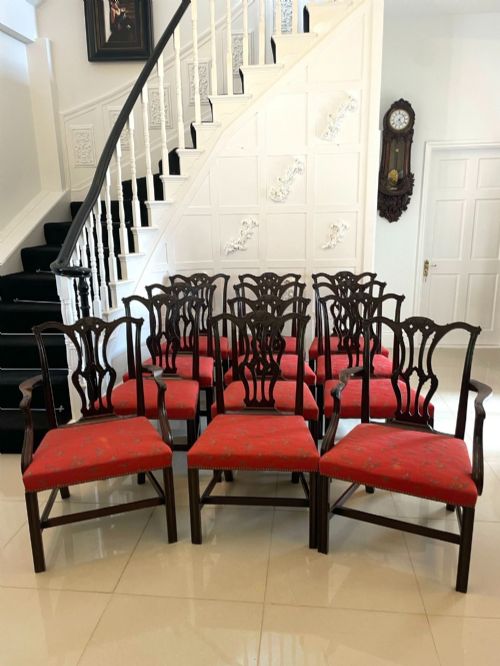
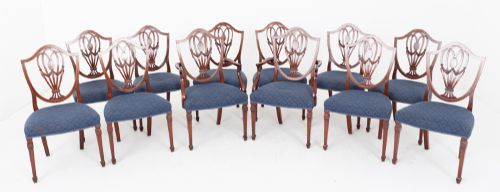
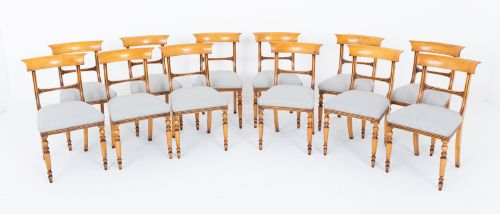


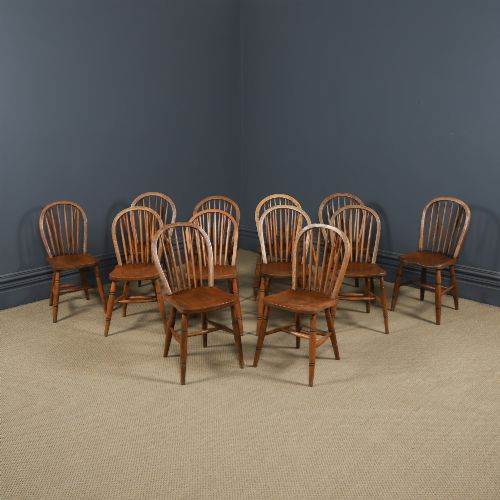
Set of 12 Dining Chairs
When sourcing a set of 12 dining chairs, buyers secure a unified dining arrangement spanning from the 18th century through the Edwardian period.

Set of 12 Dining Chairs
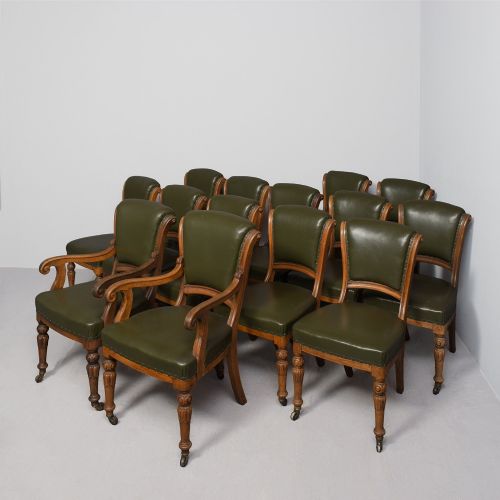
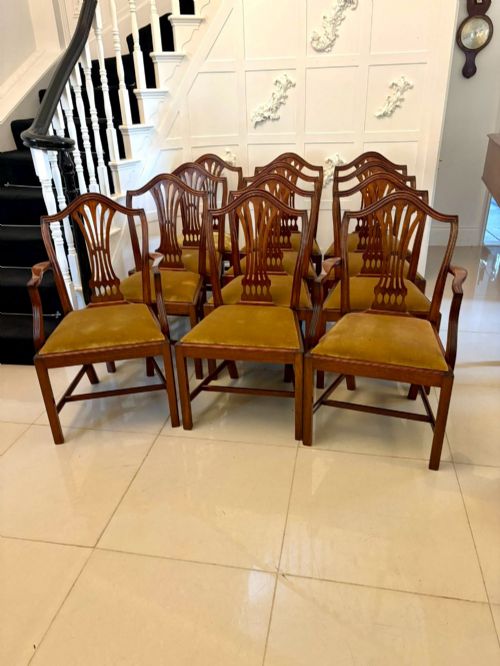
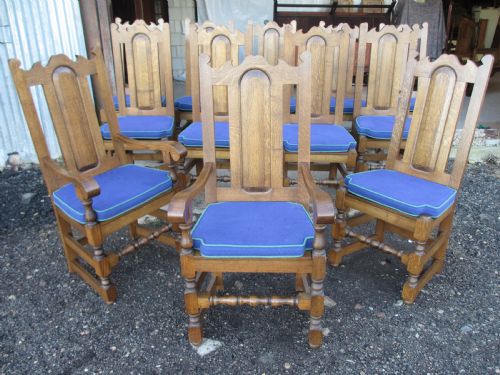
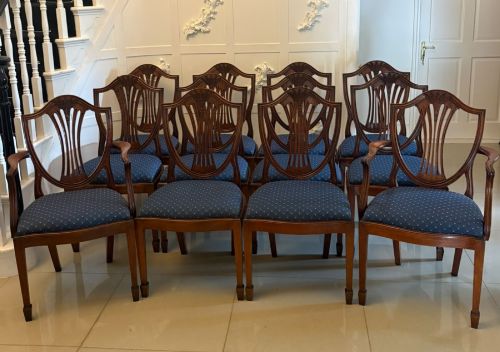
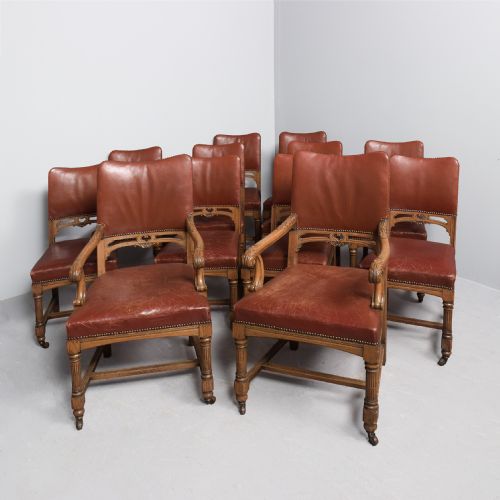
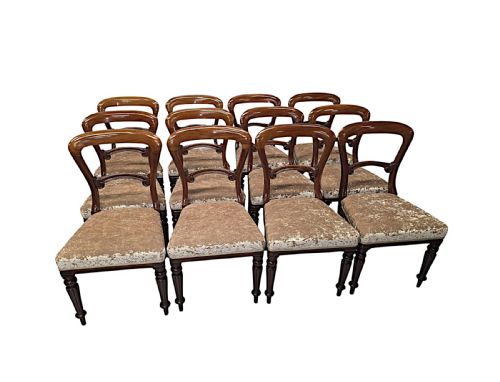
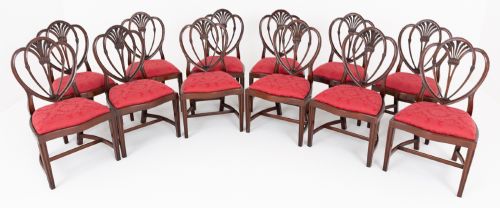
A set of 12 dining chairs provides a large and consistent seating arrangement designed for formal dining rooms and substantial tables. These groupings frequently comprise ten single chairs accompanied by two matching carver armchairs for the heads of the table.
The selections encountered here span multiple centuries and stylistic revivals, originating from English, French, Scottish, and Italian workshops. Formal mahogany models reflecting Regency, Victorian, and Georgian designs appear alongside country ash and elm Windsor iterations.
How they were made
Cabinetmakers utilised dense timbers such as mahogany, oak, walnut, and burr walnut, often pairing them with supportive secondary woods like ash and elm for regional stick-back forms. Carved details, shield backs, ladder backs, and balloon backs demonstrate the joinery techniques of the period.
Upholstery forms an integral component of many examples, utilising traditional fabrics, leather, velvet, and caning secured over padded seats. Brass accents and detailed carving further define the construction of formal revival models.
Set of 12 Dining Chairs Retail Price Guide 2026
Typical asking prices for set of 12 dining chairs among the pieces listed under this phrase on Sellingantiques today, from the lower quarter to the upper quarter. They describe what is for sale here now, not the wider market.
Listings feature mahogany, oak, walnut, ash, and elm across Regency, Victorian, and 18th century periods.
What varies in quality
The distinction between tiers rests upon the crispness of the timber carving, the selection of figured veneers, and the structural integrity of the frames. Matched sets that retain their original proportions and uniform patination command greater regard than assembled groups.
The preservation of original upholstery methods, underlying webbing, and secondary timbers influences the overall standard. High-tier examples exhibit meticulous attention to joinery details, such as tight joints and finely executed splats.
Gillows·Robert Strahan Dublin·Wm Bartlett And Son
The Set of 12 Dining Chairs Glossary
- Carver
- An armchair designed to match a set of single dining chairs, traditionally placed at the head and foot of the table. These incorporate armrests for the convenience of the host.
- Shield Back
- A chair back shaped in the outline of a heraldic shield, popularised by Georgian designers like Hepplewhite. This form often includes intricate pierced splats.
- Balloon Back
- A rounded, curved chair back resembling the profile of a hot air balloon, characteristic of Victorian seating. This shape offers ergonomic support through its continuous wooden loop.
- Splat
- The vertical central strip of wood in a chair back connecting the seat to the top rail. Master craftsmen shaped these into ribbons, vases, or geometrical patterns.
- Harlequin Set
- A collection of dining chairs that are closely related in style and period rather than originally born as one unified group. These groupings share general design characteristics while showing subtle variations.
Set of 12 Dining Chairs: Frequently Asked Questions
How do I accommodate twelve chairs?
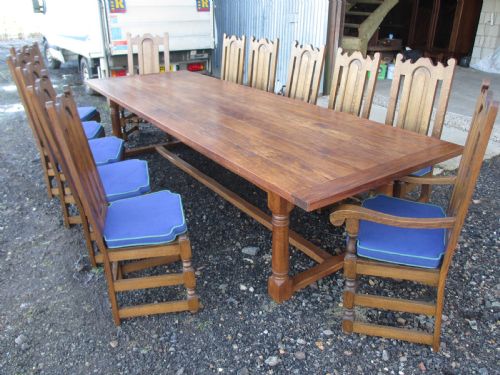
A set of this scale requires a substantial dining table, typically measuring twelve feet or longer, to allow adequate spacing between each seat. Arranging the ten single chairs along the sides with the two carvers at either end maintains proper clearance.
Ensuring sufficient floor space around the perimeter of the room permits guests to pull their chairs out comfortably without obstructing walkways or adjacent furniture.
What is a carver chair?
A carver is an armchair styled to match the accompanying single chairs in a dining set. Historically assigned to the host and hostess, they provide additional arm support and visual weight at the table extremities.
These pieces share the primary timber, leg style, and back design of the non-armed chairs to preserve visual harmony across the entire grouping.
How can I date my chairs?
Dating relies on examining the timber species, joinery methods, and prevailing decorative style, such as Regency curves or Victorian balloon backs. Secondary woods hidden beneath the seats often reveal regional construction traits typical of specific decades.
Comparing the turned elements, stretcher placements, and carving sharpness against documented period examples helps narrow the timeline of manufacture.
Are mismatched sets authentic?
Historical dining sets sometimes evolved as families gathered additional chairs over time, resulting in harlequin groupings of closely related pieces. These assembled sets remain historically valid and reflect traditional domestic accumulation.
Matching timber tones and compatible stylistic details ensure that harlequin configurations maintain a cohesive appearance within a contemporary dining space.