

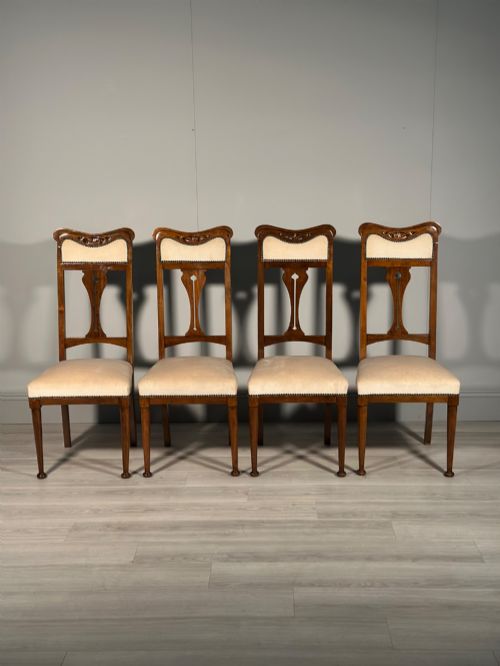
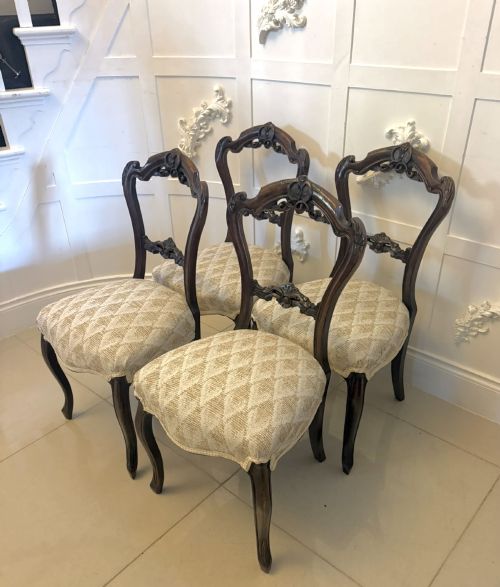
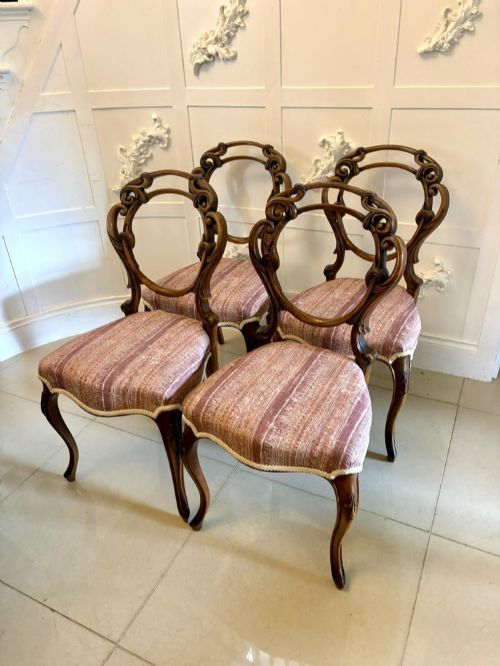
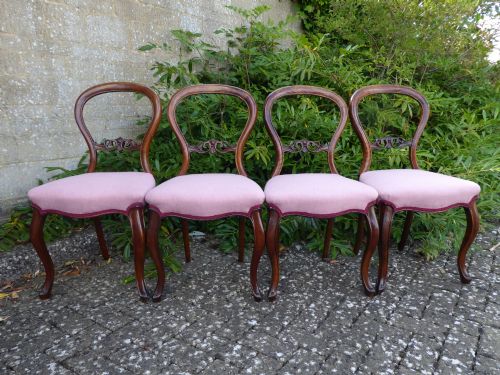
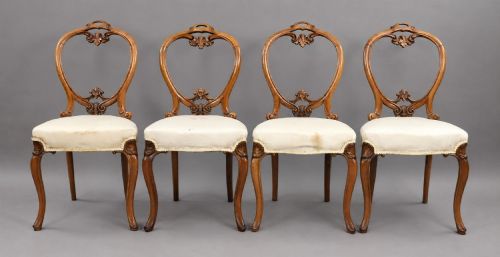
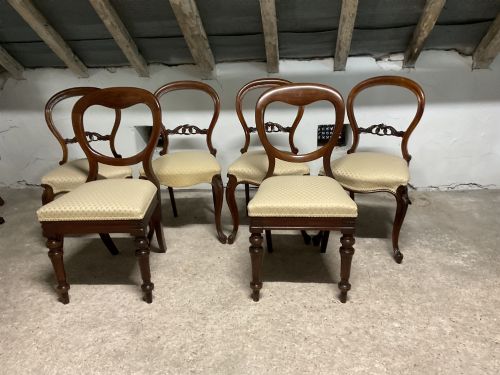

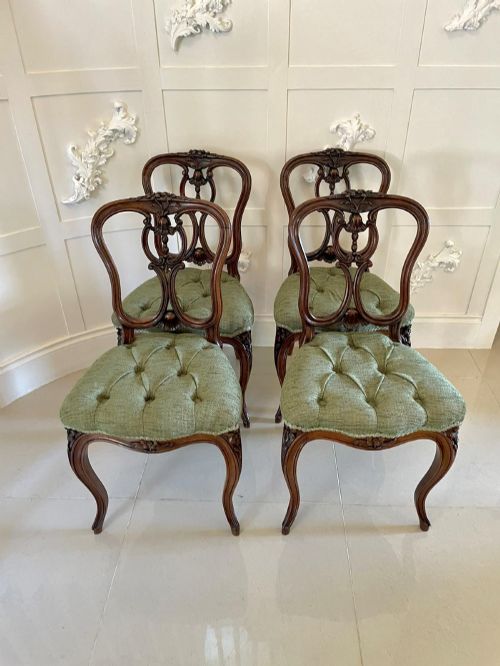
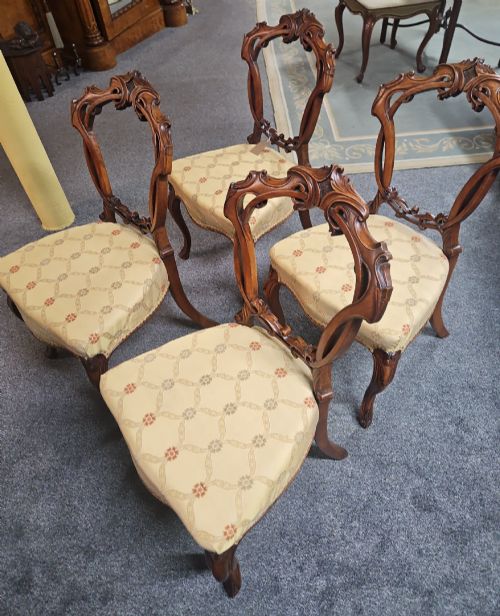


Set Four Walnut Chairs
These set four walnut chairs bring together timber, period design, and seating forms from the eighteenth to the early twentieth century.
Set Four Walnut Chairs
When you search for set four walnut chairs, you encounter matching groupings of dining chairs, side chairs, armchairs, and salon chairs spanning Georgian, Victorian, and Edwardian periods. Victorian examples in this grouping frequently take the form of balloon back dining chairs or carved side chairs.
The material palette centres firmly on walnut, often paired with various textiles, velvet, and contemporary upholstery fabric. Pieces originate across British and French traditions, displaying stylistic revivals including Rococo, Queen Anne, and Louis XV designs.
Most entries belong to the nineteenth century, with particular concentrations from the 1850s and 1860s alongside Georgian and Edwardian iterations. These sets provide matching seating arrangements originally intended for formal dining rooms and parlours.
How they were made
Makers utilised solid walnut for the structural frames, often shaping the timber through carving to create balloon backs, cabriole legs, and decorative crest rails. Some examples incorporate marquetry inlay into the wooden surfaces for additional visual texture.
Upholstery forms an integral part of construction, utilising fabric, velvet, and textile coverings stretched over internal padding. Frames frequently combine turned or curved walnut components held together with traditional joinery methods.
Set Four Walnut Chairs Retail Price Guide 2026
Typical asking prices for set four walnut chairs among the pieces listed under this phrase on Sellingantiques today, from the lower quarter to the upper quarter. They describe what is for sale here now, not the wider market.
Listings feature walnut frames paired with velvet, textile, and contemporary upholstery fabrics across Victorian and Edwardian periods.
What varies in quality
The depth and crispness of the carved ornamentation on the walnut frames distinguish finer examples from simpler production. Carved flourishes, delicate pierced splats, and well-defined mouldings require greater carpentry skill.
The integrity of the timber and the cohesion of the matched set dictate overall standing. Even fading of the walnut grain across all four chairs and sturdy structural framing separate superior sets from mismatched or heavily repaired groupings.
The Set Four Walnut Chairs Glossary
- Balloon back
- A chair back shaped in a continuous oval curve resembling a balloon, characteristic of mid-nineteenth-century seating. This form provides ergonomic support while presenting a light silhouette.
- Carved wood
- Timber shaped with chisels and gouges to form decorative reliefs and structural contours. In these pieces, carving defines the crest rails and front legs.
- Marquetry
- Fitted patterns of wood veneer applied to furniture surfaces to create pictorial or geometric designs. This technique decorates select eighteenth-century panels.
- Salon chair
- A smaller, lighter seat intended for reception rooms rather than heavy dining use. These chairs often feature decorative upholstery and ornate frames.
Set Four Walnut Chairs: Frequently Asked Questions
How do I date a set of walnut chairs?
Dating relies on stylistic markers such as balloon backs, cabriole legs, or marquetry inlay, alongside construction methods visible in the frame joints. Comparing the design against known Georgian, Victorian, and Edwardian production periods clarifies the decade of manufacture.
Material choices and upholstery remnants also offer clues to age, though many pieces have received replacement fabric over time. Examining the timber patination helps confirm whether the chairs originate from the eighteenth, nineteenth, or early twentieth century.
Were these chairs meant for dining?
Many examples function as dining chairs, particularly the sturdy Victorian balloon back forms and Georgian prototypes designed for domestic use around a table. Other entries serve as salon chairs or side chairs intended for occasional seating in parlours.
Sets of four typically catered to smaller households or specific parlour arrangements rather than large banquet settings. The presence of arms distinguishes armchairs from standard side chairs within a matched group.
What is French stylistic influence on these chairs?
French influence appears through revived Louis XV and Louis XVI motifs, including Rococo curves and parcel gilt highlights applied to walnut frames. Makers in Britain and France adopted these continental aesthetics during the nineteenth century.
Such pieces combine English timber traditions with French decorative vocabulary, resulting in serpentine rails and elaborate carved cartouches. This cross-channel aesthetic remains prominent among surviving nineteenth-century examples.
How should I care for antique walnut wood?
Preserving walnut surfaces involves maintaining stable room humidity and avoiding direct placement near heat sources or strong sunlight. Regular dusting with a soft, dry cloth protects the finish without stripping the underlying patina.
Harsh chemical polishes should be avoided in favour of traditional waxes suited to antique timber. Gentle maintenance ensures the grain and colour of the walnut remain stable over time.