
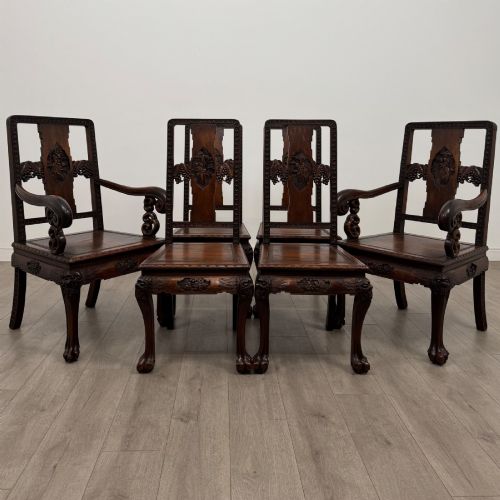
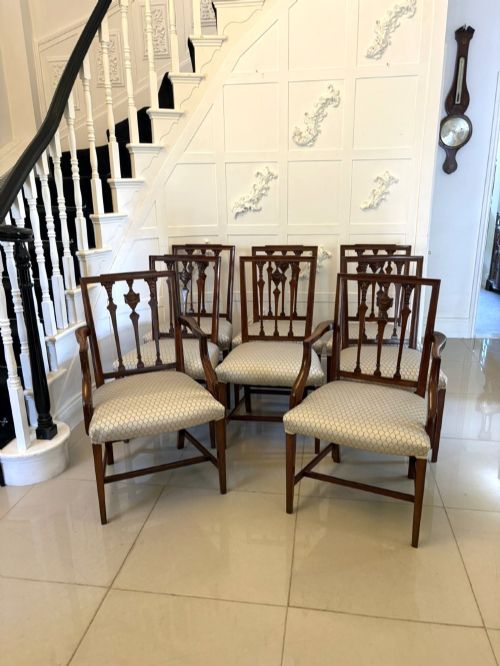
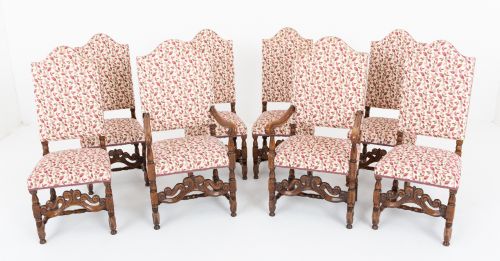
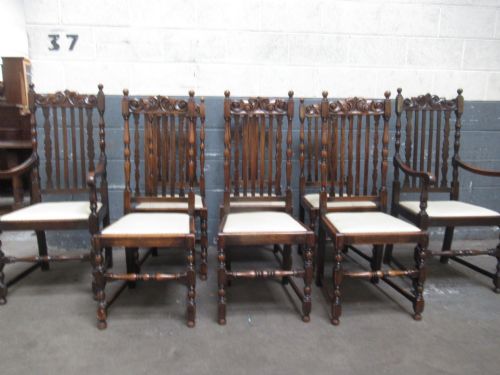
Set Carved Carver Chairs
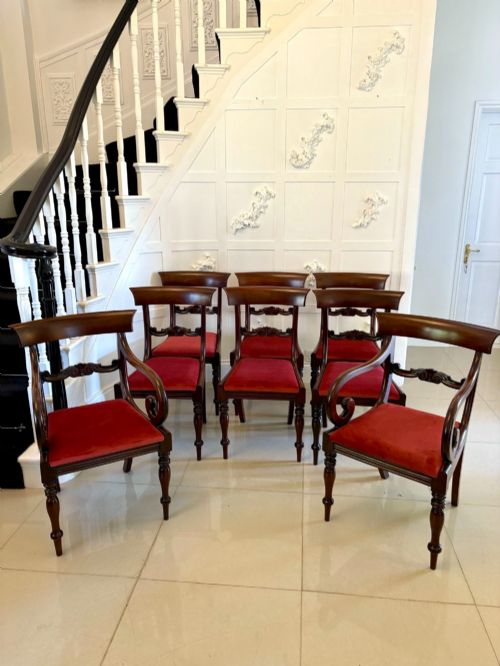
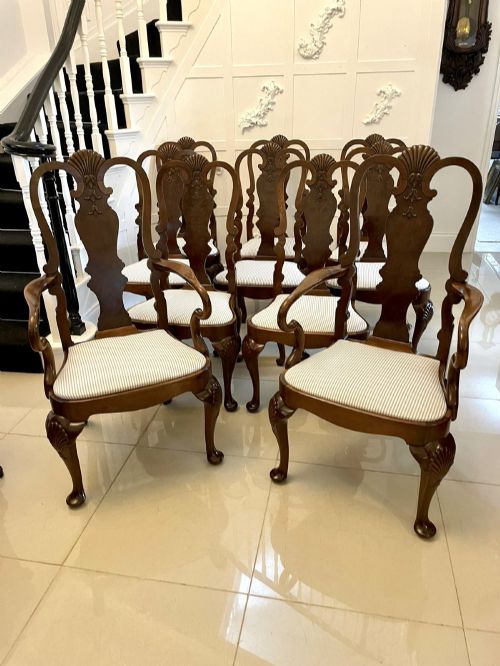
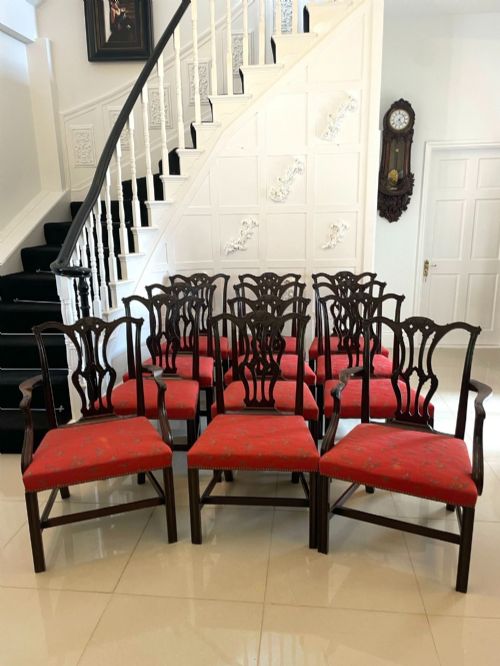
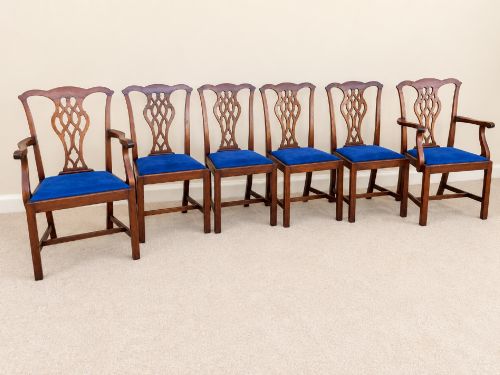
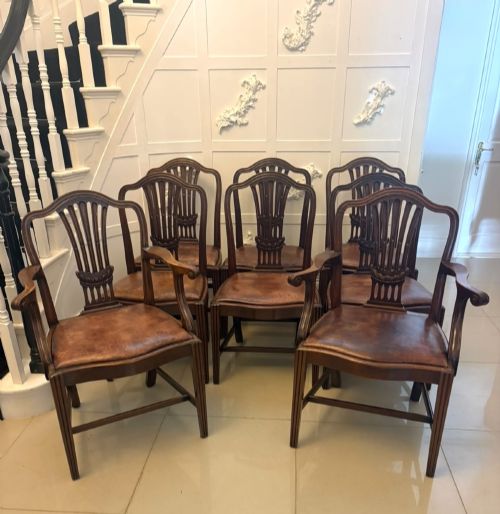
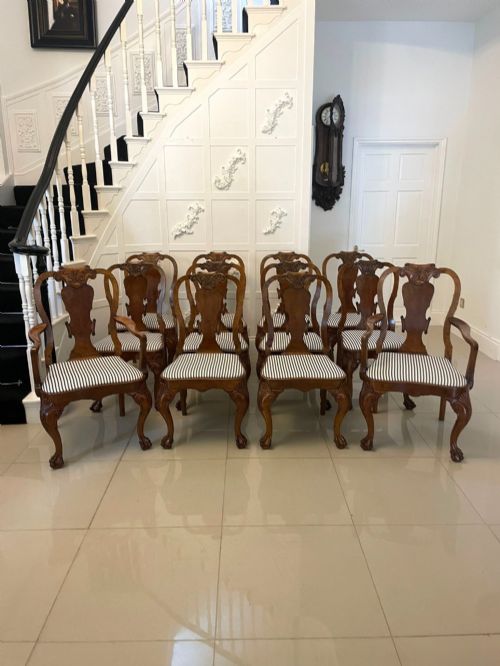
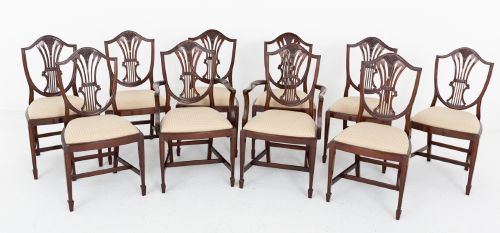
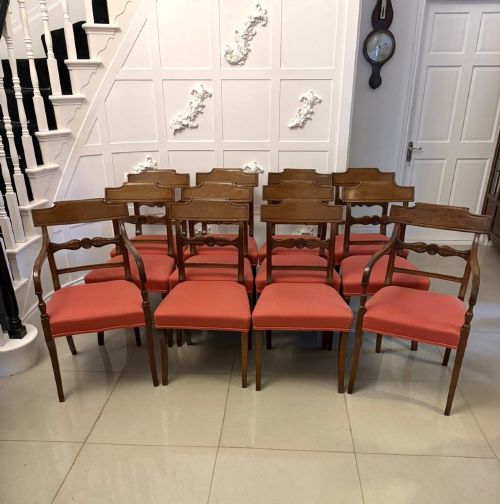
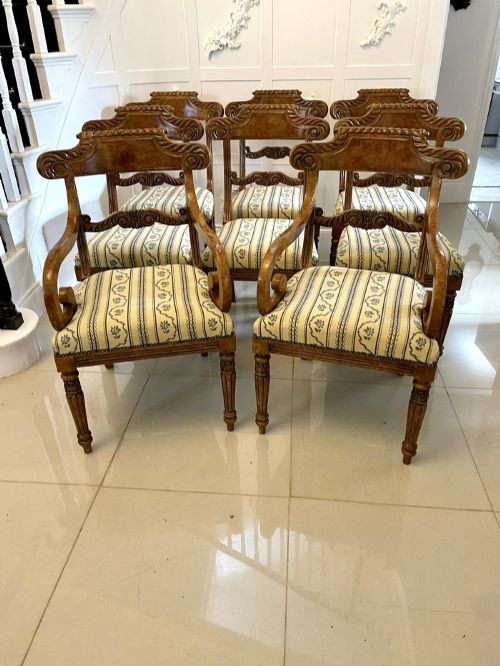
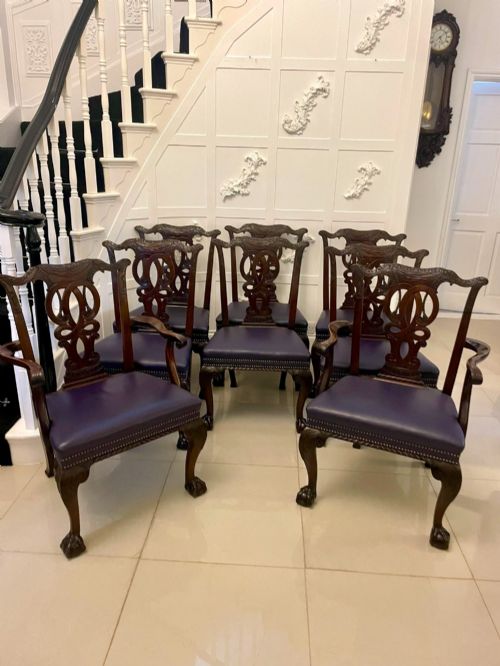
These set carved carver chairs bring formal presence to a dining room, offering substantial timber frames and scroll arms designed to sit at the head of the table.
Set Carved Carver Chairs
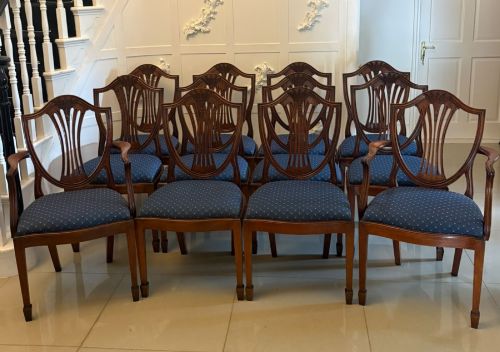
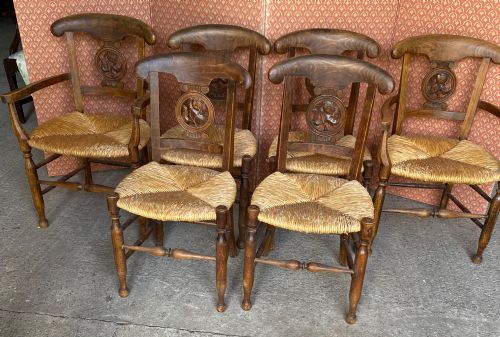
A set carved carver chairs brings together matched groups of dining seating that include armchairs alongside side chairs, spanning periods from the eighteenth century through the Edwardian era and the 1930s. Buyers searching for this phrase encounter dining sets in mahogany, oak, and walnut, shaped in styles that reference Chippendale, Hepplewhite, Regency, and Queen Anne designs.
The pieces on this page originate from nineteenth-century Victorian workshops as well as early twentieth-century revivals, often assembled in groupings ranging from six to twenty chairs. Mahogany and oak dominate the timber choices, frequently paired with upholstery in leather, velvet, or fabric to suit formal dining spaces.
How they were made
Cabinetmakers shaped these frames from solid hardwoods like mahogany, walnut, and oak, often turning legs and steaming timber to form curved shield backs or splats. Carving was executed by hand on crest rails, knees, and arm terminals, utilising chisels to define foliage, scrolls, and ribbon motifs.
Joinery relied on mortise and tenon construction to secure the seat frames and backrests, ensuring the arm attachments on carver chairs could withstand daily use. Upholstered drop-in or fixed seats were Webbed, stuffed with horsehair or flock, and covered in leather, velvet, or woven fabric secured with brass tacks.
Listings feature dining sets spanning from the eighteenth century to the 1930s, constructed in mahogany, oak, and walnut.
What varies in quality
The crispness of the hand-carved detail separates standard production from exceptional examples, as skilled carvers achieved deep undercut foliage and sharp architectural lines. Timber selection also dictates grade, with figured mahogany and burr walnut showing dense, intentional grain patterns across the shield backs and rails.
Proportion and the integrity of the joinery define the upper tier, where armchairs maintain balanced arm supports that integrate smoothly with the back uprights. Original surface patination and surviving leather or fabric upholstery add to the integrity of a set.
Warings·Maple and Co·Alfred Allen of Birmingham·Waring and Gillow
The Set Carved Carver Chairs Glossary
- Carver
- An armchair designed for the head of a dining table, featuring supportive armrests that match the surrounding side chairs. These pieces provide a more formal seat.
- Shield Back
- A chair back shaped in the outline of a heraldic shield, popularised by eighteenth-century designers and revived in later periods. It often contains carved splats or drapery motifs.
- Splath
- The central vertical slat of a chair back connecting the crest rail to the seat. It is frequently pierced or carved with ribbon and tassel designs.
- Crest Rail
- The horizontal top member of a chair back. This section bears the primary carved ornamentation of the piece.
- Drop-in Seat
- A removable upholstered frame that drops into a rebate within the chair seat rails. It allows for straightforward reupholstery without dismantling the main frame.
Set Carved Carver Chairs: Frequently Asked Questions
Are these chairs suitable for daily use?
Solid hardwood frames built with traditional mortise and tenon joinery remain robust enough for regular dining room service. Checking the stability of the arm joints and seat rails ensures they handle everyday movement.
Modern users often pair these antique frames with updated interior seating arrangements, benefiting from the durability of nineteenth and early twentieth-century construction.
How do I tell an eighteenth-century set from a revival?
Eighteenth-century originals show hand-tool marks and timber shrinkage consistent with age, whereas revival sets from the Victorian era or the 1920s display machine assistance and uniform wood seasoning. Revival pieces often adopt earlier styles like Chippendale or Hepplewhite with heavier proportions.
Examining the underside of the seat frames and the type of secondary wood used helps clarify the actual period of manufacture.
What timber was used most often?
Mahogany and oak appear most frequently across these listings, providing the dense structural strength required for dining furniture. Walnut and burr walnut also feature in higher-end examples from the Victorian period and the early twentieth century.
Each wood dictates the character of the carving, with oak lending itself to deep Jacobean styles and mahogany suiting sharp Regency details.