



Serpentine Work Table
These serpentine work tables combine graceful undulating outlines with practical compartments for needlework, bringing refined French and Victorian craftsmanship into any room.
Serpentine Work Table
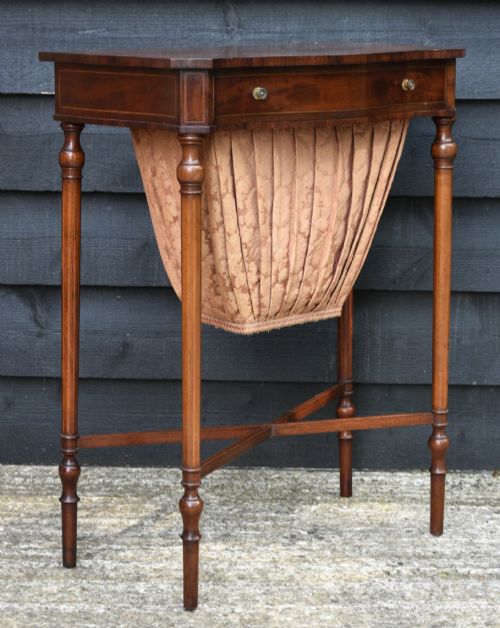
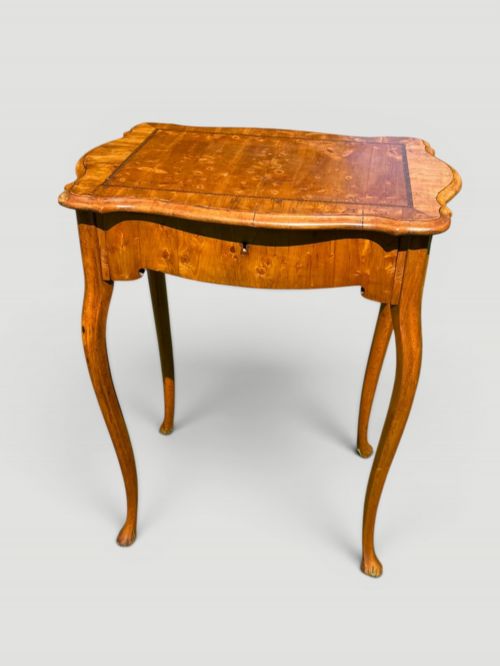
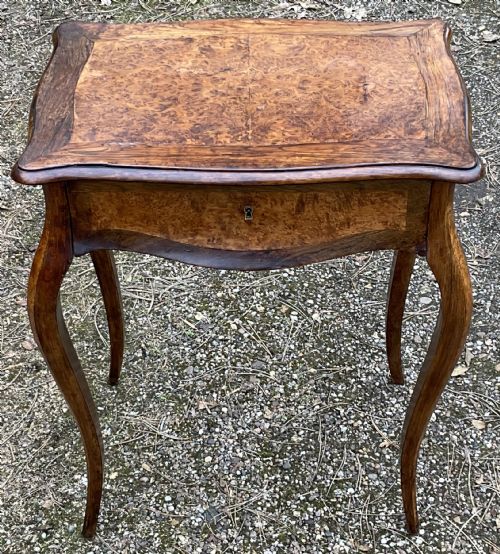
A serpentine work table is a specialised piece of domestic furniture featuring a curved, sinuous top and interior fittings designed for sewing, needlework, or small pursuits. You encounter these tables primarily in Victorian and Edwardian iterations, reflecting the nineteenth and early twentieth century penchant for dual-purpose furnishings.
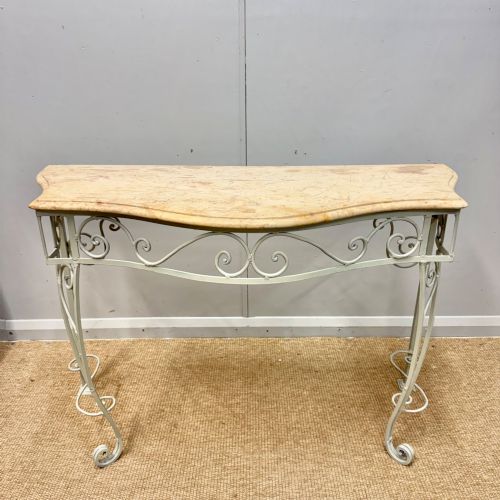
The forms span several distinct stylistic lineages, connecting British craftsmanship with French revival movements such as Louis XV and Napoleon III. While some examples function purely as decorative side or centre tables, the true work table retains its fitted interior compartments beneath the serpentine lid.
How they were made
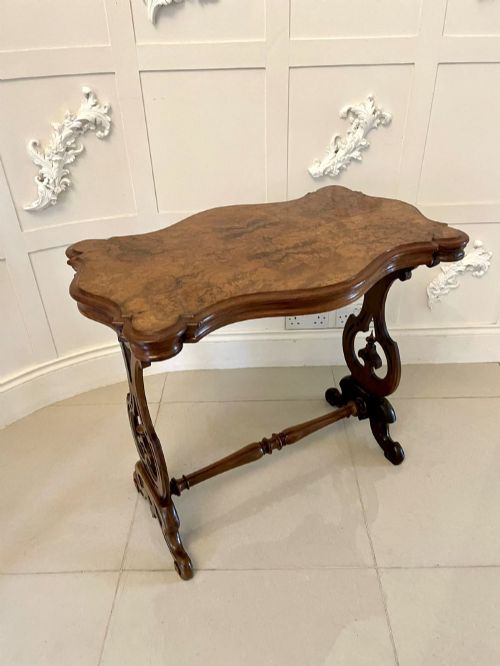
Cabinet makers utilised dense native and exotic timbers, most notably burr walnut, mahogany, kingwood, and rosewood, often applied as fine veneers over robust foundational woods. The distinctive serpentine contour required precise sawing and shaping of both the solid framing and the veneered surfaces.
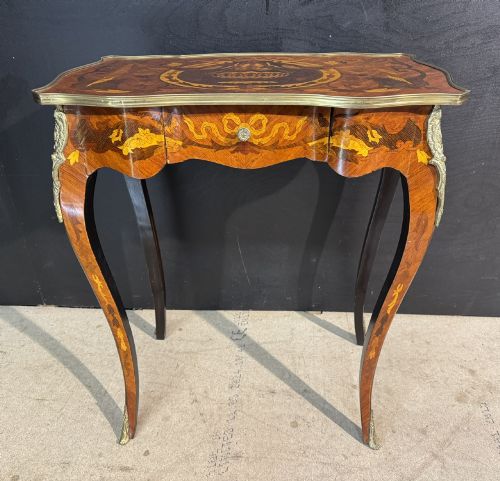
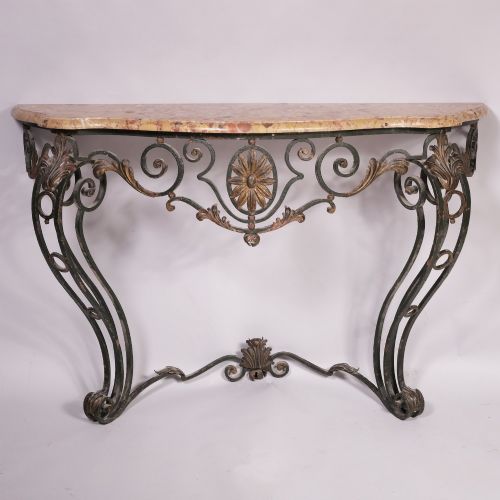
Decorative enrichment relied heavily on brass or ormolu mounts, intricate marquetry inlay, and ebonised wood details. Boulle work, incorporating tortoiseshell and brass marquetry, appears on several French revival pieces, demonstrating advanced brass-cutting and application techniques.
Materials recorded across the inventory include brass, ormolu, burr walnut, mahogany, kingwood, rosewood, and ebonised wood.
What varies in quality
Quality rests upon the selection of timber veneers, particularly the grain figuration of burr walnut or the complexity of the marquetry patterns. Finer pieces demonstrate meticulous matching of wood grains across the undulating serpentine top, ensuring symmetry along the curved edges.
The sophistication of the internal fittings and the crispness of the ormolu mounts separate standard production from superior examples. Well-executed gilt bronze mounts and tightly fitted interior compartments indicate higher workshop standards.
Maison Millet
The Serpentine Work Table Glossary
- Serpentine
- A furniture top or front characterised by a wavy outline, curving inward in the centre and outward at the ends. This profile demands high skill from the cabinet maker.
- Ormolu
- Gilded bronze mounts applied to furniture for decorative effect. The technique involves treating bronze with a gold-mercury amalgam before firing.
- Boulle
- A type of marquetry consisting of tortoiseshell and brass inlay developed in France. It creates a striking contrast of dark tortoiseshell and gleaming metal.
- Marquetry
- Decorative patterns formed by the insertion of pieces of wood, shell, or ivory into a veneered surface. Craftsmen cut these elements precisely to fit flush into the backing timber.
- Burr walnut
- Wood taken from the abnormal growth of a walnut tree, yielding highly figured, swirling grain patterns. It forms the primary visual surface on many Victorian tables.
Serpentine Work Table: Frequently Asked Questions
What is a serpentine work table?
A serpentine work table is a small nineteenth or early twentieth century table featuring a curved, undulating top and internal compartments designed for sewing or needlework.
These pieces combine decorative appeal with functional storage, making them suitable for use as side tables or occasional tables in modern interiors.
How do I date a serpentine work table?
Dating relies on examining the timber species, construction methods, and stylistic influences such as Victorian revival or Edwardian inlay. Walnut and rosewood predominate in mid to late nineteenth century examples, while Edwardian pieces often utilise inlaid mahogany.
Secondary woods inside drawers and compartments also provide clues regarding the period of manufacture and the workshop origin.
Were these tables used only for sewing?
While originally equipped with compartments for thread, needles, and textiles, many served multiple domestic functions. Some examples double as writing desks, games tables, or general occasional tables.
The fitted interiors often lift out or feature lidded compartments that adapt easily to holding modern small items.
How do I care for a veneered work table?
Veneered surfaces require protection from direct sunlight and excessive humidity to prevent the fine timbers from drying out or warping. Regular dusting with a soft, dry cloth maintains the polish without damaging the antique finish.
Avoid placing damp items directly onto the wood, and use coasters beneath any decorative objects.