




Edwardian Work Basket Table
These edwardian work basket table pieces combine practical needlework storage with refined display surfaces for the home.
Edwardian Work Basket Table
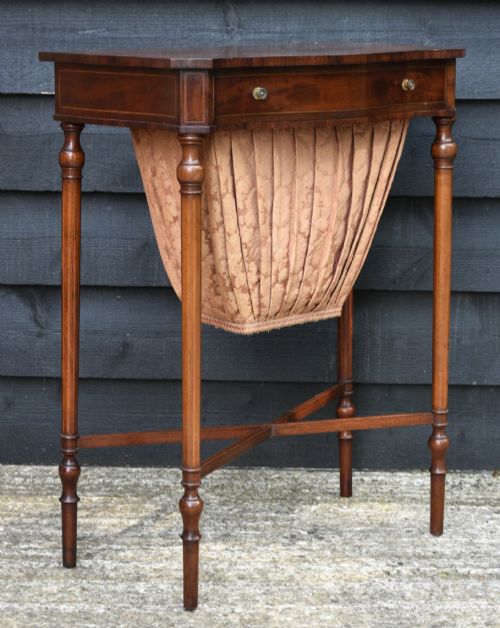
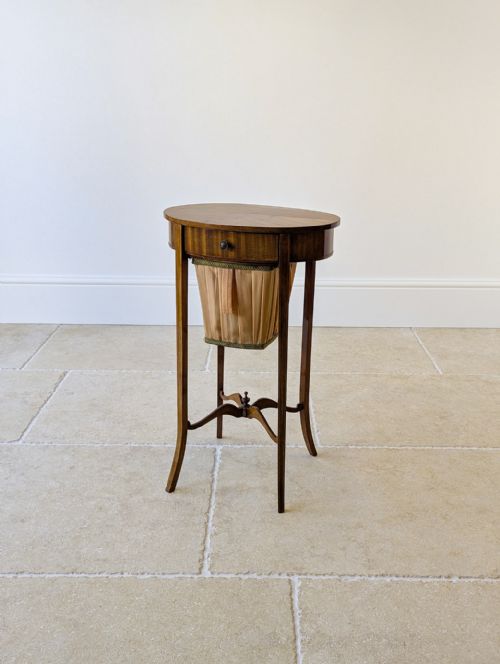
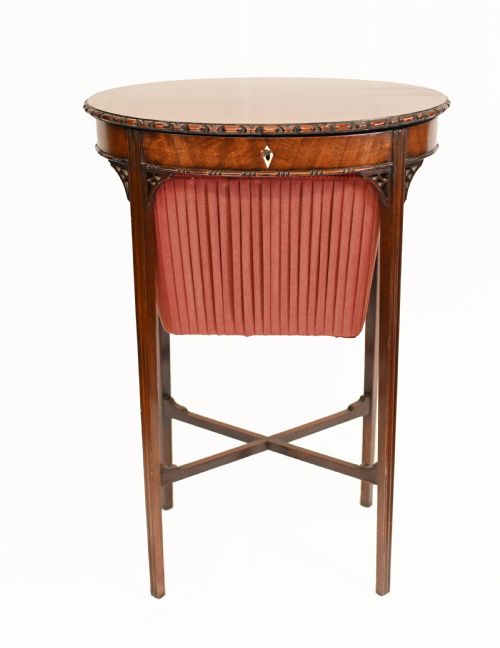
An edwardian work basket table brings together the functions of a sewing station and a small occasional table. These pieces typically combine a wooden frame with an integrated fabric or silk basket underneath for holding threads and textiles.
The selections encountered here span multiple periods, with Edwardian examples appearing alongside Victorian and Regency pieces. Form variations include octagonal tops, serpentine edges, and folding designs that double as lamp tables.
Makers utilised various timber frames, including mahogany, satinwood, and walnut, paired with textile components. Such tables served as functional furniture for the drawing room, allowing needlework to remain close at hand.
Materials and Construction
Cabinetmakers constructed these frames primarily from mahogany, satinwood, and walnut timbers. Many examples feature decorative inlays that highlight the polished surfaces of the wood.
The hanging storage component relies on fabric and silk elements attached beneath the tabletop. Solid silver work baskets also appear, featuring intricate pierced metalwork.
Needlework enthusiasts kept endless tangled threads neatly hidden beneath polite little mahogany lids.
Judging Quality
Quality rests upon the selection of timbers and the precision of the cabinetwork. Tables utilising figured mahogany, satinwood, or burr walnut demonstrate superior decorative ambition.
The refinement of the inlay work and the integrity of the integrated silk or fabric baskets distinguish finer examples. Details such as serpentine edges and small proportions indicate considered design.
James Dixon & Sons Ltd·Gillows
The Edwardian Work Basket Table Glossary
- Work table
- A small piece of furniture designed for holding sewing materials, equipped with a bag or basket beneath the top. These tables became popular during the nineteenth and early twentieth centuries.
- Serpentine
- A curved line of furniture moulding or framing that undulates gently outward and inward. This shape requires precise woodworking skill to execute cleanly.
- Satinwood
- A yellowish exotic timber valued for its lustrous grain and smooth finish. It appears frequently in inlaid decorative panels on Edwardian furniture.
- Pierced-work
- Metal or wood perforated with decorative patterns through cutting or sawing. This technique creates intricate openwork designs on silver baskets.
- Occasional table
- A small, movable table intended for specific, temporary uses in a room. These pieces function easily alongside seating or as lamp stands.
Edwardian Work Basket Table: Frequently Asked Questions
How were these tables used?
Victorian and Edwardian households utilised these tables in drawing rooms and parlours where women gathered for needlework and embroidery. The suspended basket kept threads, fabrics, and tools neatly contained.
When not in use for sewing, the flat top surface accommodated small lamps or decorative objects, making the furniture versatile for daily living.
What woods were used?
Cabinetmakers employed a range of fine timbers for these tables, including mahogany, satinwood, and walnut. Some examples incorporate burr walnut for enhanced grain patterns.
Inlays in contrasting woods frequently decorate the tabletops, adding visual interest to the polished surfaces.
How do you style them today?
These tables integrate easily into modern interiors as bedside stands, hallway surfaces, or side tables beside armchairs. Their compact proportions allow them to fit into smaller spaces.
The lower basket can store current reading material or small accessories, blending historical utility with contemporary function.