





Serpentine Walnut Desk
When you search for a serpentine walnut desk, you are looking at undulating lines and figured timber that reward close inspection.
Serpentine Walnut Desk
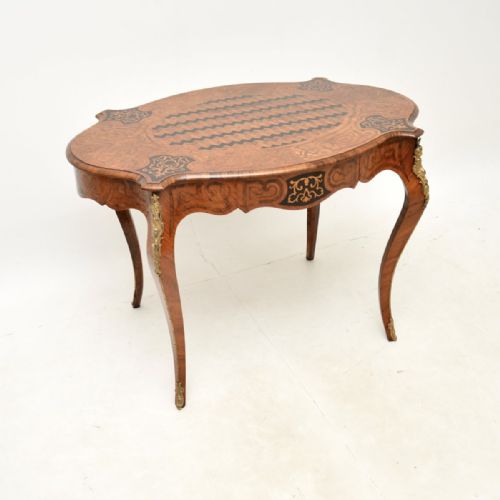
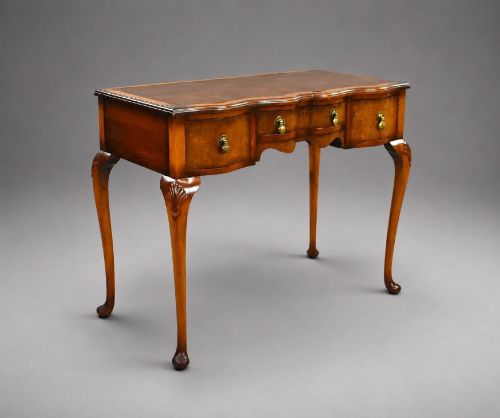
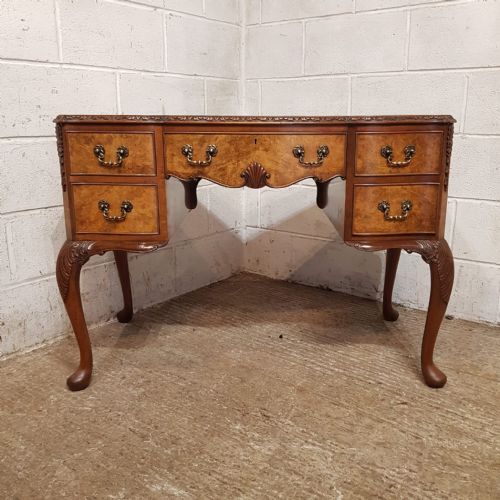
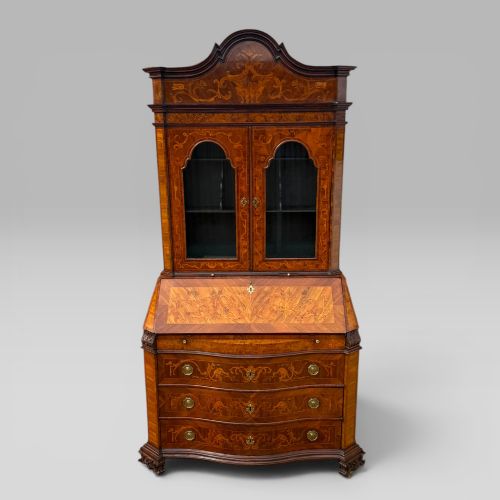
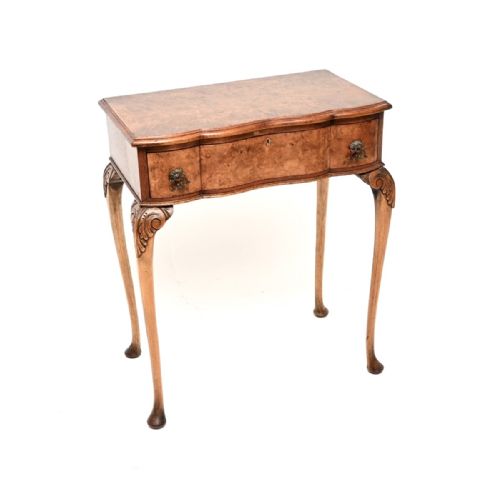
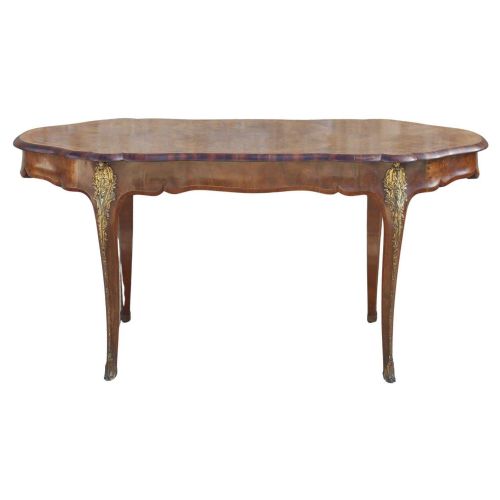
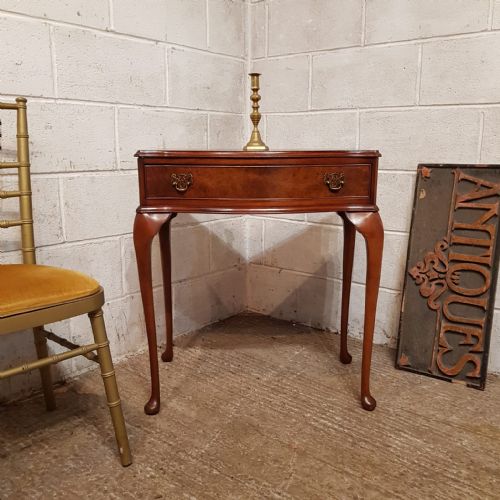
A serpentine walnut desk brings together a distinctive sweeping front profile and rich timber grain, appearing primarily in nineteenth-century and early twentieth-century iterations on this page. These pieces range from compact kneehole writing tables to larger pedestal desks and bureau forms.
Makers drew on historic idioms such as Queen Anne and Louis XV styles, incorporating cabriole legs and shaped edges. The form suits studies and drawing rooms alike, offering fitted drawers and writing surfaces inset with leather.
The survival of these desks spans multiple decades of Victorian and revival production, reflecting enduring demand for curved wooden furniture. Buyers encounter both English pedestal formats and continental bureau plat designs.
How They Were Made
Cabinetmakers constructed these desks using solid walnut frameworks overlaid with burr walnut veneer to create highly figured surfaces on the curved fronts. The natural grain patterns of the wood dictate the visual rhythm across the top and drawers.
Decoration often includes marquetry inlay, stringing, and cast ormolu mounts that accent the structural contours and corners. Brass handles and leather writing inserts complete the fabrication of the upper writing surfaces.
Butterfly-shaped card tables flutter into the record alongside grand partner desks.
What Varies in Quality
The standard of a serpentine walnut desk depends heavily on the selection and symmetry of the burr veneer across the sweeping curves. Superior examples display continuous, matched grain patterns that follow the complex contours without interruption.
Hand-cut dovetailing in the drawer construction and the crispness of applied ormolu or marquetry detail separate workshop output. The harmony of the proportions, particularly the integration of the cabriole legs with the serpentine body, defines the overall resolve of the piece.
Maple and Co
The Serpentine Walnut Desk Glossary
- Serpentine
- A curved structural line that sweeps outward at the centre and inward at the sides, or vice versa, creating a wave-like profile. This shaping demands advanced cabinetmaking skill to execute across solid timber and veneer.
- Burr Walnut
- The knotted growth of a walnut tree sliced to reveal intricate, swirling grain patterns. It forms the primary decorative surface on high-status desks.
- Bureau Plat
- A freestanding writing table fitted with drawers across the frieze, originating in France. These tables are finished on all sides for placement in the centre of a room.
- Ormolu
- Gilded bronze mounts applied to furniture for decorative enrichment. They accentuate the corners, handles, and apron rails of revival and continental desks.
- Marquetry
- Decorative patterns formed by fitting contrasting veneers into a wood ground. Floral and geometric motifs frequently appear on the tops and drawer fronts.
Serpentine Walnut Desk: Frequently Asked Questions
How do I date a walnut desk?
Dating relies on examining construction methods, hardware, and stylistic revival influences visible in the piece. Eighteenth-century models differ fundamentally in internal timber use compared to Victorian or Edwardian reproductions.
Secondary woods, drawer linings, and veneer thickness provide reliable clues to the exact period of manufacture.
Where should I place a freestanding desk?
Freestanding desks finished with polished backs, such as bureau plat models or pedestal formats, suit placement in the middle of a room. They allow access from multiple sides and display craftsmanship from every angle.
Ensure the room humidity remains stable to protect the walnut veneer and leather writing surfaces from drying out.
What distinguishes burr walnut from plain walnut?
Burr walnut derives from the abnormal growths on walnut trees, yielding dense, swirling patterns filled with tiny knots and eyes. Plain walnut displays a straighter, more uniform grain structure.
Cabinetmakers prized burr veneer for high-end surfaces because the complex figure catches the light across curved fronts.