


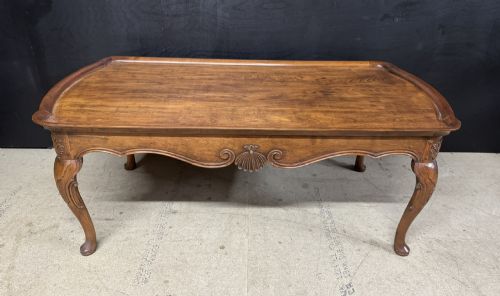
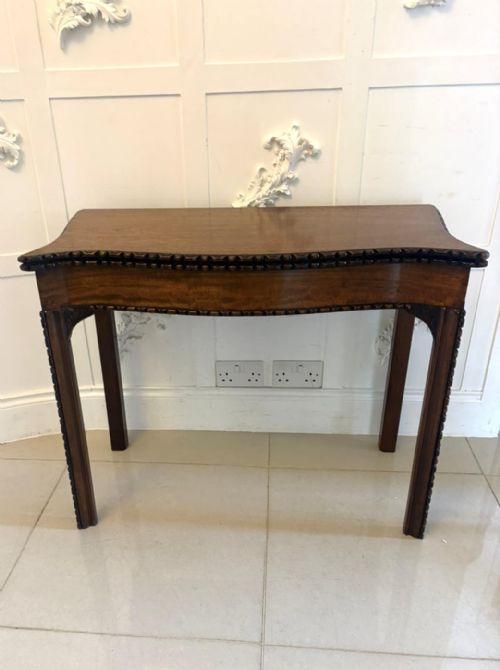
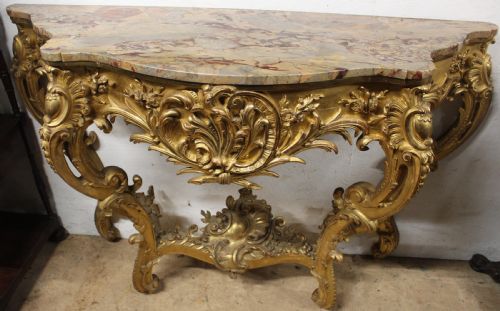
Serpentine Top Table
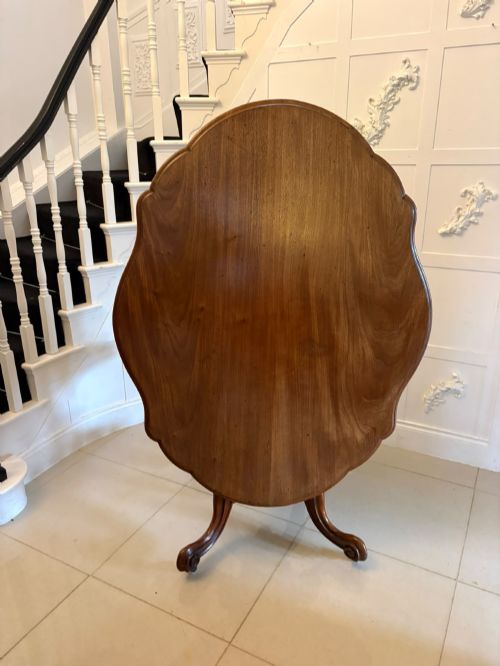
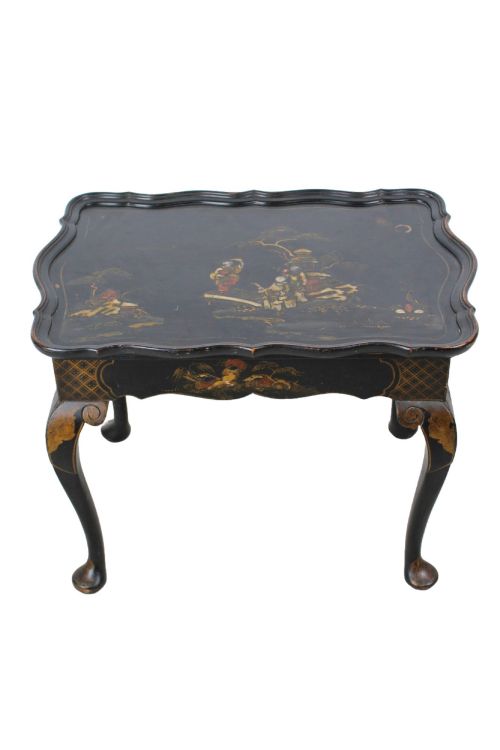
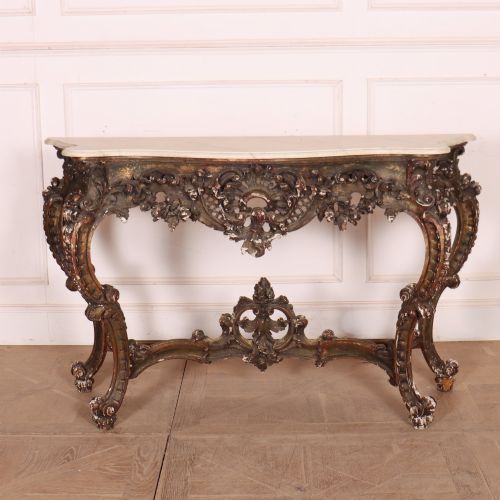
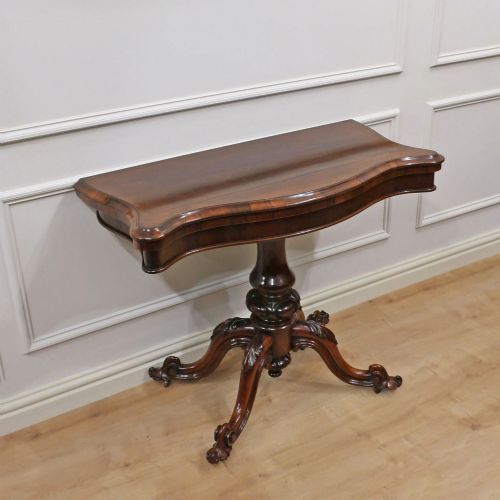
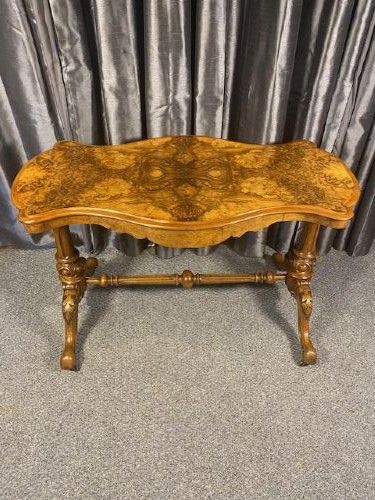
A serpentine top table brings an undulating silhouette to a room, offering refined curves in mahogany, walnut, or marble.
Serpentine Top Table
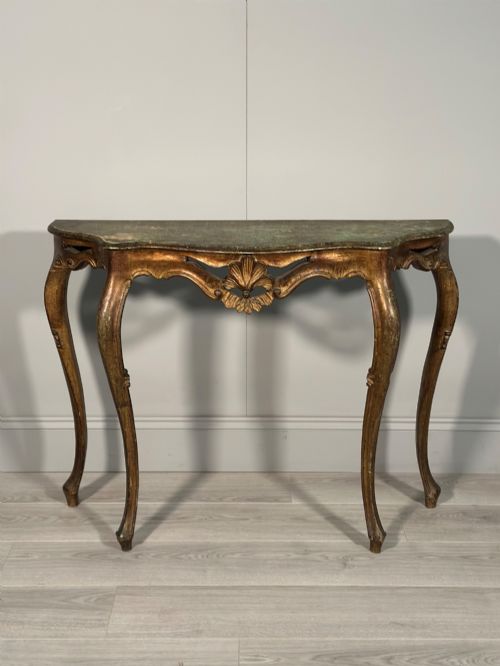
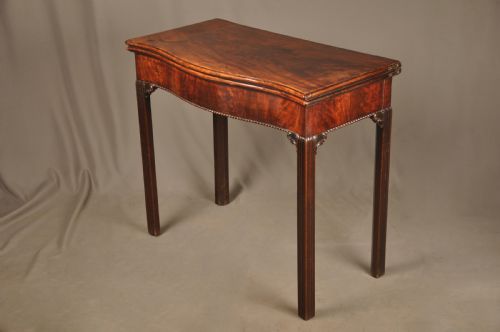
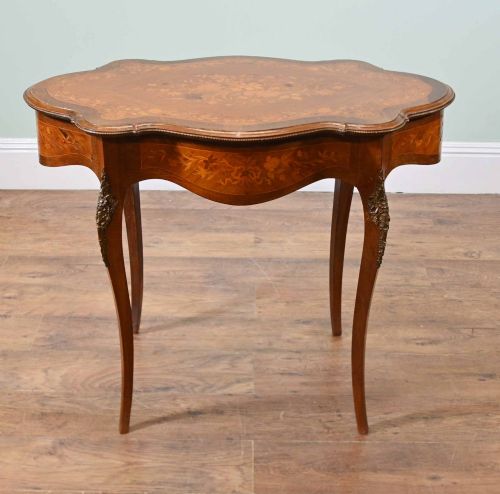
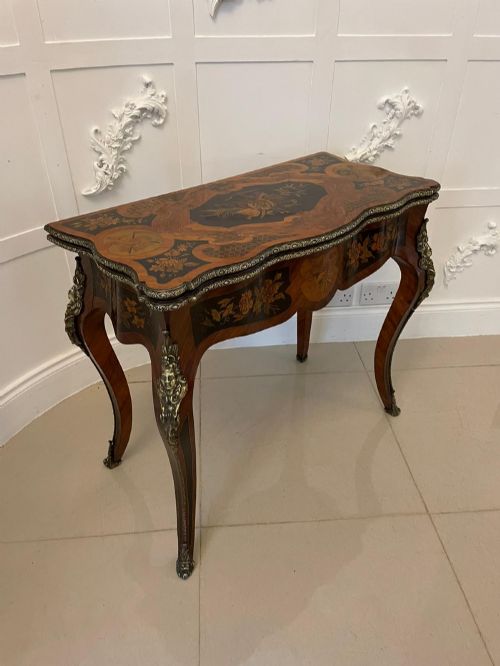
The form appears across various functional types, from card tables and centre tables to console tables and writing desks. Many pieces originate from nineteenth-century workshops or draw on French Louis XV and Rococo styles with elaborate marquetry.
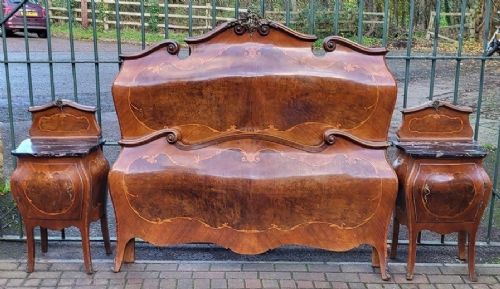
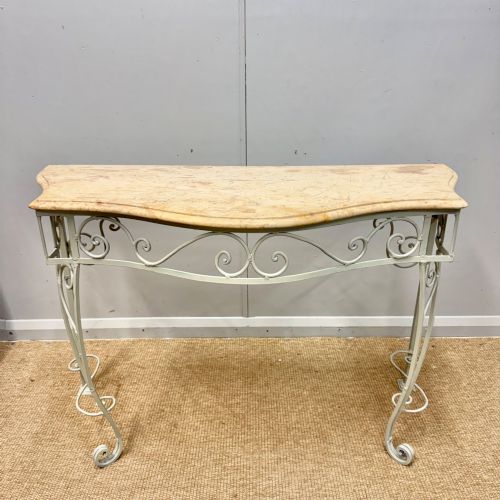
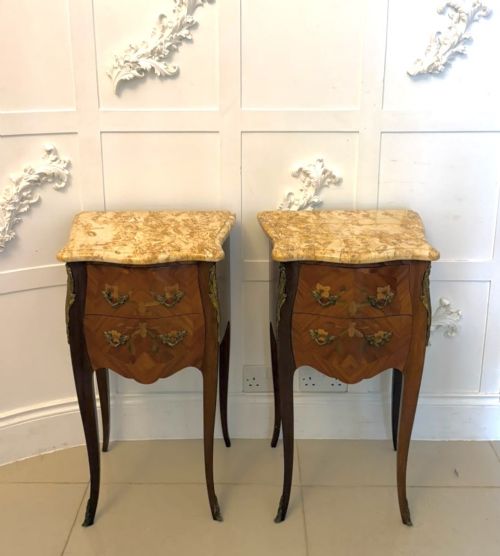
Console tables and bedside cabinets frequently pair these curved wooden tops with inset marble slabs or decorative ormolu mounts. These variations reflect both British craftsmanship and continental design influences found across the period inventory.
Materials and construction
Cabinetmakers constructed the complex curved outlines of a serpentine top table using solid timbers like mahogany, walnut, and rosewood, often enhanced by burr veneers. Shaping the sweeping edge required precise hand-sawing and meticulous planing to maintain structural integrity along the grain.
Marquetry and parquetry veneers were frequently applied to the surfaces, creating intricate floral or geometric patterns using contrasting woods such as satinwood and kingwood. Ormolu mounts and cast brass details were then fitted to accentuate the corners and cabriole legs.
Serpentine Top Table Retail Price Guide 2026
Typical asking prices for serpentine top table among the pieces listed under this phrase on Sellingantiques today, from the lower quarter to the upper quarter. They describe what is for sale here now, not the wider market.
Listings feature woods like walnut, mahogany, rosewood, and kingwood paired with marble and brass.
Judging the quality
Quality rests upon the precision of the carved or moulded edge, where the transition from convex to concave curves must remain crisp and uniform. Superior examples display seamless veneer matching across the undulating surface without lifting or warping along the grain.
The integration of secondary elements, such as finely chased ormolu mounts, hand-tooled leather writing surfaces, or heavy marble slabs, distinguishes master craftsmanship from simpler production pieces. Structural stability within the joints and legs ensures the curved frame bears weight properly.
E. Kahn
The Serpentine Top Table Glossary
- Serpentine
- An edge or front profile composed of a convex centre flanked by two concave curves. This contour requires skilled woodworking to shape harmoniously.
- Marquetry
- Decorative veneer work arranged in pictorial or floral patterns using various coloured woods. Craftsmen cut these thin slices to fit precisely together before gluing.
- Ormolu
- Gilded bronze used for decorative mounts and furniture ornamentation. It is cast and chased to highlight fine architectural or floral details.
- Cabriole leg
- A furniture leg that curves outward at the knee and tapers inward toward the foot, inspired by animal limbs. This form frequently terminates in pad or scroll feet.
- Parquetry
- Geometric wood veneer patterns arranged in repetitive motifs such as cubes or chevrons. It provides a durable and decorative surface for table tops.
Serpentine Top Table: Frequently Asked Questions
What is a serpentine top table?
A serpentine top table is a piece of furniture featuring a distinctively curved edge with alternating convex and concave sections. This undulating shape adds movement and visual interest to the silhouette.
Such tables were produced in various forms throughout the eighteenth and nineteenth centuries, serving as desks, card tables, or console tables. Their design demands advanced woodworking skill to shape both the solid timber and the accompanying aprons.
How were serpentine tables used historically?
These tables served multiple functions depending on their form, ranging from intimate card games to formal display and writing. Console versions stood against drawing-room walls beneath mirrors, while smaller tables functioned near seating areas.
Folding card tables provided a surface for evening entertainment, opening to reveal baize or leather playing surfaces. Bedside variants offered enclosed storage alongside sleeping quarters.
Where should I place a serpentine table?
A serpentine table suits entrance halls, living rooms, or bedrooms as a focal point that breaks up straight architectural lines. Console versions work well against flat walls where their curved fronts soften the room's geometry.
Placing them away from direct heat sources helps protect older wood veneers and polished surfaces from drying out. Adequate clearance allows the sculptural profile of the edge to be fully appreciated.
How do I date a serpentine top table?
Dating relies on examining the secondary woods, construction methods, and stylistic cues present in the carcass and legs. Georgian pieces often display simpler mahogany framing, while Victorian iterations frequently incorporate rich burr walnut or elaborate marquetry.
Hardware types, such as cast brass handles or hinges, also offer clues to the period of manufacture. Comparing the joinery style helps differentiate between eighteenth-century originals and later nineteenth-century revivals.