
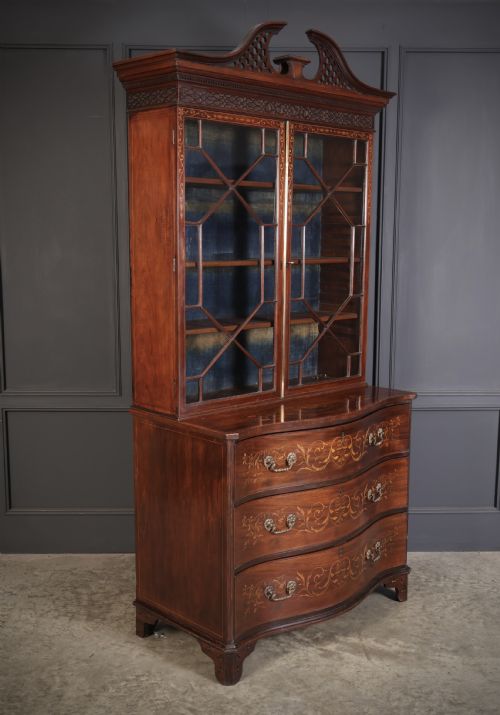
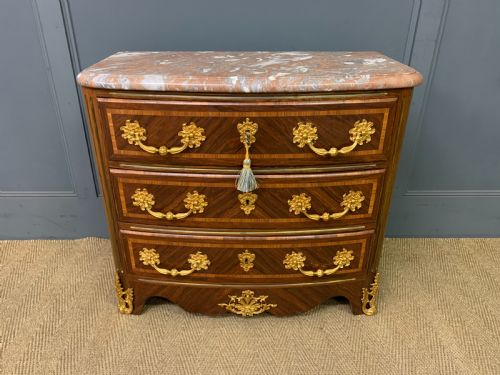
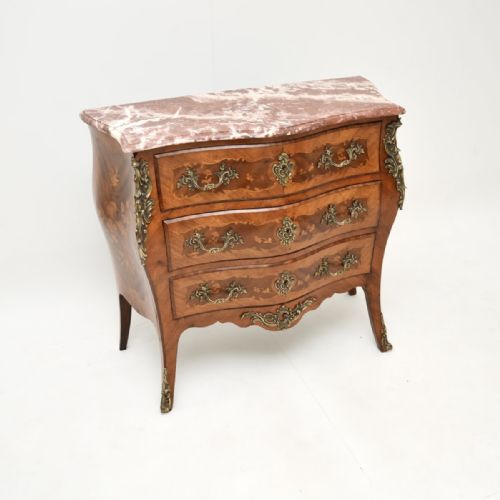

Serpentine Marquetry Chest
A serpentine marquetry chest brings fluid continental elegance and intricate floral wood inlay into a room, offering both sculptural presence and practical storage.
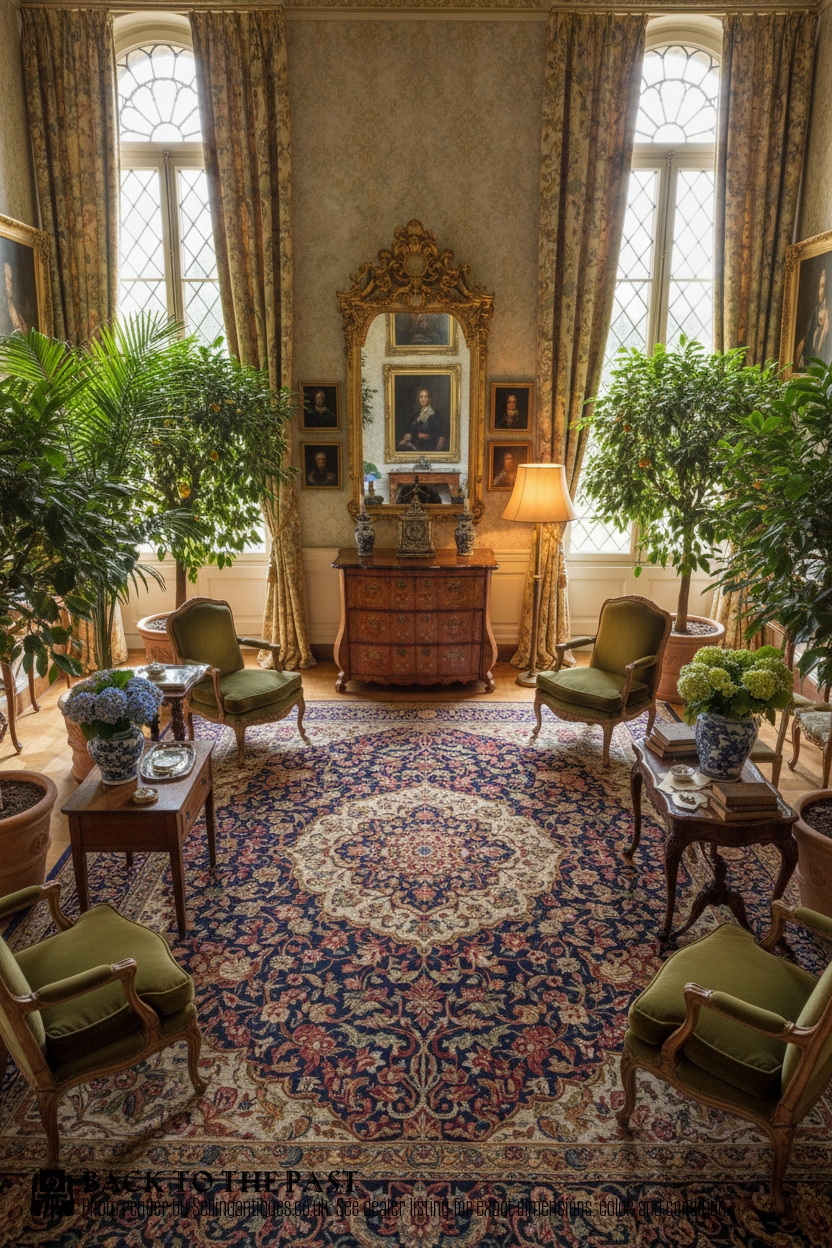
Serpentine Marquetry Chest
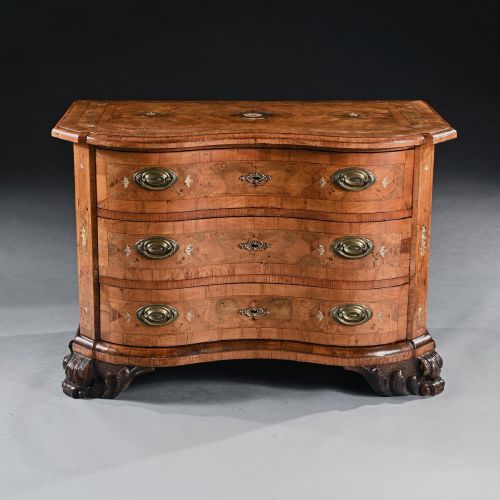
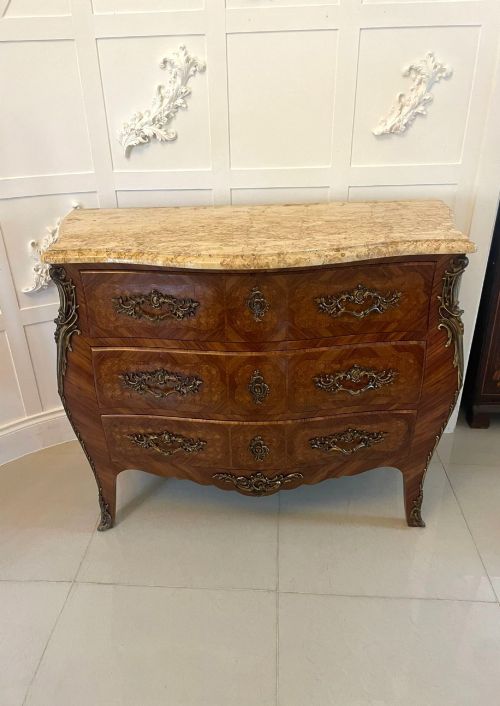
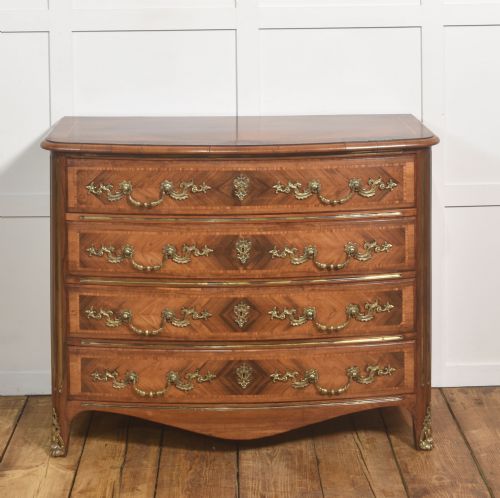
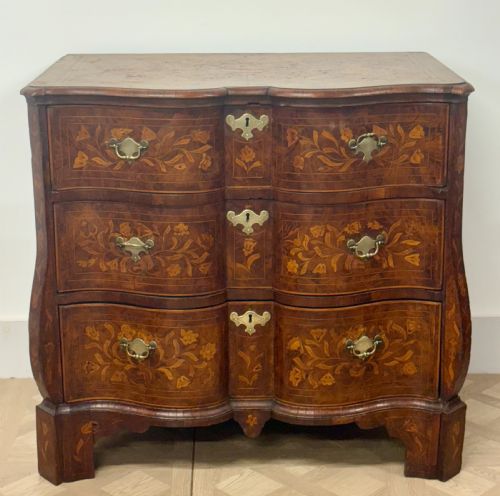
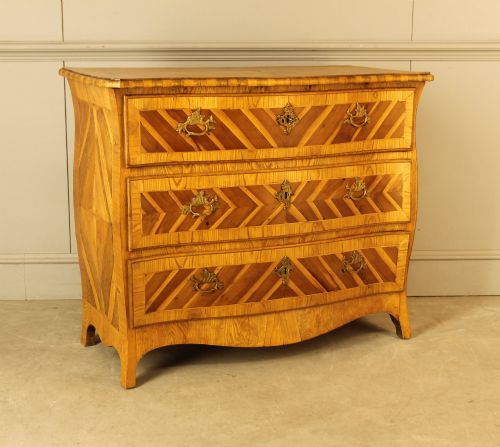
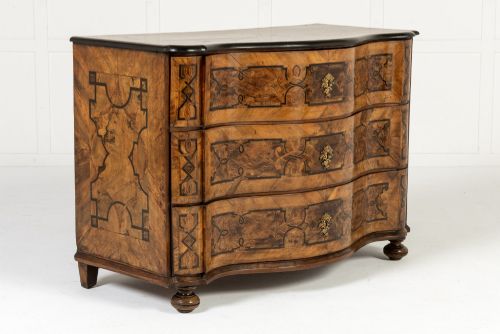
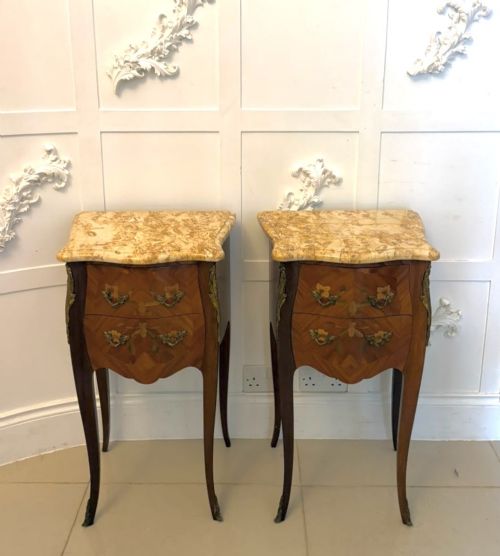
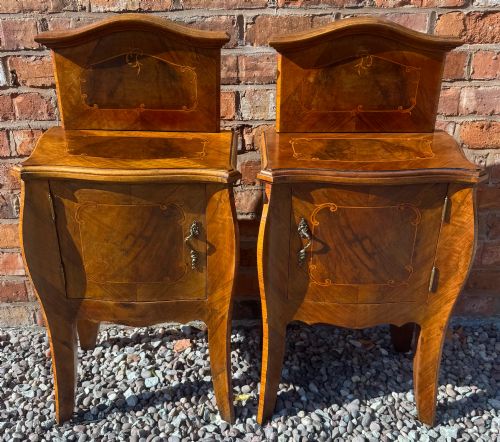
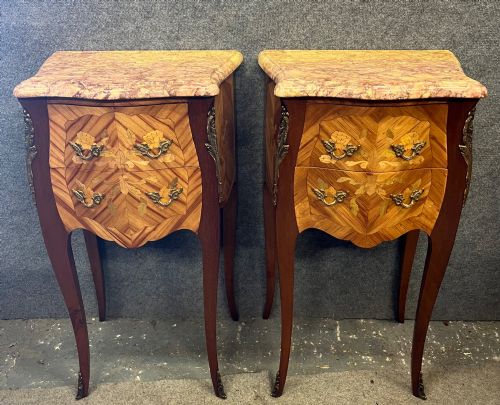
A serpentine marquetry chest presents a distinctive undulating front facade decorated with patterned wood veneers arranged to form pictorial or geometric designs. These statement storage items appear frequently as commodes, bedside cabinets, and chest of drawers originating from French, German, Dutch, and English workshops.
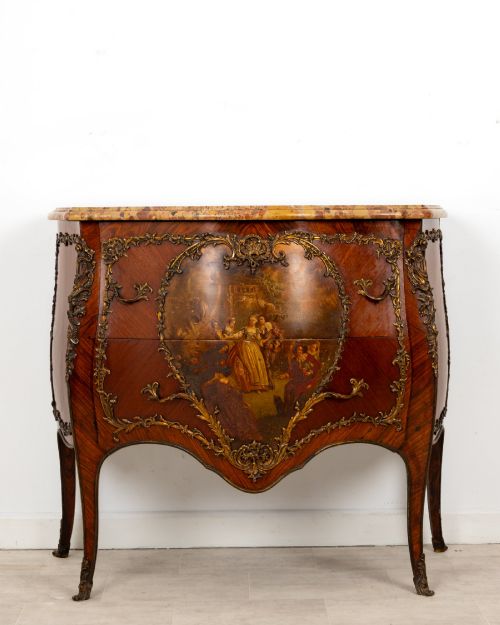
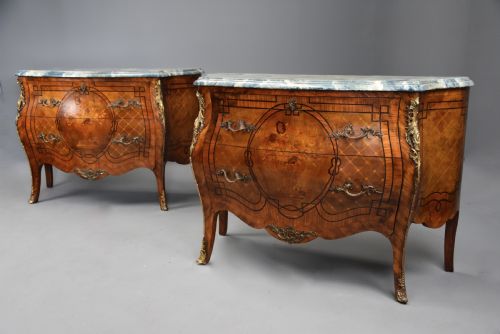
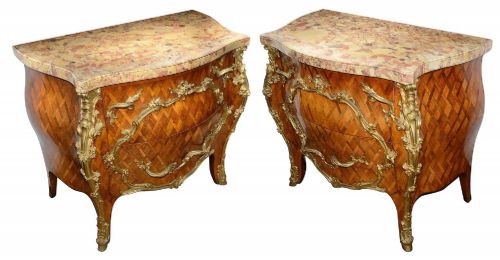
The silhouettes span eighteenth-century baroque and rococo expressions alongside nineteenth-century revival iterations influenced by Louis styles. Buyers commonly encounter marble-topped commodes featuring bombe contours and elaborate floral or scrollwork inlays across walnut, kingwood, and mahogany carcases.
What separates the finest examples
Quality rests upon the precision of the veneer work and the integration of decorative mounts. Superior pieces display crisp, varied wood tones without shrinkage gaps, alongside finely chased gilt bronze mounts that complement rather than overpower the timber grain.
The sophistication of the internal drawer construction and the fluidity of the serpentine curves define the upper tier. A well-executed commode maintains architectural harmony even through complex undulating profiles.
Listings include eighteenth-century German and Dutch walnut pieces alongside nineteenth-century French kingwood and mahogany commodes.
The Serpentine Marquetry Chest Glossary
- Marquetry
- Decorative veneer work using various tinted woods arranged to form patterns or pictures. This technique transforms flat surfaces into elaborate visual displays.
- Serpentine
- A furniture front shaped with a convex centre flanked by concave curves. This profile requires expert woodworking to follow the continuous flowing line.
- Bombe
- A swelling, outward-curving chest profile popular in continental cabinetmaking. It adds dramatic volume and three-dimensional presence to commodes.
- Ormolu
- Gilded bronze mounts applied to furniture corners and feet for decoration. The finish adds bright metallic contrast against dark wood veneers.
- Commode
- A low chest of drawers, typically French in origin and design. These pieces often feature marble tops and decorative mounts.
Serpentine Marquetry Chest: Frequently Asked Questions
What is a serpentine marquetry chest?
A serpentine marquetry chest is an antique storage piece featuring an undulating curved front and detailed wood veneer patterns. These decorative commodes and cabinets originated primarily in eighteenth and nineteenth-century European workshops.
Craftsmen used contrasting timbers to create floral or geometric designs across the swelling wooden surfaces. Many include marble tops and cast metal mounts that highlight the fluid shape.
How do I care for a marble top?
Marble tops require gentle cleaning with mild soap and water to preserve the polished surface. Avoid acidic cleaners or lemon juice that can etch the stone over time.
Using coasters and placing felt pads beneath objects helps prevent scratches. Regular dusting keeps the natural grain looking bright and clear.
How do I date an antique commode?
Dating relies on examining the secondary woods used inside the drawer linings and the construction methods of the joints. Hand-cut dovetails and natural wax finishes often point towards eighteenth-century origins.
Revival pieces from the later nineteenth century frequently feature machine-sawn elements and different timber preparation techniques. Style indicators like specific rococo or neoclassical revival motifs also help narrow down the decade of production.