
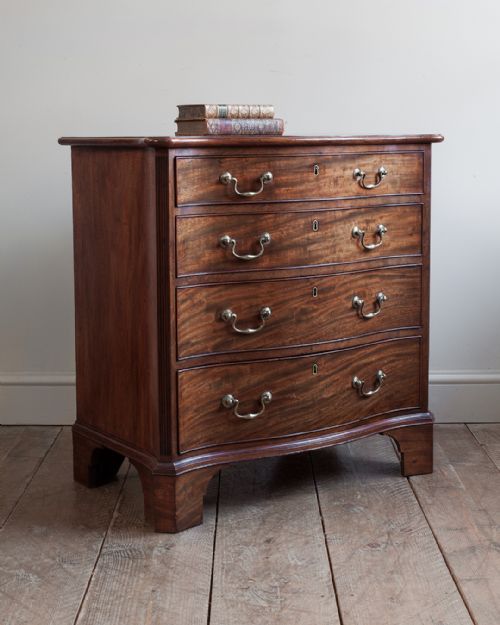

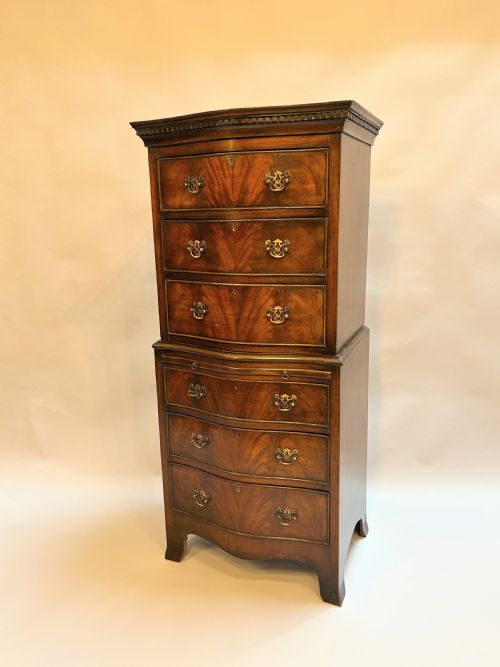
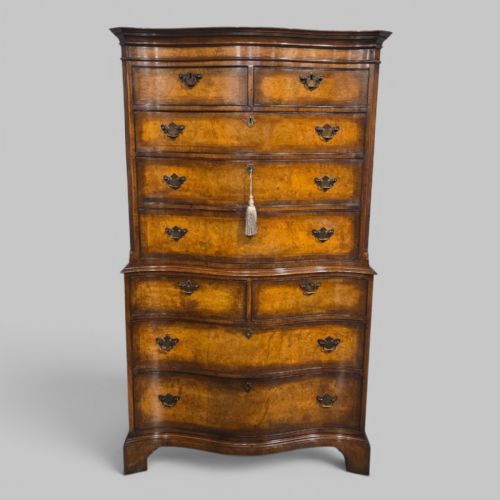


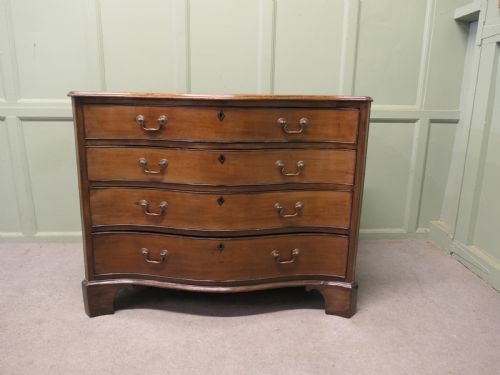
Serpentine Fronted Tallboy
A serpentine fronted tallboy combines curving drawers with vertical presence, offering a distinctive storage piece shaped by Georgian design and later revivals.
Serpentine Fronted Tallboy
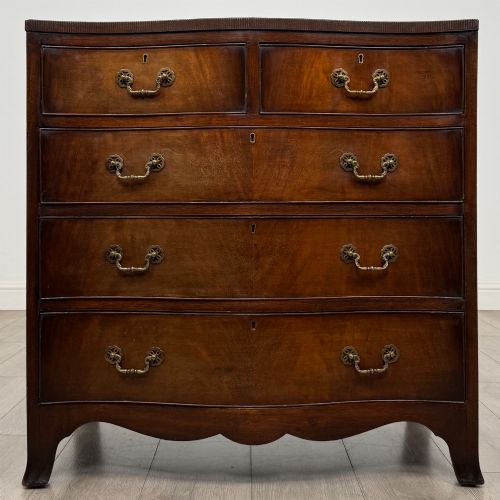
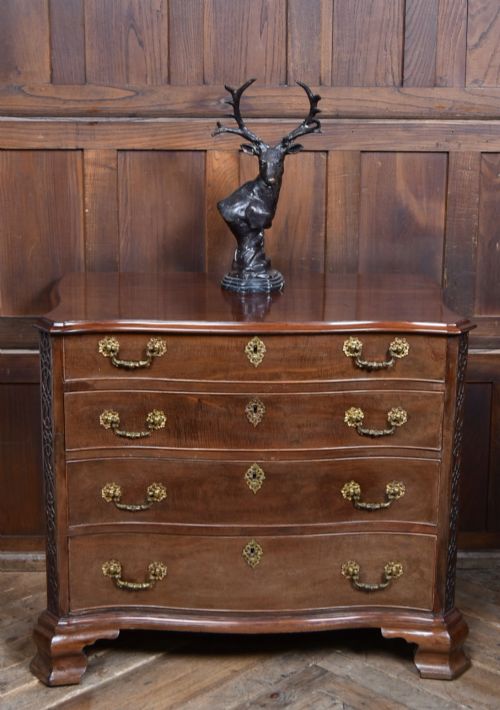
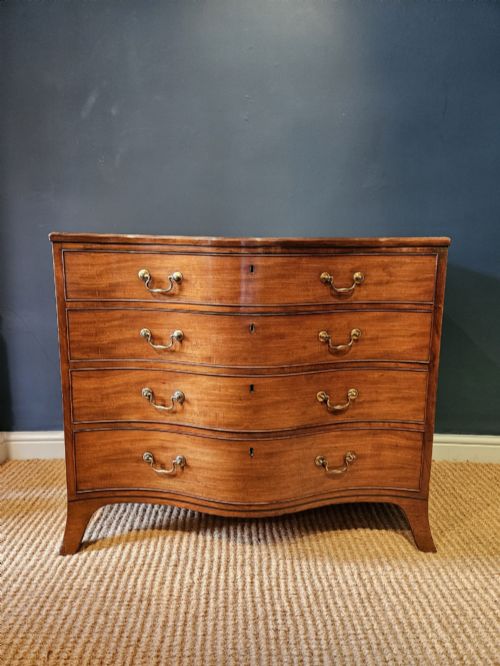
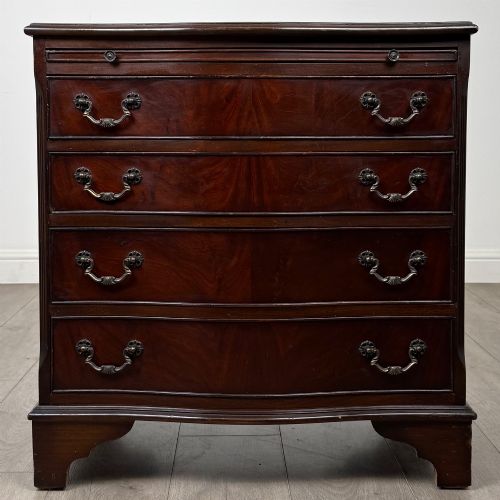
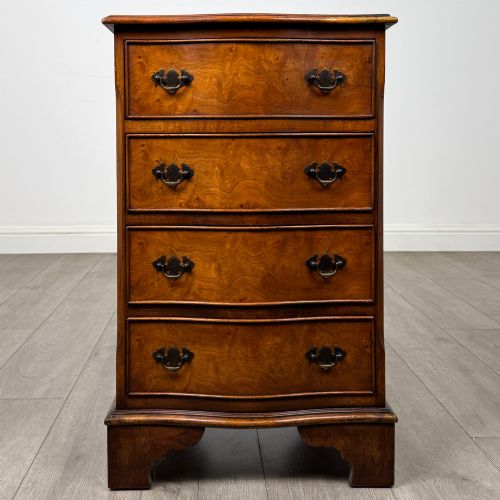
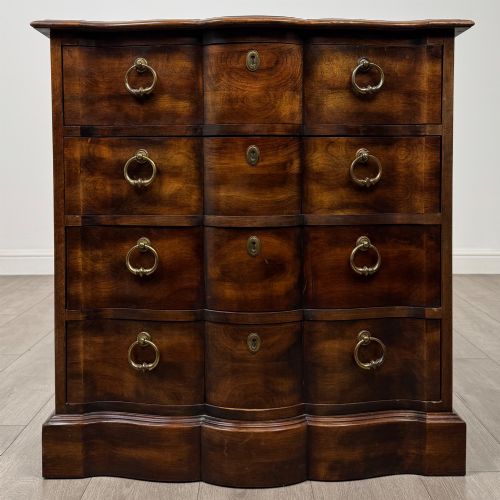
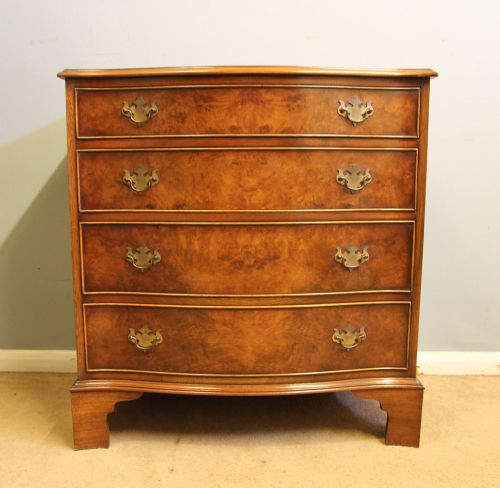
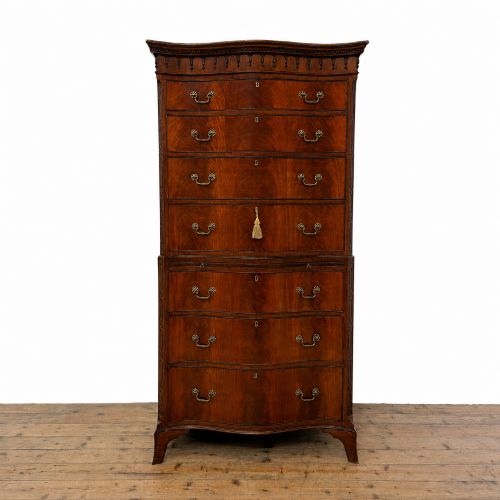
A serpentine fronted tallboy presents a sweeping, undulating curve across the drawer fronts, rising predominantly in mahogany or burr walnut across Georgian origins and subsequent Edwardian and twentieth-century revivals.
Buyers encounter forms ranging from single chests on stands to double-tier chest on chest tallboys and four-drawer cabinets, spanning periods from the eighteenth century to the 1930s.
These items serve as principal bedroom or hallway storage, uniting the vertical capacity of a tallboy with the softer aesthetic of a curved facade.
Materials and construction methods
Cabinet makers utilised dense hardwoods like mahogany and figured walnut, frequently applying burr walnut veneers to curved drawer fronts to display rich grain patterns.
Constructing the undulating serpentine shape required precise timber selection and careful shaping of solid drawer fronts, occasionally complemented by boxwood inlay and cast brass handles.
Primary materials recorded across the inventory include mahogany, burr walnut, oak, and figured walnut.
Evaluating craftsmanship and proportion
Quality rests in the precision of the curved serpentine sweep, where superior examples maintain crisp lines and smooth drawer operation without distortion in the timber.
The choice of surface veneer defines the visual grade, distinguishing plain hardwood surfaces from finely figured burr walnut and fiddleback mahogany selections.
Waring S Gillows
The Serpentine Fronted Tallboy Glossary
- Serpentine front
- A curved furniture front characterised by a convex centre flanked by concave ends, creating a gentle undulating shape.
- Tallboy
- A tall chest of drawers, often constructed as a chest on chest or a chest raised upon a stand for elevated storage.
- Chest on chest
- A tall storage unit formed of two separate carcases stacked vertically, with narrower drawers positioned above wider ones.
- Burr walnut
- A prized timber harvested from walnut tree growths, featuring swirling, knotty grain patterns used extensively for decorative veneering.
- Boxwood inlay
- Narrow strips of pale boxwood set flush into the primary timber surface to create contrasting geometric or linear borders.
Serpentine Fronted Tallboy: Frequently Asked Questions
What is a serpentine fronted tallboy?
A serpentine fronted tallboy is a tall storage unit featuring stacked drawers with a distinctively curved, undulating front.
These pieces combine the vertical capacity of a traditional tallboy with the flowing lines characteristic of Georgian and revival cabinet making.
How do I date a tallboy?
Dating relies on examining the timber species, construction methods, and stylistic cues such as hardware and inlay.
Examples range from authentic 18th-century Georgian originals to later 19th-century and 20th-century revival pieces influenced by Queen Anne and George III designs.
Where should I place a tallboy?
A tallboy suits bedrooms, dressing rooms, or hallways where vertical storage is required without occupying excessive floor space.
The curved serpentine facade allows the piece to catch light and serve as a focal point in the room.
What is the difference between walnut and mahogany?
Mahogany is a robust reddish-brown timber favoured for solid carved details and fine cabinet work during the Georgian period.
Walnut, particularly burr walnut, offers highly figured, swirling grain patterns utilised for decorative veneering across various 20th-century revivals.