


Serpentine Fronted Credenza
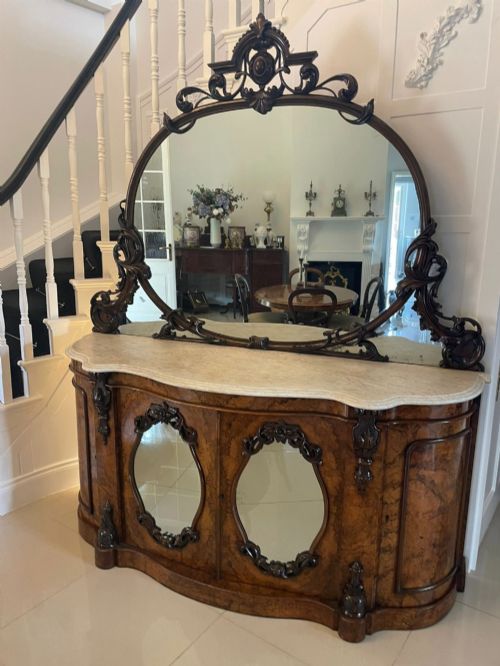
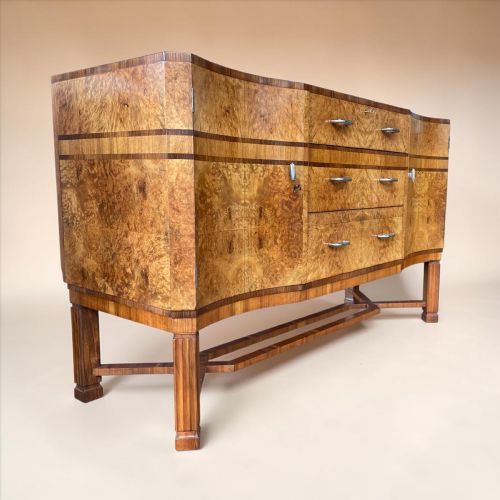
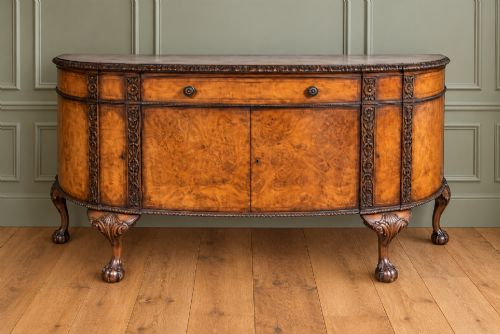
A serpentine fronted credenza brings rhythmic walnut curves and rich marquetry into a room, offering both formal display and deep storage.
Serpentine Fronted Credenza
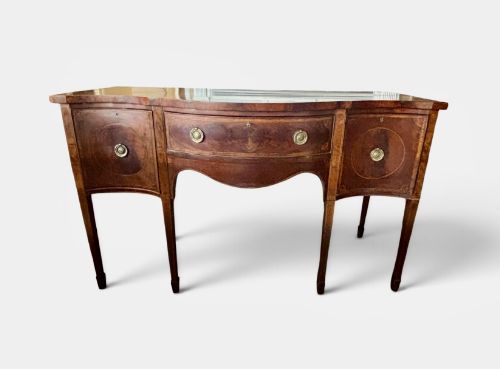
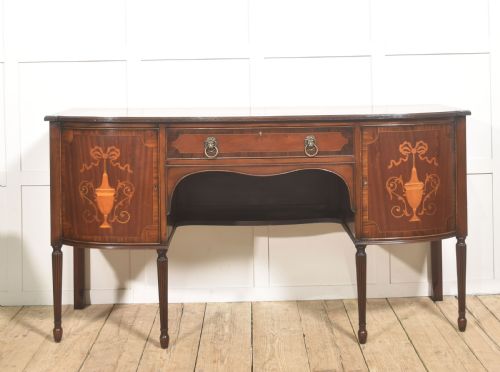
A serpentine fronted credenza is a sophisticated cabinet combining a undulating curved front with spacious interior compartments for display and storage. When searching this phrase, a buyer encounters pieces primarily from the Georgian, Victorian, and Edwardian periods.
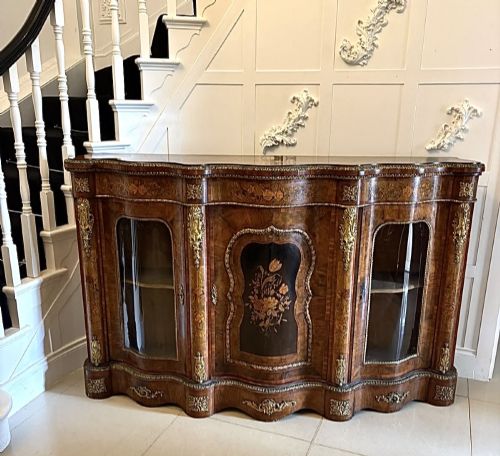
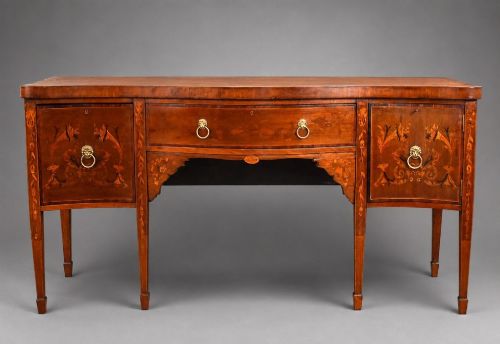
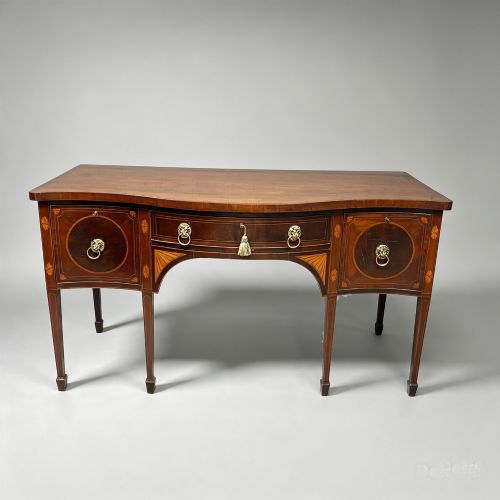
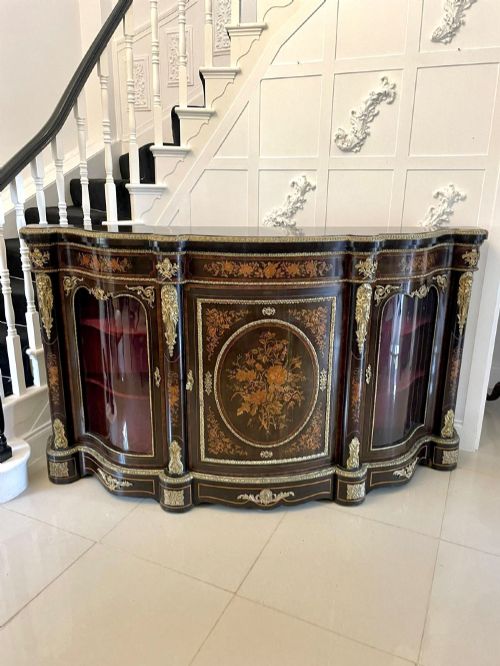
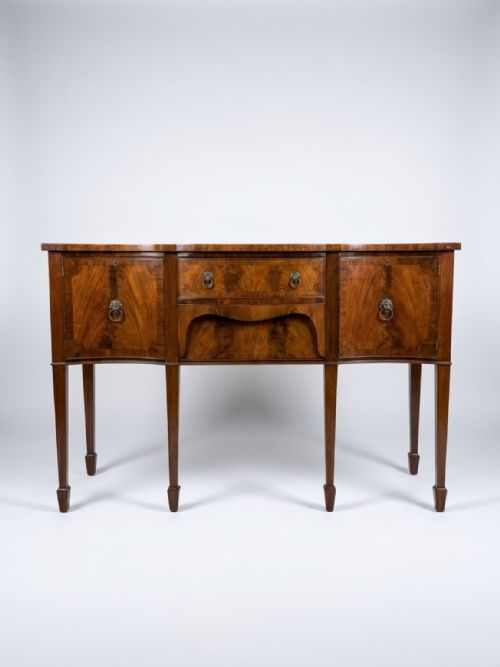
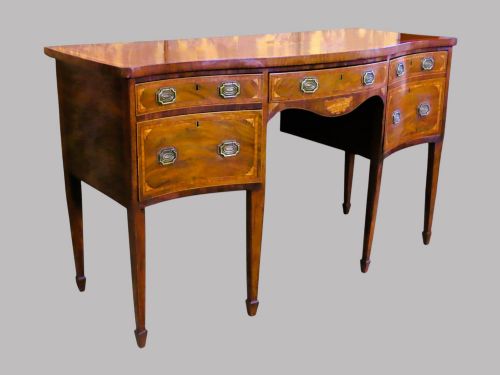
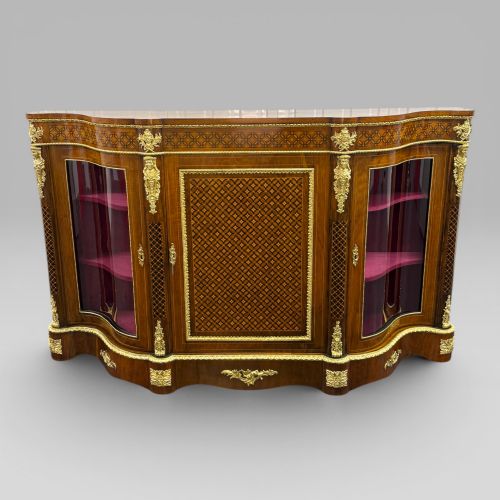
The most common versions met on this page include mid-Victorian burr walnut credenzas featuring glazed doors and elaborate floral marquetry, alongside substantial Georgian mahogany sideboards shaped with gentle, flowing curves.
Makers and cabinetmakers constructed these forms to serve dining rooms and formal reception spaces, utilising rich timbers to catch the light across the signature convex and concave contours.
How they were made
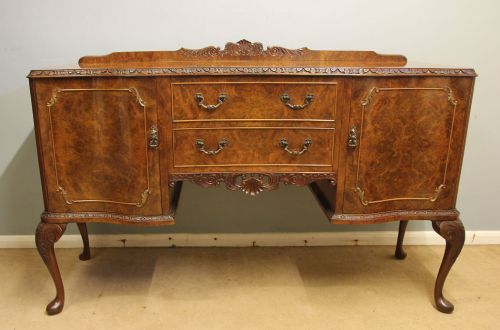
Cabinetmakers constructed these pieces using dense hardwoods like mahogany and walnut, frequently applying burr walnut or satinwood veneers over a stable pine or oak carcase to achieve striking figured grains.
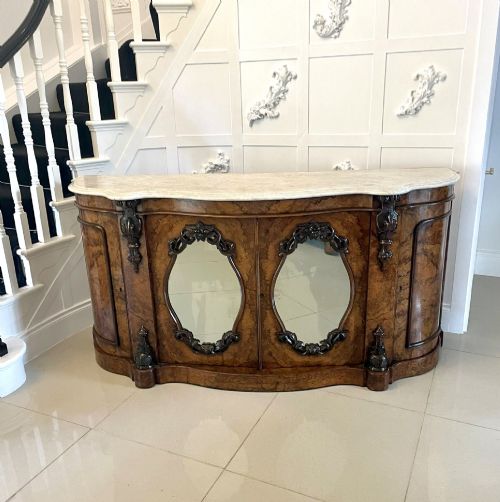
Surface ornamentation relied on intricate floral marquetry, delicate string inlay, and cast ormolu mounts that accented the corners, door borders, and arched central panels.
Glass doors and mirrored backs added depth and reflection, while shaped marble tops provided durable, cool surfaces on select Victorian examples.
Serpentine Fronted Credenza Retail Price Guide 2026
Typical asking prices for serpentine fronted credenza among the pieces listed under this phrase on Sellingantiques today, from the lower quarter to the upper quarter. They describe what is for sale here now, not the wider market.
Listings feature mahogany, burr walnut, and rosewood alongside marble, brass, and ormolu mounts across Georgian, Victorian, and Edwardian periods.
What varies in quality
The sophistication of the timber selection largely dictates the standing of a piece, with high-end examples displaying intensely figured burr walnut or closely matched flame mahogany across every curved surface.
Execution of detail sets exceptional pieces apart, visible in the precision of hand-cut marquetry, the crispness of ormolu mount castings, and the smoothness of the serpentine contouring.
Originality of components, from the bevelled glass and brass hardware to integrated mirror backs and marble slabs, preserves the integrity and character of the work.
Maison Gagneau·Epstein
The Serpentine Fronted Credenza Glossary
- Serpentine
- A shape featuring a curved front with a convex centre flanked by concave wings. This flowing contour requires skilled woodworking to shape both solid timber and veneered surfaces.
- Credenza
- A low cabinet designed for display and storage, often featuring glass-fronted side cupboards and central doors. Victorian examples frequently incorporate mirrored backs and gilt bronze mounts.
- Marquetry
- The art of applying pieces of veneer to a structure to form decorative patterns and pictures. Craftsmen utilised contrasting woods like satinwood and walnut to create floral designs.
- Ormolu
- Gilded bronze mounts applied to furniture as decorative hardware and corner accents. This technique was favoured by cabinetmakers during the Victorian French Revival and mid-nineteenth century.
- Burr Walnut
- Timber taken from the wart or burl growth on a walnut tree, producing highly twisted and swirling grain patterns. It was sliced into thin veneers for high-status cabinet work.
Serpentine Fronted Credenza: Frequently Asked Questions
What is a serpentine fronted credenza?
A serpentine fronted credenza is a low, curved storage cabinet designed for formal reception rooms, featuring undulating contours across the doors and drawers.
These pieces combine functional shelving with decorative glass fronts, marquetry, and rich timber veneers like burr walnut or mahogany.
How do I style a credenza at home?
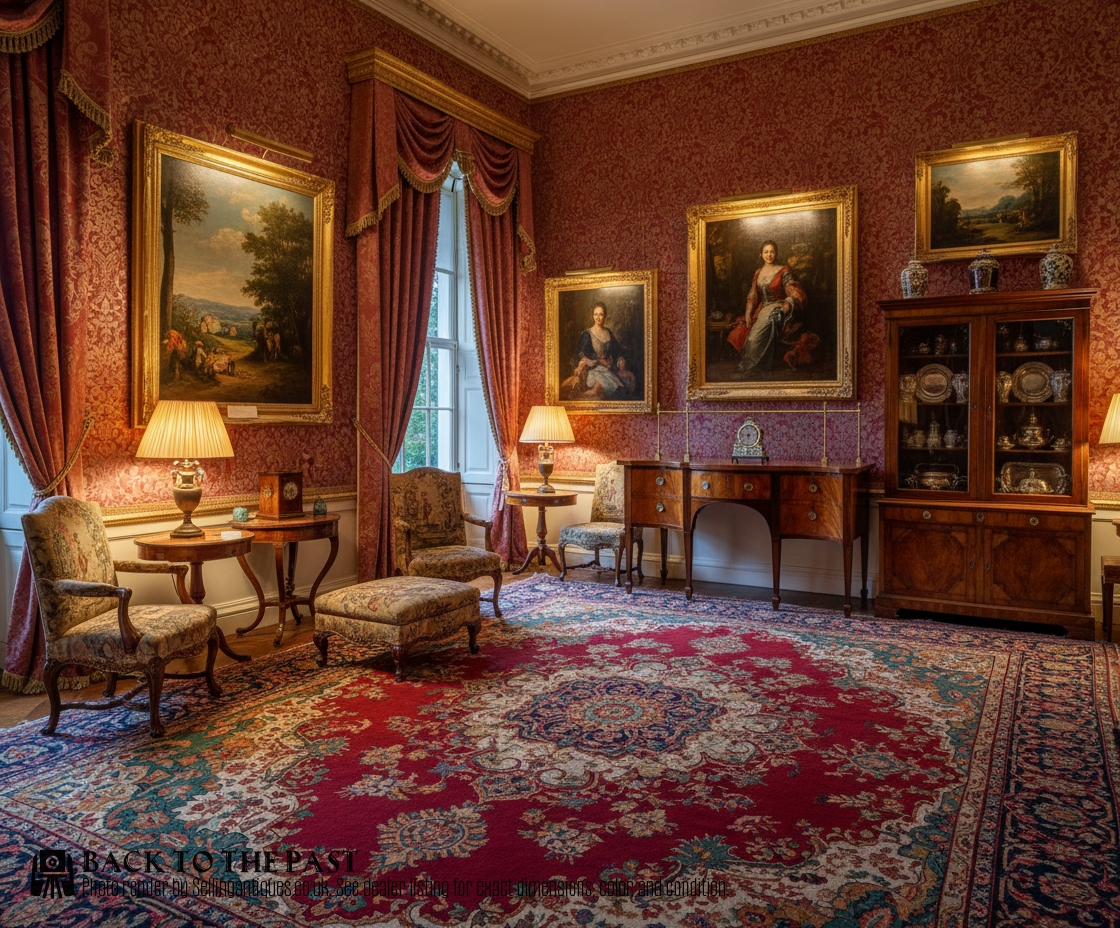
Position a credenza against a principal wall in a dining room, hallway, or drawing room where the curved front can be fully appreciated. Use the surface for lamps or decorative ceramics while keeping interiors for tableware or books.
Ensure adequate clearance around the curved central doors so they open smoothly without obstruction from nearby furniture.
How do I tell Victorian from Georgian pieces?
Victorian examples often employ burr walnut veneers, elaborate floral marquetry, glass doors, and cast ormolu mounts. They frequently include mirrored backs or marble tops.
Georgian pieces rely on solid mahogany or flame veneers, understated string inlay, and architectural proportions focused on clean lines rather than heavy ornamentation.
Were these used in dining rooms?
These cabinets served primarily in dining rooms and formal reception spaces to hold linens, cutlery, and glassware. Their wide tops also functioned as serving tables during gatherings.
Over time, changing domestic habits moved these versatile pieces into living rooms and hallways as focal display furniture.