



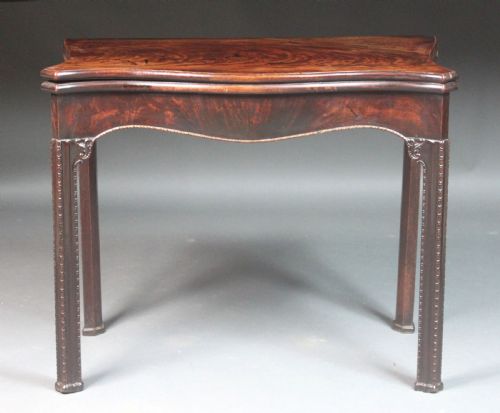


Serpentine Front Tea Table
These serpentine front tea table pieces bring fluid curves and dependable eighteenth-century craftsmanship into your home, rewarding anyone who appreciates tactile timber and refined proportion.
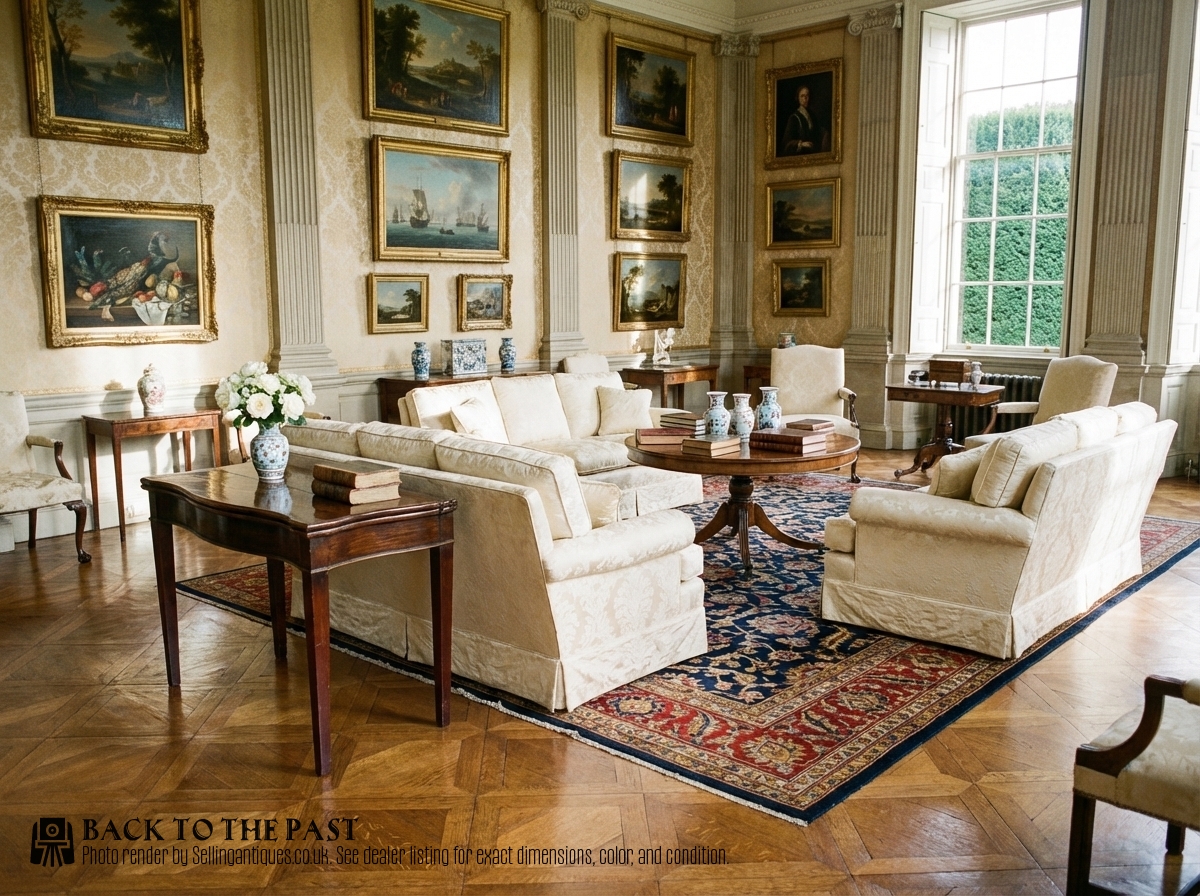
Serpentine Front Tea Table
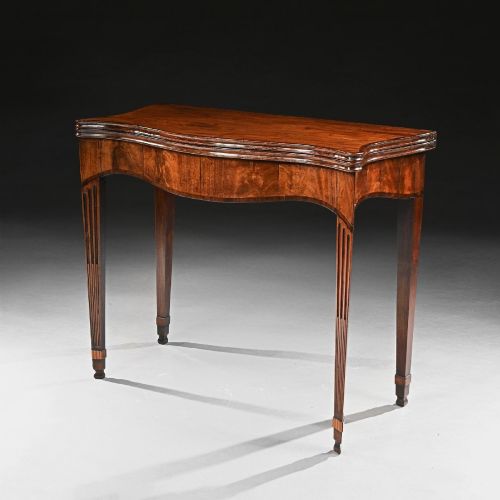
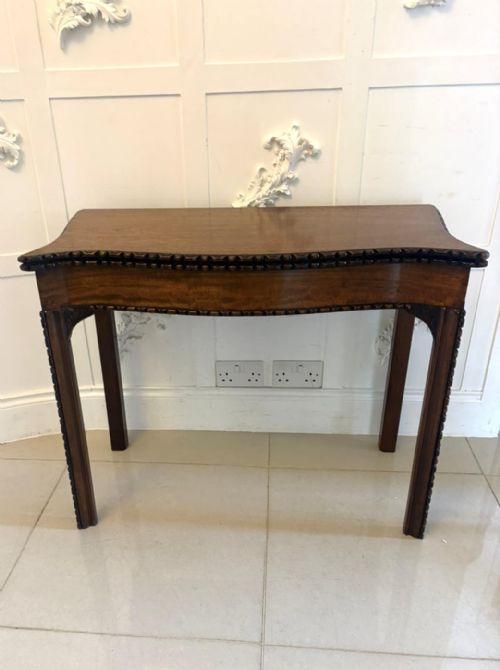
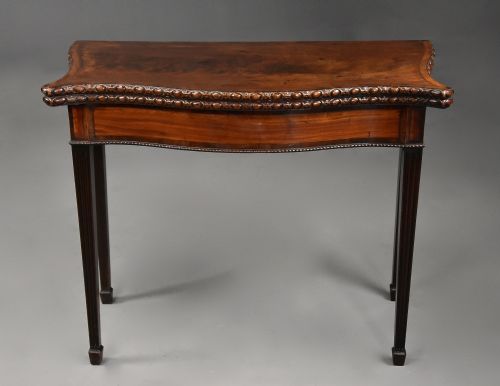
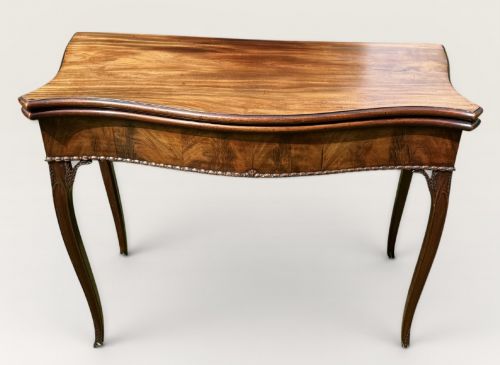
A serpentine front tea table combines a gently undulating cabinetmaker's line with the practical surface demanded by historic social rituals. When you search for a serpentine front tea table, you encounter forms primarily rooted in the eighteenth century, alongside later revivals from the nineteenth century.
The pieces listed on this page encompass various iterations including tea tables, card tables, and card and games tables. You are most likely to meet mahogany examples from the Georgian period, often bearing the characteristic serpentine shaping along the front apron.
Makers shaped these surfaces to catch the light differently than flat timber, creating subtle movement across the grain. This specific silhouette demands precise woodworking, which explains why the form survived through multiple stylistic revivals.
Materials and Construction
Cabinetmakers constructed these tables using solid timber and veneer over supportive secondary woods, relying heavily on mahogany and walnut. Burr walnut veneers and intricate wood inlay appear on later or more decorative iterations, adding rich visual texture to the undulating surfaces.
The dynamic curves of the serpentine front required careful sawing and joining of the timber to maintain structural integrity over centuries. Brass hardware and occasional ormolu mounts complete the construction, fastened securely to house the folding tops and internal mechanisms.
Serpentine Front Tea Table Retail Price Guide 2026
Typical asking prices for serpentine front tea table among the pieces listed under this phrase on Sellingantiques today, from the lower quarter to the upper quarter. They describe what is for sale here now, not the wider market.
Judging Quality and Execution
Quality in a serpentine front tea table rests upon the crispness of the carved details and the harmonious flow of the curved timber. Finer examples display superior timber selection, where the grain follows the serpentine contour naturally without awkward joins.
The depth of the original patina and the subtlety of the carved mouldings separate standard production from exceptional cabinetmaking. Superior tables retain their original structural rigidity and smooth mechanical action in the folding top, showing minimal alteration over time.
The Serpentine Front Tea Table Glossary
- Serpentine
- A curved furniture front shaped in a continuous undulating line resembling a snake's movement. This convex centre flanked by concave ends creates dynamic visual rhythm.
- Patina
- The surface sheen and mellowed tone developed by wood through age, handling, and exposure to light. It is a key indicator of historic authenticity.
- Veneer
- A thin layer of figured wood applied to a sturdier base timber to create decorative patterns. Burr walnut is frequently used this way.
- Ormolu
- Gilded bronze ornamentation applied to furniture for decorative accent. It appears on revival pieces influenced by French tastes.
- Console
- A table designed to stand against a wall, sometimes adapted with a folding top for dual use as a games surface.
Serpentine Front Tea Table: Frequently Asked Questions
How were these tables used originally?
These tables served primarily in receiving guests for tea, holding porcelain and silver service pieces securely on their polished surfaces.
Many examples doubled as card tables, featuring folding tops that opened to reveal baize-lined playing spaces for evening entertainment.
How do I spot a Georgian original?
Examine the timber construction beneath the top and check for traditional joinery methods appropriate to the eighteenth century. Look for natural wear patterns and a consistent patina rather than artificially distressed surfaces.
Pay attention to the specific carving on the knees and legs, which typically aligns with Georgian or Chippendale design conventions seen in the evidence.
Can I use a serpentine tea table daily?
These pieces function well in modern interiors for display or as occasional surfaces, provided you protect the antique timber from moisture and excessive heat. The folding mechanisms allow them to sit compactly against a wall when floor space is needed.
Routine dusting with a soft cloth maintains the finish without stripping the historic wax or accumulated patina.
What is the difference between tea and card tables?
Tea tables generally provided a stable surface for serving hot beverages, while card tables incorporated hinged leaves designed to swing open for games.
Many surviving pieces combine both functions through clever pivoting or folding tops supported by swing legs.