


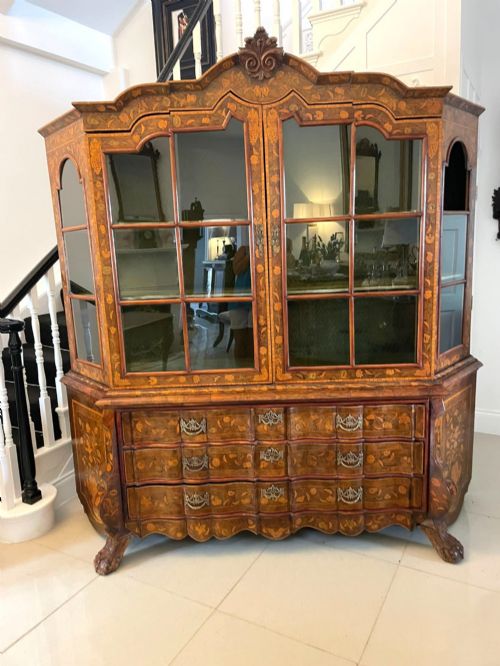
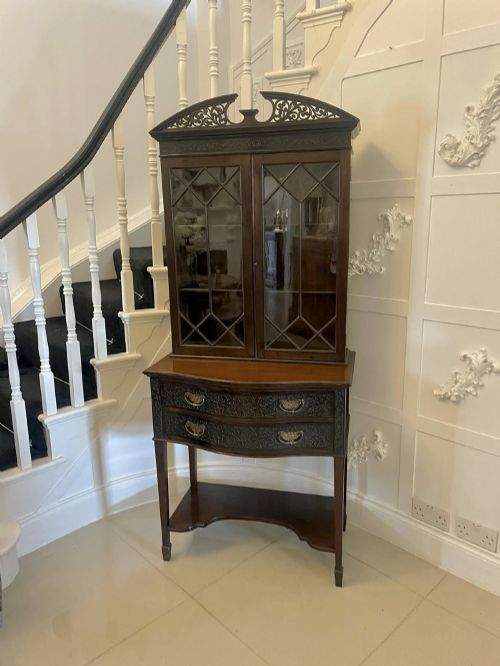
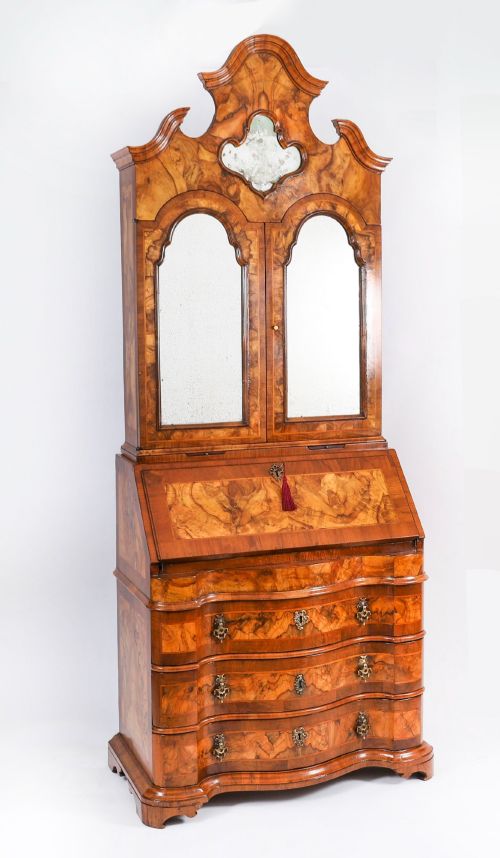
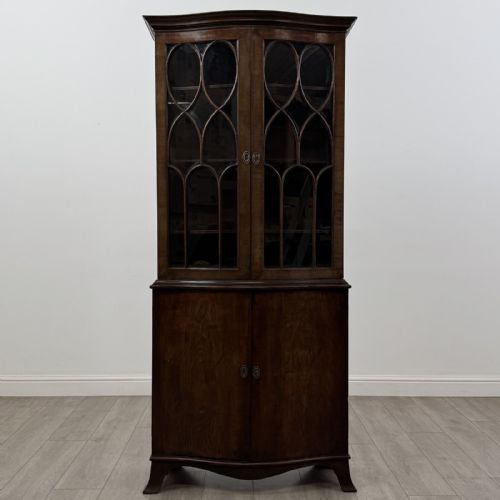
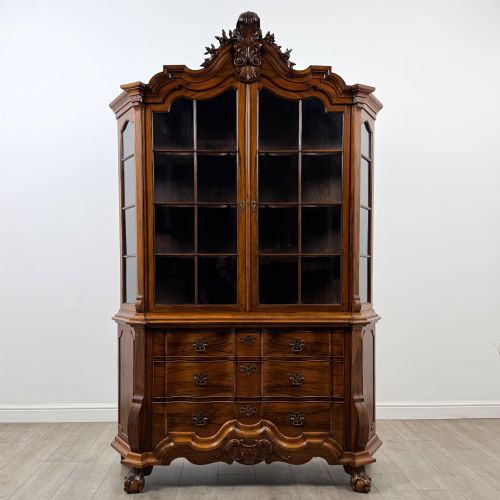
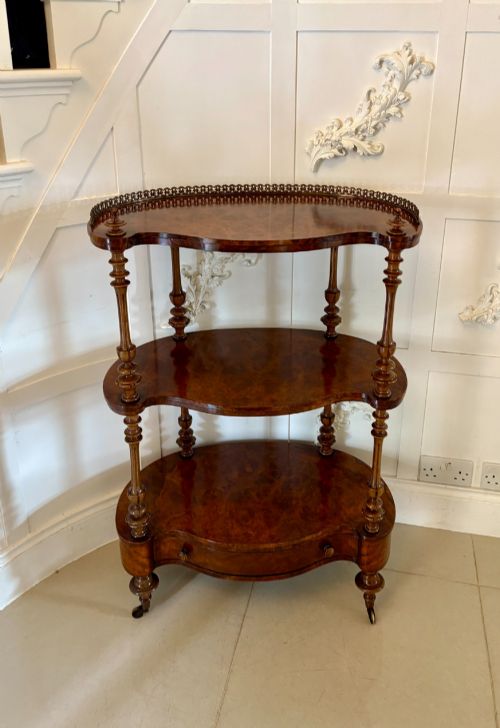
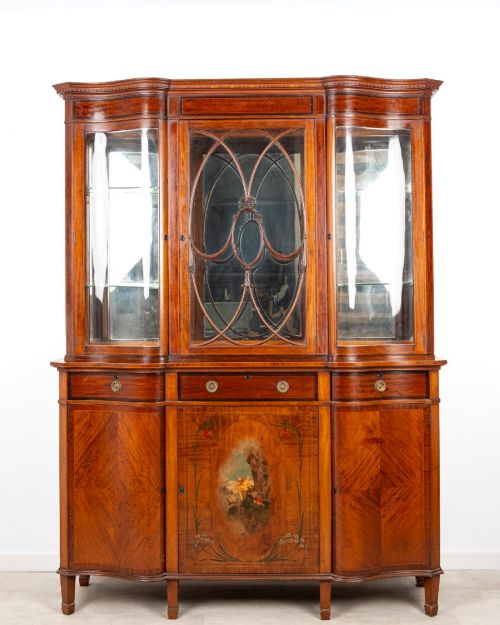
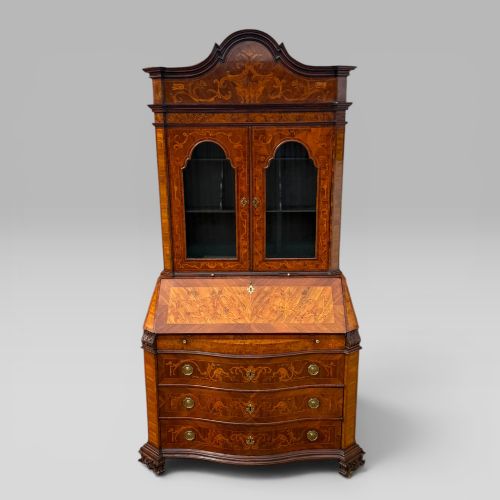


Serpentine Bookcase
A serpentine bookcase brings a fluid, undulating silhouette to a room, offering refined timber construction and glass display space.
Serpentine Bookcase
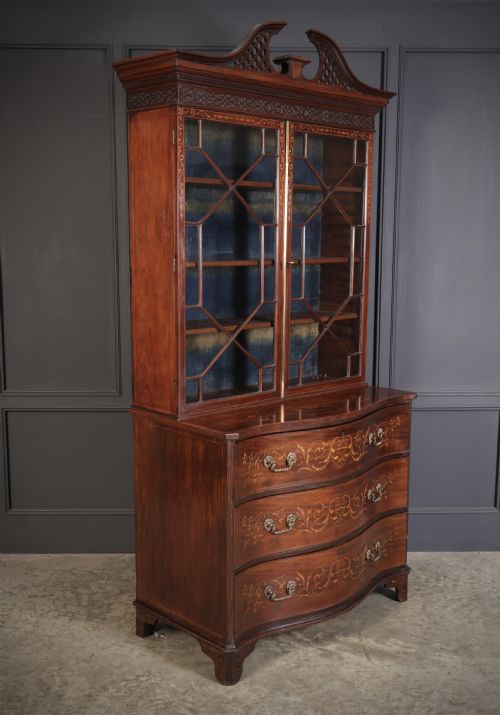
A serpentine bookcase presents a distinct curving front line, shifting outward at the centre or flanks to create a gentle undulating rhythm. These items appear across various periods, from 18th-century Georgian and Venetian examples to later Victorian and Edwardian revivals.
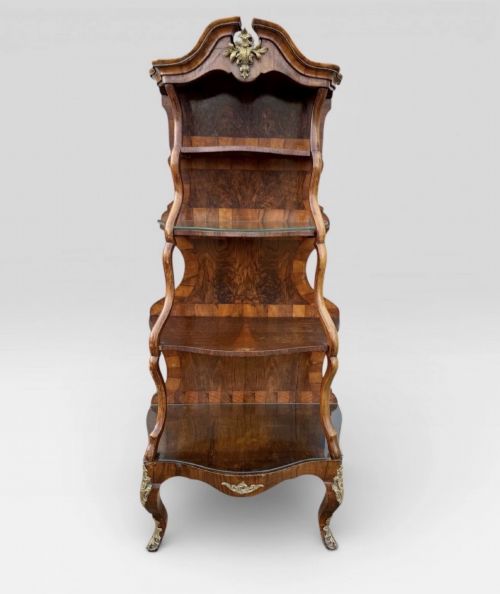
Buyers will encounter multiple forms beyond the standard bookcase, including bureau bookcases, display cabinets, and standing corner cupboards. Mahogany and walnut dominate the selection, often accompanied by glazed doors and intricate marquetry details.
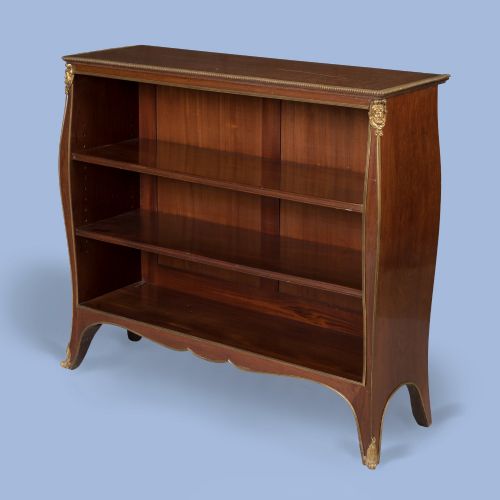
The aesthetic draws heavily on English cabinet-making traditions alongside continental influences, particularly French Louis XV revivals and Venetian rococo styles. Each piece balances functional storage with decorative display, utilising shaped shelves and glass panels to lighten the heavy timber silhouettes.
Materials and construction methods
Cabinet-makers relied on dense hardwoods such as mahogany, walnut, and kingwood as the primary structural foundations. Burr walnut veneers and satinwood bandings were frequently applied to flat and curving surfaces to introduce rich grain patterns and tonal contrast.
Bending timber to achieve the characteristic serpentine profile required advanced joinery skills, often executed by shaping solid wood or layering veneers over a carefully constructed core. Ormolu mounts, brass hardware, and gilt metal details were then added to accentuate the sweeping lines of the carcass.
Serpentine Bookcase Retail Price Guide 2026
Typical asking prices for serpentine bookcase among the pieces listed under this phrase on Sellingantiques today, from the lower quarter to the upper quarter. They describe what is for sale here now, not the wider market.
Listings feature items spanning the 18th, 19th, and early 20th centuries, encompassing Georgian, Victorian, and Edwardian periods.
Evaluating craftsmanship and execution
The finesse of the curving timber line marks the distinction between standard production and superior work. A well-executed serpentine front flows smoothly without abrupt angles, demonstrating precise hand-shaping and careful veneer matching across the undulating drawers or doors.
The integration of decorative elements such as floral marquetry, hand-carved mahogany details, and high-grade ormolu mounts indicates a higher tier of manufacture. Well-regarded makers of the later periods, such as Edwards and Roberts, applied meticulous attention to internal cabinetry, secondary woods, and brass fittings.
Edwards and Roberts
The Serpentine Bookcase Glossary
- Serpentine
- A furniture front characterised by a curving line that undulates outward and inward. This shape requires advanced woodworking skill to maintain structural integrity along the continuous curves.
- Marquetry
- The art of applying pieces of veneer to a structure to form decorative patterns and pictures. Craftsmen utilise various coloured woods to achieve intricate floral or geometric designs.
- Ormolu
- Gilded bronze mounts applied as decorative ornaments to furniture. This technique gained prominence in French and English cabinet-making during the 18th and 19th centuries.
- Bureau Bookcase
- A dual-purpose piece combining a sloping desk flap for writing with upper shelving for books. These items frequently incorporate internal pigeonholes and small drawers behind the fall-front.
- Vitrine
- A glass-fronted display cabinet designed to exhibit porcelain, glassware, and small ornaments. These cabinets often feature glazed side panels to maximise illumination of the interior.
Serpentine Bookcase: Frequently Asked Questions
What is a serpentine bookcase?
A serpentine bookcase is a storage unit featuring a distinctive undulating front facade that curves outward and inward. These pieces combine book storage with decorative display, often utilising glass doors.
Cabinet-makers applied this curving design to break up the flat planes typical of standard furniture. The style appears across multiple eras, including the Georgian period and Edwardian revivals.
How do I date a serpentine bookcase?
Dating involves examining the primary timbers, secondary woods inside drawers, and the style of any marquetry or hardware. Earlier 18th-century examples often feature solid walnut or mahogany with hand-cut dovetails.
Later Victorian and Edwardian pieces frequently display machine-sawn elements alongside revival styles like Sheraton or Louis XV. Comparing the carcass construction against known period characteristics provides the most reliable timeline.
Where should I place a serpentine bookcase?
These pieces function well in studies, drawing rooms, or libraries where their curved fronts can be fully appreciated. Placing them away from direct sunlight protects vulnerable wood veneers and antique glass.
Sufficient floor clearance allows the undulating silhouette to stand out against a flat wall. Pairing them with period seating or side cabinets creates a cohesive interior arrangement.
What woods were used for these bookcases?
Mahogany and walnut serve as the primary foundational timbers across the majority of surviving examples. Cabinet-makers also utilised exotic woods like kingwood, tulipwood, and satinwood for contrasting veneers and inlay work.
Burr walnut appears frequently on finer items to provide dynamic grain patterns across the curving doors. Ormolu and brass mounts often complement these rich timber surfaces.