
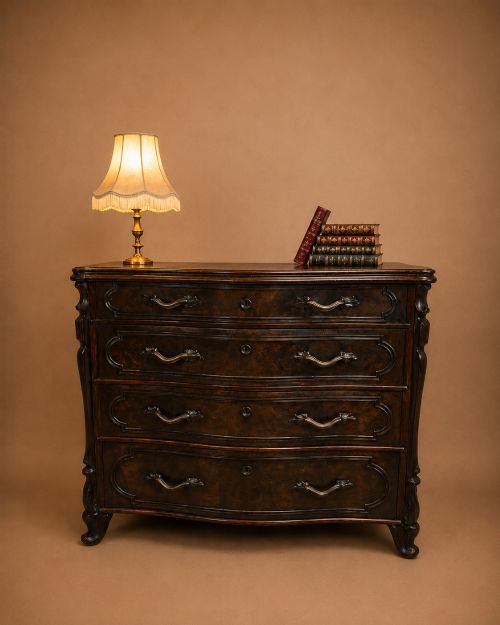
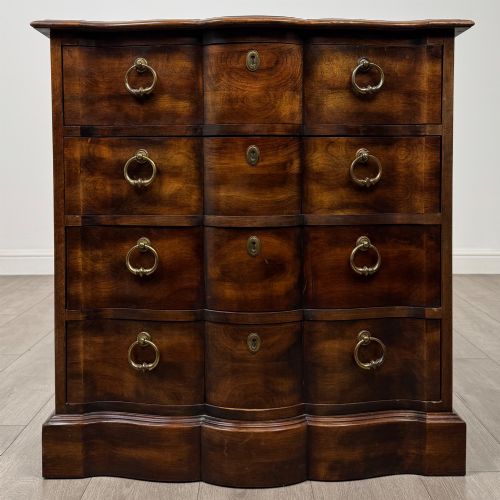
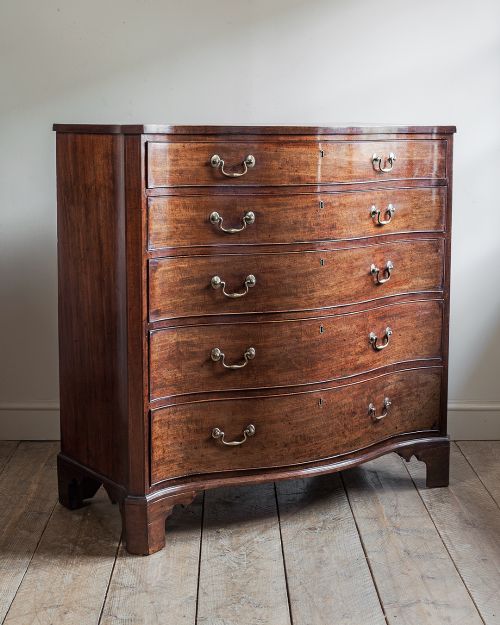
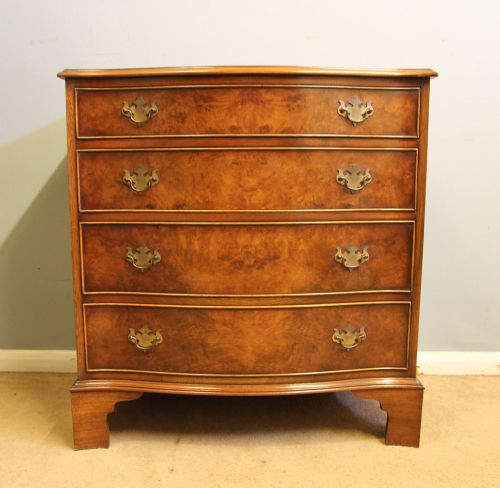
Serpentine Bedroom Drawers
Serpentine bedroom drawers offer a graceful curved silhouette that brings elegance to any sleeping chamber through classic cabinet work.
Serpentine Bedroom Drawers
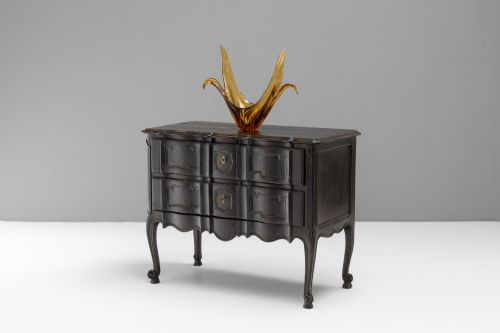
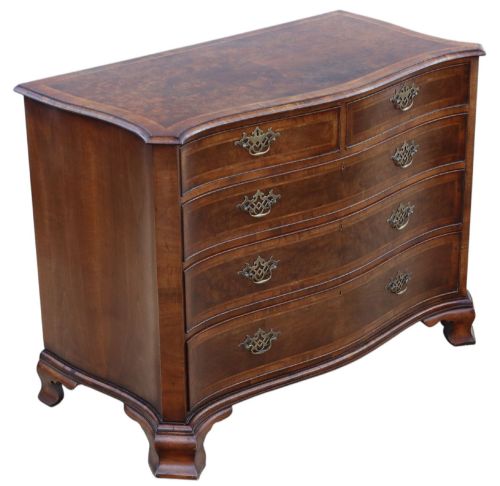
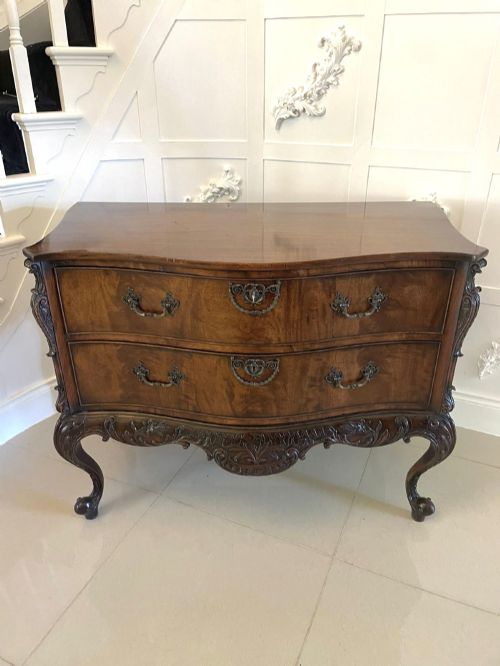
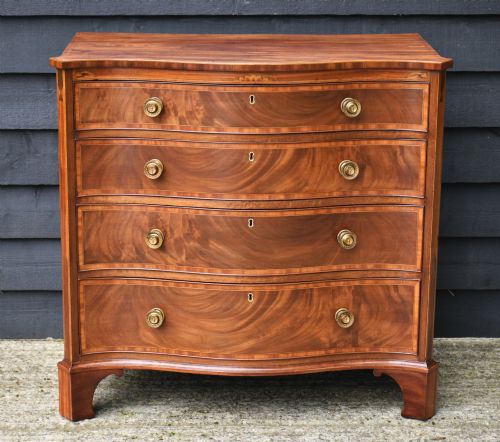
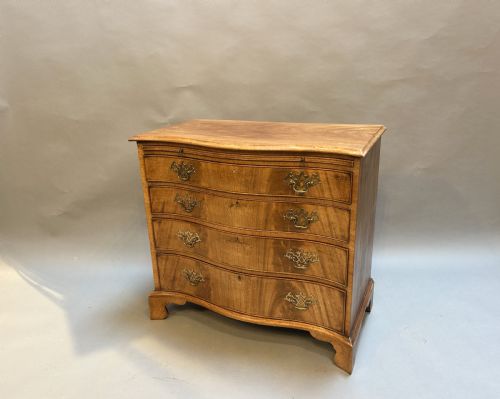
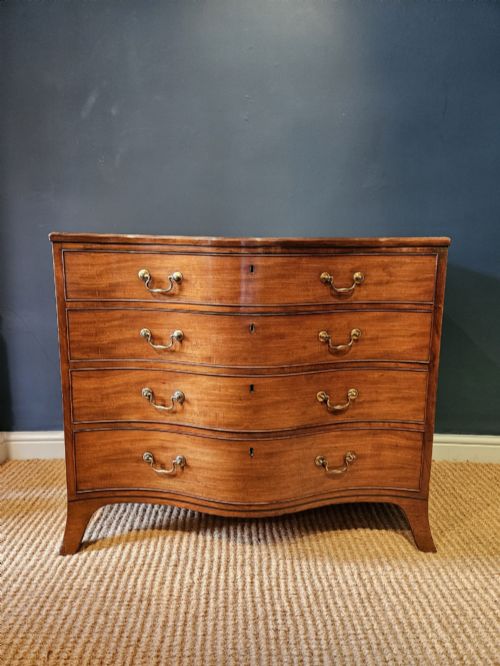
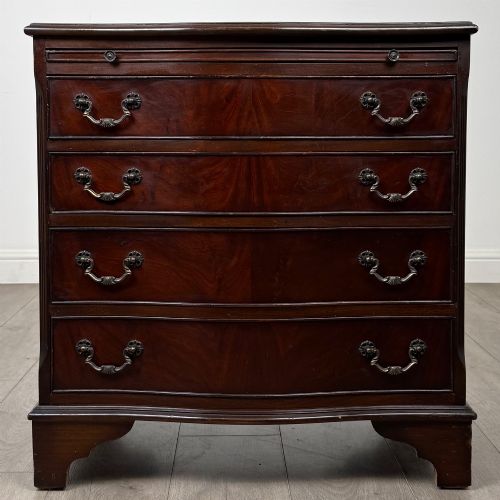
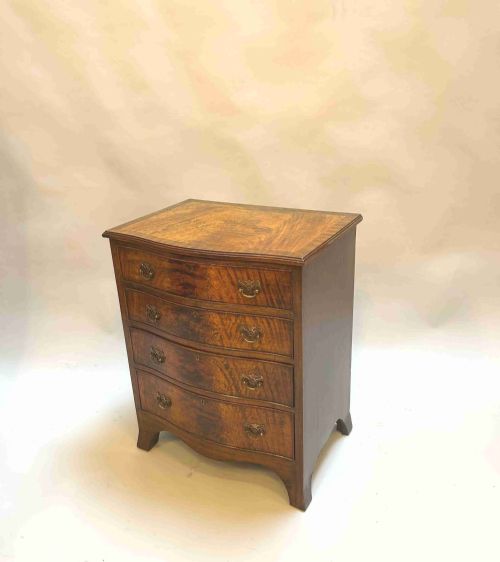
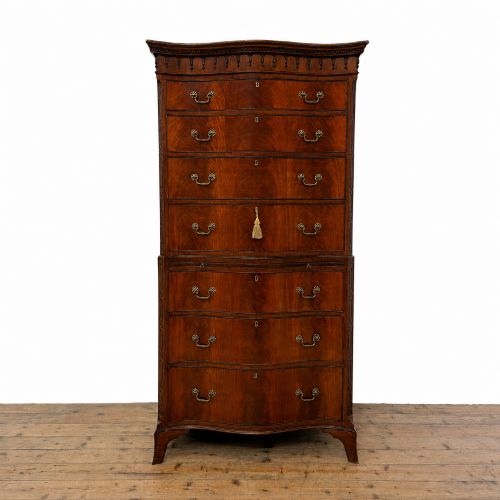
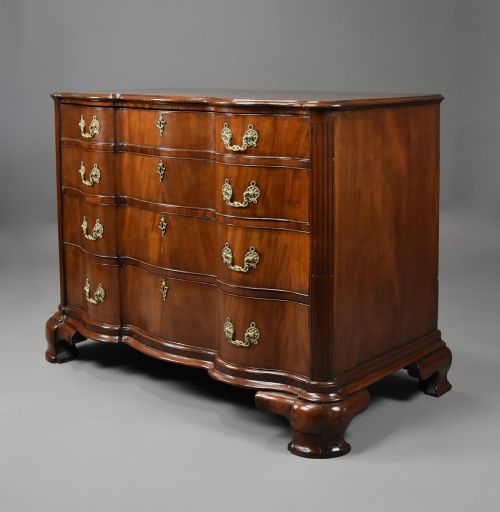
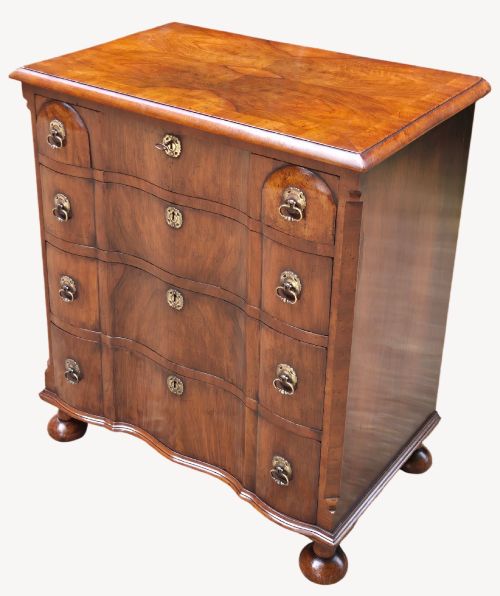
Serpentine bedroom drawers encompass pieces shaped with a convex centre flanked by concave sides, creating a flowing movement across the front. The selection here spans compact chests, tallboys, and writing tables from the Georgian period through to the twentieth century.
Most examples you encounter on this page are constructed from mahogany or walnut, originating from eighteenth-century workshops or later revival periods. Forms range from simple four-drawer chests to elaborate commodes fitted with writing slides and brass hardware.
Materials and Construction
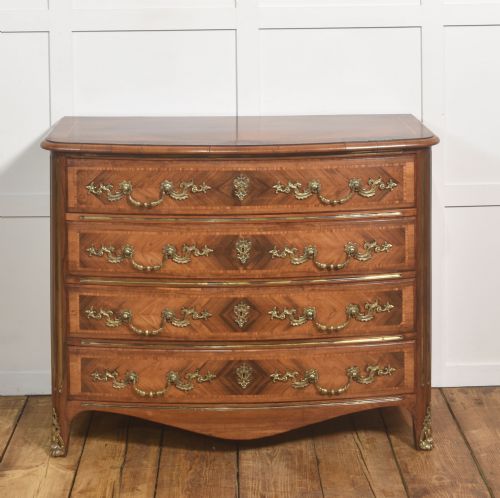
Cabinet makers utilised dense timber such as mahogany and walnut, frequently selecting figured veneers or burr walnut to cover the curved fronts. Crossbanding and marquetry decoration appear on specific French and revival pieces to accentuate the undulating lines.
The curved drawer fronts required skilled joinery to shape solid wood or bend laminates without splitting the grain. Drawers often incorporated hand-cut dovetails and operated alongside brass handles and escutcheons.
Listings include mahogany, walnut, burr walnut, satinwood, oak, and painted wood across Georgian, Victorian, Edwardian, and twentieth-century periods.
Evaluating Quality
The standard of a piece depends on the crispness of the curved moulding and how smoothly the drawers follow the serpentine contour. Superior examples display continuous grain patterns across the front drawers, achieved by cutting veneers from a single board.
Finer chests retain original brass hardware, stable timber frames, and well-fitted interior slides or writing compartments. Later revival pieces vary according to the depth of carving and the selection of secondary timbers used inside the carcass.
The Serpentine Bedroom Drawers Glossary
- Serpentine
- A furniture front characterised by a convex curve in the middle flanked by two concave curves. This contour requires precise woodworking to execute successfully.
- Commode
- A low chest of drawers or cabinet, frequently associated with eighteenth-century French and English decorative styles. They often feature marble tops or elaborate marquetry.
- Crossbanding
- A strip of veneer applied to the border of a panel or drawer front with the grain running perpendicular to the centre. It provides a neat contrasting frame.
- Tallboy
- A tall chest of drawers made by stacking one chest upon another, sometimes standing on a base or legs. They maximise storage while maintaining a modest floor footprint.
- Marquetry
- The art of applying pieces of veneer to a structure to form decorative patterns and pictures. Craftsmen used various woods to achieve naturalistic or geometric designs.
Serpentine Bedroom Drawers: Frequently Asked Questions
How do I identify a genuine period serpentine chest?
Examine the timber construction inside the drawers, looking for hand-cut dovetails and secondary woods appropriate to the stated period. The curved front should show consistent ageing and natural wear corresponding to eighteenth-century or nineteenth-century production.
Check the drawer runners and internal framing for signs of hand-planing and traditional joinery methods. Good proportions and tight joints indicate standard period craftsmanship rather than later machine-made assembly.
What is the difference between a commode and a standard chest?
A commode generally refers to a decorative low chest of drawers, often drawing influence from French provincial or Louis XV designs. They frequently incorporate marble tops, painted finishes, or complex marquetry.
Standard chests of drawers focus primarily on utilitarian bedroom storage with timber tops and simpler drawer arrangements. Both share the characteristic curved front when built to a serpentine design.
Where should I place a serpentine chest in a bedroom?
Position the piece against a main wall where the curved front can catch the light without obstructing pathways. Because the drawers project outward in the centre, ensure sufficient clearance from surrounding furniture.
Pair the chest with a simple mirror or table lamp to complement the polished mahogany or walnut surface. Avoid placing them in direct sunlight to protect the wood veneers from fading.
How should I care for walnut and mahogany furniture?
Maintain the timber by dusting regularly with a dry, soft cloth and applying a quality beeswax periodically to nourish the surface. Keep the furniture away from direct heat sources and radiators to prevent the wood from drying out and cracking.
Control room humidity to protect delicate veneers and crossbanding from lifting off the carcass. Handle drawers carefully to preserve the original runners and internal joints.