

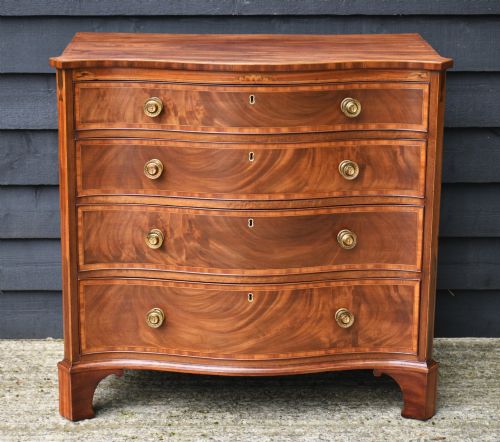
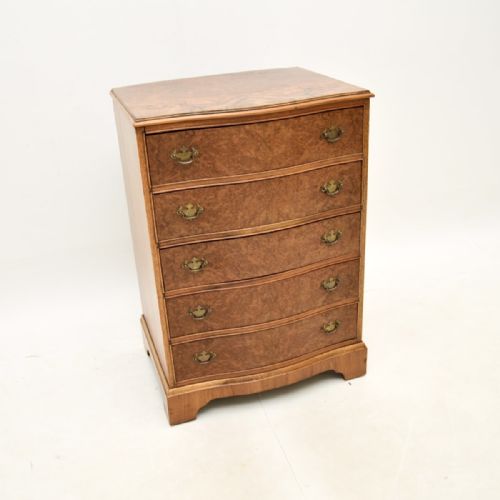
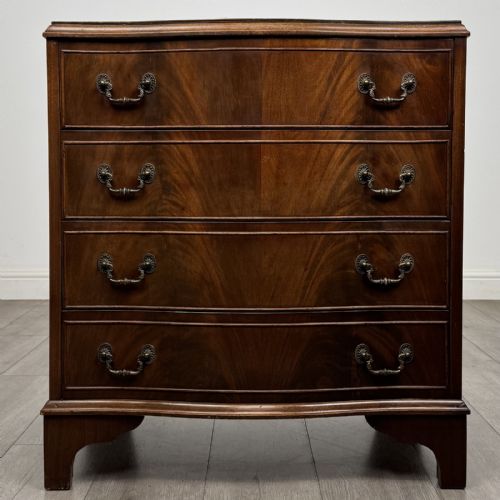
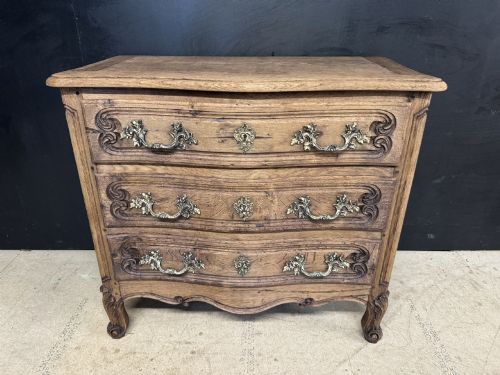
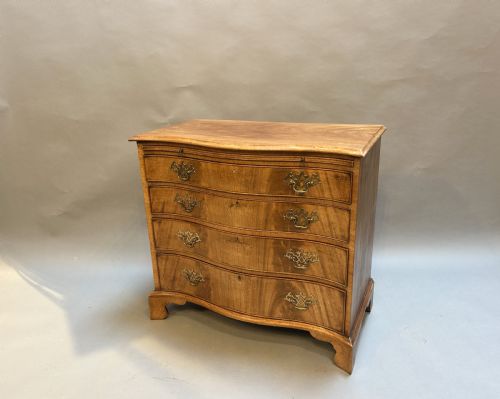
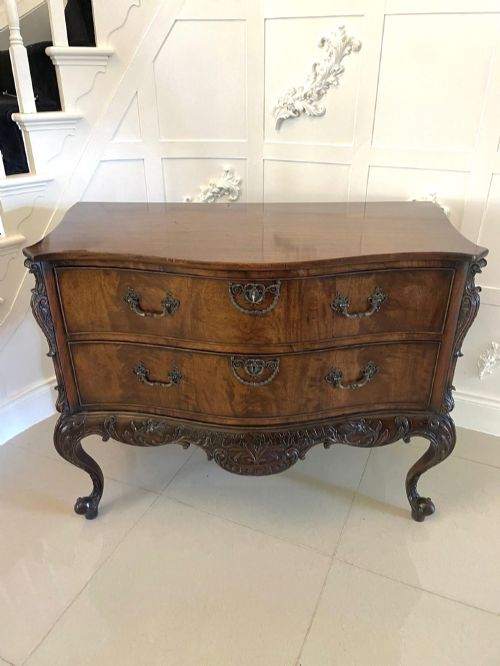
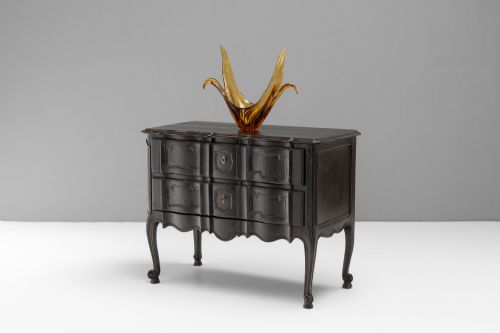
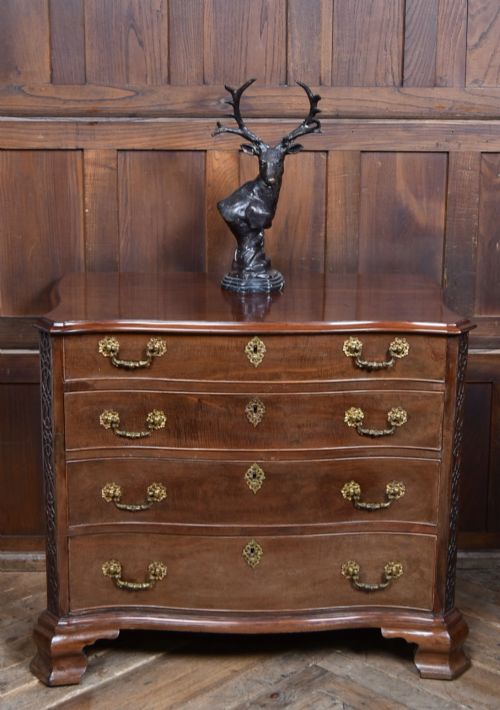
Serpentine Bedroom Chest
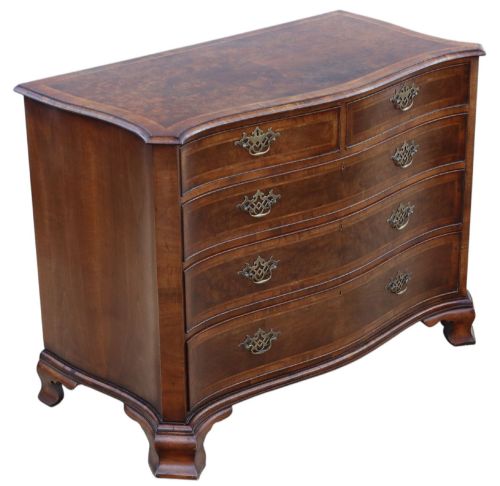
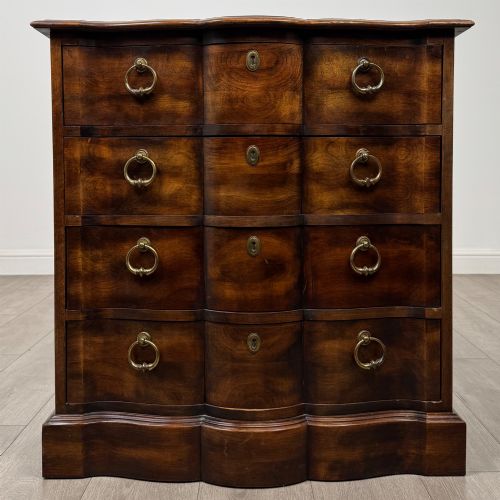
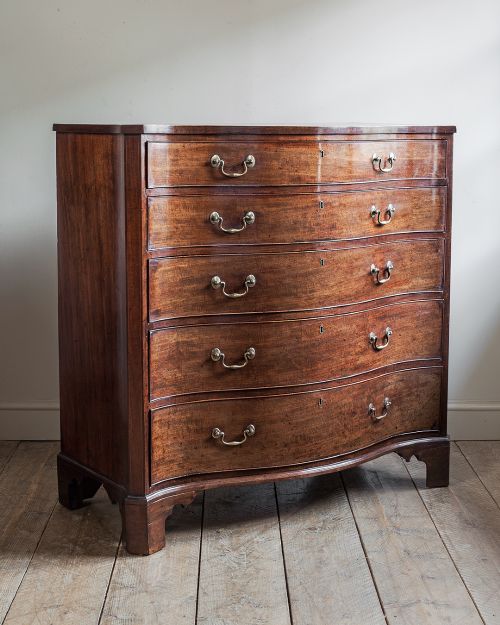
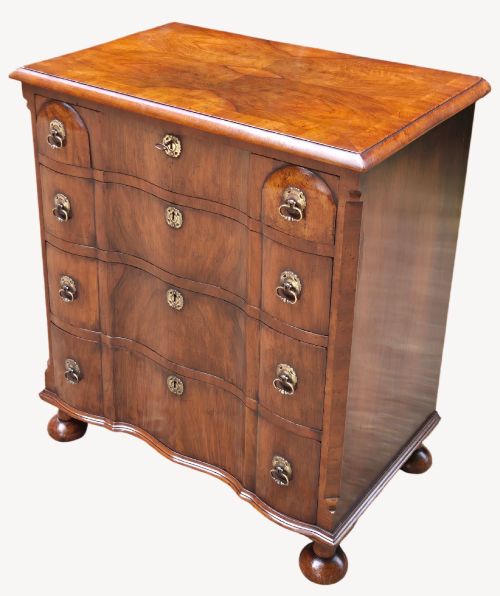
A serpentine bedroom chest offers a distinct undulating front that brings immediate architectural movement and refined storage to a room.
Serpentine Bedroom Chest
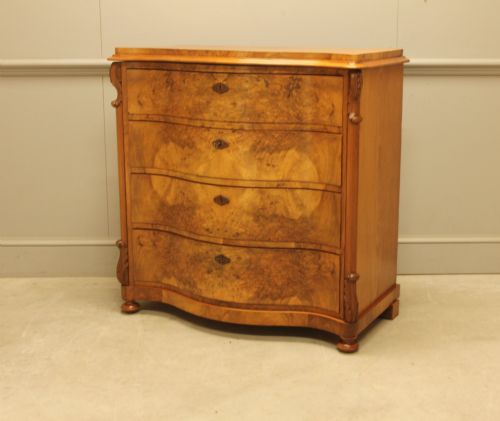
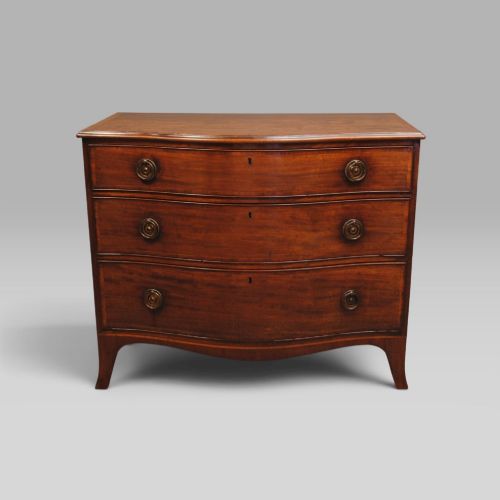
When searching for a serpentine bedroom chest, a buyer encounters distinctive furniture defined by a convex centre flanked by concave curves, creating a fluid silhouette across the drawer fronts. Most examples available on this page date from the Georgian period through to later revival eras, manifesting primarily in mahogany or burr walnut.
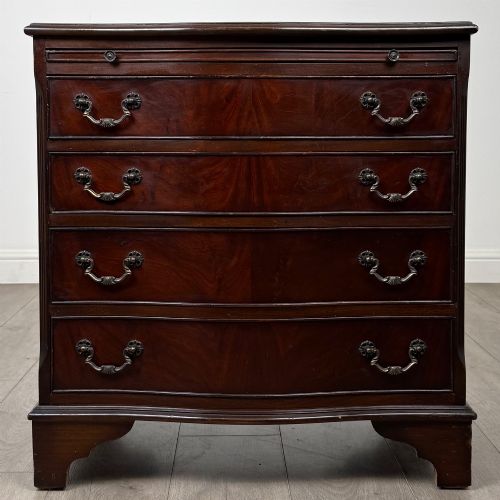
These pieces function principally as practical bedroom storage, often incorporating internal brushing slides or writing surfaces above the primary drawers. Master cabinetmakers shaped the timber specifically to catch light along the complex curves, distinguishing these forms from standard flat-fronted chests of drawers.
How They Were Made
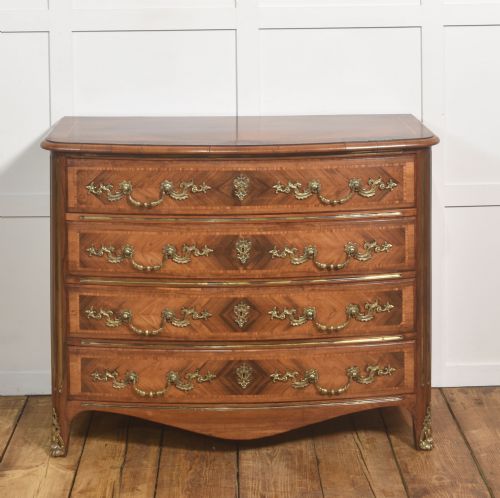
Craftsmen built these chests using dense hardwoods such as mahogany and walnut, frequently applying decorative veneers or crossbanding to accentuate the undulating drawer contours. Oak often served for internal drawer linings and structural carcasing to ensure stability.
The characteristic serpentine shape required precise sawing and joinery, as solid timber or thick veneers had to be planed and fitted to follow the precise convex and concave geometry. Original brass hardware, including bail handles and escutcheons, was pinned directly through the curved drawer faces.
Serpentine Bedroom Chest Retail Price Guide 2026
Typical asking prices for serpentine bedroom chest among the pieces listed under this phrase on Sellingantiques today, from the lower quarter to the upper quarter. They describe what is for sale here now, not the wider market.
Some chests hide sliding shelves originally designed for powdered wigs.
What Varies in Quality
Quality rests upon the handling of the timber's grain and the crispness of the curved profile. Superior examples display symmetrical figuring across the drawer fronts, where burr walnut or figured mahogany veneers are meticulously matched across the central sweep.
Construction standards also define the tier of a piece, observable in hand-cut dovetails on the drawer sides and the seamless integration of dust boards between tiers. Finer iterations maintain original brass handles and smooth drawer movement despite the inherent tension within curved timber construction.
Hepplewhite·Chippendale
The Serpentine Bedroom Chest Glossary
- Serpentine
- A furniture front shaped with a convex central section flanked by two concave curves. This contour requires advanced woodworking skill to execute properly.
- Brushing slide
- A pull-out shelf housed just beneath the top surface of the chest. It provided a temporary writing surface or clothes-sorting shelf.
- Crossbanding
- A border veneer applied around the perimeter of a drawer front, laid with the wood grain running perpendicular to the central panel. This technique creates a distinct visual framing effect.
- Commode
- A low chest of drawers or cabinet, frequently used in continental European furniture making. The term often describes French or Swedish serpentine pieces.
- Figured mahogany
- Timber harvested from specific parts of the mahogany tree exhibiting dynamic grain patterns such as fiddleback or flame. Cabinetmakers utilised these cuts for decorative impact.
Serpentine Bedroom Chest: Frequently Asked Questions
How do I spot a true serpentine front?
A genuine serpentine front curves outward in the middle and inward at the sides, forming a continuous wave. Examining the grain and the drawer edges reveals whether the timber was carved or bent to shape.
Inferior modern imitations often lack the subtle hand-planed irregularities found in period examples. The drawers must follow the exact undulating line without flat spots.
What is a brushing slide used for?
The pull-out board located beneath the top surface served as a convenient platform for folding garments or writing letters. Owners pulled it out when sorting daily attire.
Many Georgian and Edwardian chests include this feature, which slides smoothly on timber runners built into the interior frame.
How do mahogany and walnut styles differ?
Mahogany pieces tend to feature straight structural lines combined with deep reddish-brown tones, favoured by 18th-century English makers. Walnut examples often display rich burl figuring and warmer brown hues.
Continental pieces frequently utilise walnut or oak, whereas British workshops relied heavily on imported mahogany for its structural stability.
Where should I place a serpentine chest?
These chests suit bedrooms or principal hallways where their sculptural fronts can be viewed from multiple angles. Their curved profiles require slightly more clearance than flat furniture.
Pairing the chest with minimal surrounding decor allows the complex grain patterns and curved woodwork to stand out within the room.